
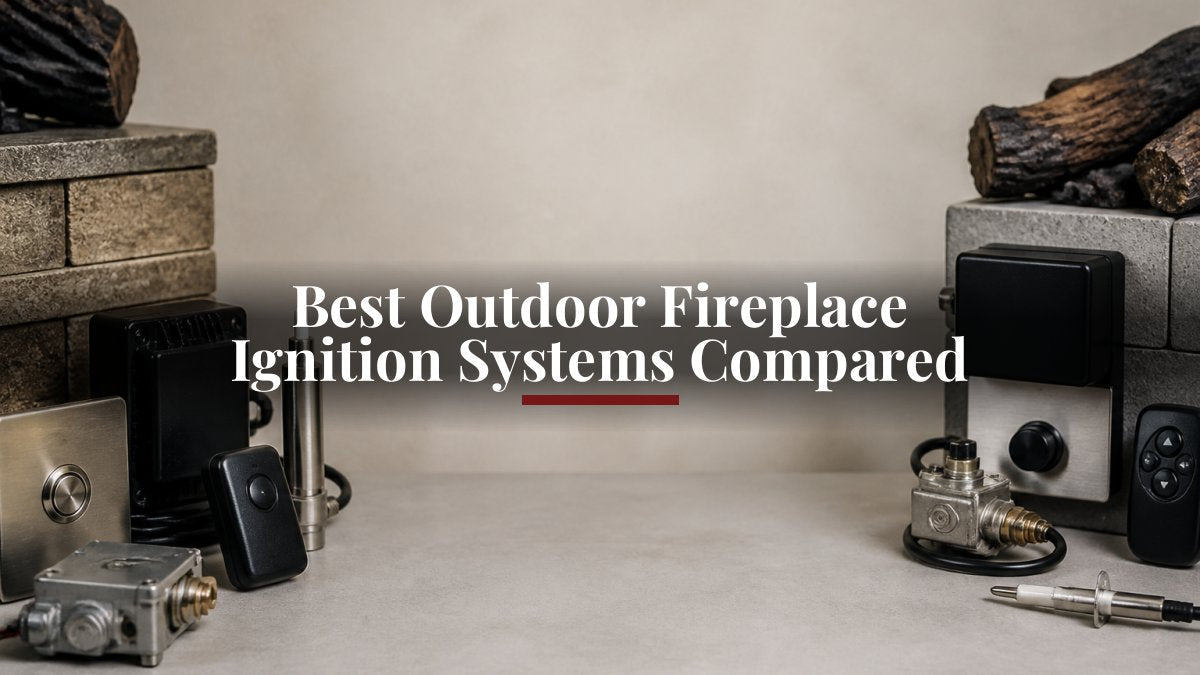
Best Outdoor Fireplace Ignition Systems Compared
Table of Contents
- Ignition Systems at a Glance: Quick Comparison
- How the Five Ignition Types Actually Work
- Manual Ignition Outdoor Fireplace: Simple, Cheap, and Still Smart
- Electronic Ignition System for Outdoor Fireplace: What You Get for the Upgrade
- Standing Pilot Ignition System: Reliable, But Watch the Fuel Bill
- Outdoor Fireplace Remote Control and Automation
- Fireplace vs. Fire Pit: Why the Ignition Choice Differs
- Weather, Cold Starts, and Long-Term Durability
- Frequently Asked Questions
Last Updated: October 18, 2026
Ignition Systems at a Glance: Quick Comparison
Outdoor fireplace ignition systems fall into five families: match-lit, push-button spark, standing pilot, electronic, and flame-sensing, and each outdoor fireplace ignition type suits a different budget and use pattern. Match-lit costs least upfront and needs no power; electronic systems cost most and need a power source, but start with a button.
Here is the short version before we go deeper:
| System | Power Needed | Upfront Cost | Best For |
|---|---|---|---|
| Match-lit | None | Lowest | Budget builds, infrequent use |
| Push-button spark | Battery | Low | Everyday convenience |
| Standing pilot | Gas only | Moderate | Frequent use, simple controls |
| Electronic | 120V or low voltage | Highest | Remote control, automation |
| Flame-sensing | Low voltage | High | Safety-critical, high-output features |
That table hides the real decision. Most buyers focus on the button and ignore what shapes ownership: cold, wet-weather behavior and long-term serviceability.
How the Five Ignition Types Actually Work
Each ignition type solves the same problem, lighting a gas burner safely, using different levels of automation.
Match-Lit and Manual Ignition
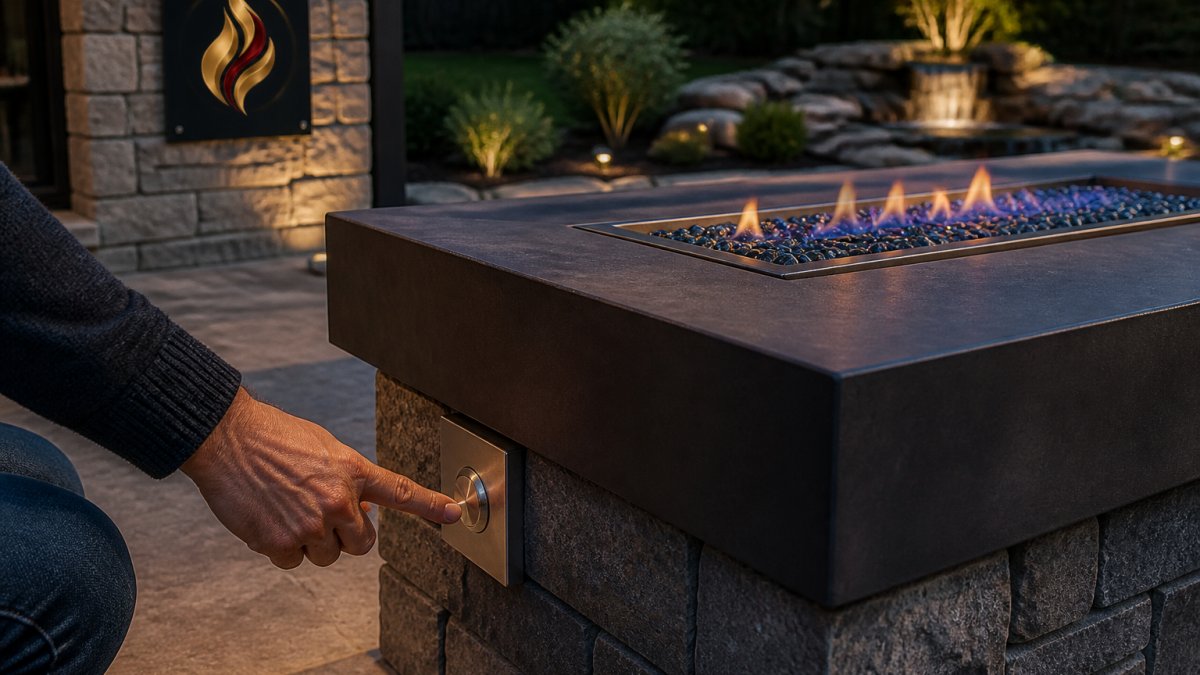
A match-lit system is the simplest design: turn a gas valve, then hold a lit match or long lighter to the burner. With no electrode or module, nothing fails electrically, so it works in a power outage and in freezing temperatures. The trade-off is hands-on operation, you crouch near an open flame every time, and guests cannot start the fire without instruction.
Push-Button Spark and Direct Spark Ignition
Push-button spark ignition uses a battery-powered electrode to arc across the burner and light the gas; direct spark sends that spark straight to the burner without a standing flame. These systems sit mid-range in price and remove the match from the equation. Battery placement matters: an igniter in a damp compartment will struggle in wet weather, so check where the battery sits before you buy.
Standing Pilot and Thermocouple Safety Systems
A standing pilot keeps a small flame burning continuously, ready to light the main burner when you turn the valve. A thermocouple sits in that flame and shuts the gas off if it goes out, the safety feature that keeps pilot systems common on outdoor fireplaces. The catch is fuel: a pilot burns gas around the clock, so pilot systems suit households that light the fire often.
Electronic and Flame-Sensing Ignition
Electronic ignition uses a control module to sequence spark, gas, and flame verification automatically. Flame-sensing adds a sensor that confirms a flame is present and cuts the gas if it is not. These systems enable remote control and smart-home integration. Power is the price of admission: some units run on low voltage, others need a 120V connection, so plan the electrical run before the hardscape goes in.

Manual Ignition Outdoor Fireplace: Simple, Cheap, and Still Smart
A manual ignition outdoor fireplace is the right call more often than the market admits. If you light your fire a few evenings a week in season, a match-lit burner does the job with the fewest parts to break and the lowest upfront cost. The Cazo Fire & Water Bowl shows how little changes between tiers: the same handcrafted GFRC bowl is available match-lit or with low-voltage electronic ignition, with the bowl, burner, and finish identical, the ignition is the difference.

Electronic Ignition System for Outdoor Fireplace: What You Get for the Upgrade
An electronic ignition system for outdoor fireplace use buys three things: push-button starts, remote operation, and automatic flame verification, plus a component that needs a power source and, eventually, service. The True Flame SANCTUARY 1 burner system illustrates the tiering well, offering three ignition choices on the same 75,000 BTU stainless steel burner: match throw, thermocouple safety pilot, and a fully electronic weatherproof system with a control panel and on/off switch.
Standing Pilot Ignition System: Reliable, But Watch the Fuel Bill
A standing pilot ignition system trades a small, constant gas draw for instant, simple operation. There is no battery to replace and no module to troubleshoot.
The honest limitation is cost of ownership.
Pilot systems also struggle in wind. A gust that snuffs the pilot shuts the thermocouple and the whole system down until you relight it.
Outdoor Fireplace Remote Control and Automation
Outdoor fireplace remote control turns a fire feature into something you operate like a light switch.
Automation is only as good as the ignition underneath it. Remote control requires electronic ignition with flame sensing; you cannot retrofit a remote onto a match-lit burner without replacing the control hardware.
For buyers weighing this upgrade, our team can walk through which burner systems support remote operation and what each needs at the install stage.
Fireplace vs. Fire Pit: Why the Ignition Choice Differs
Fireplaces and fire pits stress ignition systems differently, and the differences go beyond wind exposure. An outdoor fireplace usually has a chimney or enclosure that shelters the burner, a wall to conceal controls, and a defined opening that constrains burner size and layout. A fire pit sits fully exposed, often with no structure to hide electronics and no chimney to draft smoke away.
How enclosure and access shape the choice
A built-in outdoor fireplace typically gives you three things a fire pit does not: a concealed cavity for a control module, a wall surface for a key valve or switch, and a service access panel behind or beside the burner. That access matters more than most buyers realize, modules, batteries, and thermocouples must be reachable without dismantling stone.
Burner layout and flame-sensing placement
Flame-sensing systems need the sensor positioned where it can read the flame across the burner's full range, low, high, and wind-disturbed. On a long linear fireplace burner, the sensor and electrode sit at specific points along the burner, and the opening must let the flame reach them; on a compact round fire pit burner, the sensor sits close to the ignition point and reads quickly.
Side-by-side compatibility and installation matrix
The table below summarizes how each ignition family fits the two feature types. Treat it as a starting filter, not a substitute for the burner manufacturer's installation instructions, which govern the specific product.
The Outdoor Plus Cazo Fire & Water Bowl-Low Voltage Electronic Ignition-LP →
| Ignition type | Fuel compatibility | Power source | Enclosure / access needs | Fireplace fit | Fire pit fit | Retrofit suitability |
|---|---|---|---|---|---|---|
| Match-lit | Natural gas or propane | None | Key valve access; no electrical | Strong, simplest, fewest parts | Strong, works with any bowl or pit | Easiest, no wiring |
| Push-button spark | Natural gas or propane | Battery | Dry battery compartment, reachable | Good if battery is serviceable | Good, common on bowls and tables | Moderate, battery access must be added |
| Standing pilot | Natural gas or propane | Gas only (continuous pilot draw) | Ventilation for pilot; thermocouple access | Strong, sheltered pilot holds up | Weaker, wind snuffs exposed pilots | Moderate, needs pilot and thermocouple access |
| Electronic | Natural gas or propane | 120V or low voltage | Weatherproof module cavity, power run, service panel | Strong when access panel exists | Possible with remote control box | Hardest, electrical rough-in required |
| Flame-sensing | Natural gas or propane | Low voltage | Sensor placement along burner; module access | Strong on linear burners with proper sensor placement | Strong on compact burners | Hard, sensor and module must be added |
Retrofit reality check
Retrofitting ignition is where most surprises live. Upgrading a match-lit burner to electronic ignition usually requires a new control module, flame sensor, electrode, power source, and service access point.
A practical rule: decide on ignition before the gas line and hardscape are finalized. If the feature is already built, match-lit and battery spark are the realistic upgrade paths; pilot and electronic systems generally require access that finished construction does not provide.
If you are weighing a fireplace build against a fire pit or fire table, our team can help you match the ignition system to the enclosure, burner layout, and access you actually have. Browse our fireplaces and fire features or fire pits and fire tables to see which configurations support the ignition type you want.
Weather, Cold Starts, and Long-Term Durability
Weather is the quiet decider in this category. Cold gas is denser and slower to light, so any spark-based system needs a clean electrode gap and a dry compartment. Moisture in a battery box or control module is the most common cause of a no-start, and it is almost always an installation issue rather than a product fault.
Cold starts: why the first light of the season is the hardest
On a cold morning or the first cool evening of fall, gas pressure and burner temperature both work against a quick light. A spark system may need a second or third attempt as gas is slow to reach the burner and the electrode gap has drifted with temperature. A standing pilot may struggle if the pilot flame is small or the thermocouple is cool.
Practical cold-start habits:
- Open the gas valve fully and give the line a moment to pressurize before sparking.
- Check the electrode gap against the manufacturer's specification; a gap that is correct in summer can be marginal in cold, damp air.
- Keep the burner and electrode dry; a cover or removable lid prevents dew and rain from pooling in the ignition area.
Moisture, wind, and corrosion
Moisture is the leading cause of ignition failure across every system type, entering through uncovered burners, poorly sealed control cavities, and battery compartments without drainage. Wind is second: it disturbs the flame, trips flame sensors, and snuffs standing pilots on exposed features.
Corrosion follows moisture. Stainless steel burners and pans resist rust far better than mild steel, and brass or stainless fittings outlast plated components.
Protective measures that pay for themselves:
- A fitted cover for the feature when it is not in use.
- A burner pan with drainage holes and a slight slope away from the ignition point.
- A weatherproof enclosure for control modules with a drip edge and a low drain point.
Troubleshooting common ignition problems
Most no-start calls fall into a handful of patterns. The table below maps symptoms to likely causes and first checks.
| Symptom | Likely cause | First checks |
|---|---|---|
| No spark at the electrode | Dead battery, corroded electrode, wet compartment, or disconnected lead | Replace battery; dry and clean the electrode; check the lead at the module |
| Spark but no flame | Gas valve closed, air in the line, or blocked burner ports | Confirm valve position; purge the line per the manufacturer's instructions; inspect burner ports |
| Pilot will not stay lit | Thermocouple not in the pilot flame, dirty pilot orifice, or draft | Reposition or clean the thermocouple; clean the pilot orifice; shield from wind |
| Flame lights then shuts off | Flame sensor not reading the flame, or media blocking the sensor | Clear media away from the sensor; check sensor placement and connection |
| Weak or intermittent spark | Low battery, moisture in the module, or a failing electrode | Replace battery; dry the module; inspect the electrode for cracks |
| Remote or switch does not respond | Battery in remote, module power, or pairing | Replace remote battery; confirm module power; re-pair per instructions |
If a check does not resolve the issue, stop and consult a qualified gas professional. Do not continue attempting to light a burner that is not behaving as designed.
Inspection and maintenance intervals
A simple schedule prevents most failures:
- Before each season: inspect the electrode and sensor, clean the burner ports, replace batteries, and confirm gas connections are tight.
- Monthly during use: check flame color and stability, and clear debris from the burner and media.
- After storms or heavy rain: dry the control compartment and confirm the burner lights normally before regular use.
Safety standards, code, and professional installation
Ignition systems are gas appliances, and the rules governing them are not optional. In the United States, gas-fired outdoor fireplaces and fire pits are typically required to use listed components and be installed per local codes, which commonly reference the International Fuel Gas Code or International Residential Code as adopted by the jurisdiction. Ventilation, clearances to combustibles, shutoff valve location, and installer qualifications all matter, and requirements vary by municipality.
A few principles hold broadly:
- Use burners and ignition components listed for the application; do not substitute unlisted parts.
- Provide a accessible manual shutoff valve on the gas line.
- Maintain the clearances to combustibles specified by the manufacturer and the adopted code.
Our advice after years of outfitting outdoor spaces: buy the ignition that matches how you actually use the fire, not the one with the longest feature list. A well-installed match-lit bowl beats a poorly housed electronic one every season. If you are planning a new feature or troubleshooting an existing one, our team can help you identify the right burner, ignition type, and installation path for your space.
Frequently Asked Questions
What are the different types of outdoor fireplace ignition systems?
There are five main types: match-lit (manual) ignition, push-button spark ignition, standing pilot with a thermocouple, direct spark ignition, and fully electronic flame-sensing ignition. Match-lit and manual systems need a match or lighter and no electricity. Spark and electronic systems use an electrode and module, usually with battery or low-voltage power. Standing pilot systems keep a small flame lit with a thermocouple proving the flame is present. Each type trades upfront cost against convenience, power requirements, and weather tolerance.
Is electronic ignition better than manual ignition for an outdoor fireplace?
It depends on how often you light it and whether power is available at the feature. An electronic ignition system for an outdoor fireplace lights with a button or remote, shuts off automatically if the flame fails, and suits frequent entertaining. Manual ignition costs less upfront, needs no electricity, and has fewer parts to fail, which makes it a strong choice for occasional use or remote patios. Many buyers run manual on a secondary fire bowl and electronic on the main feature.
How does a standing pilot ignition system work?
A standing pilot keeps a small gas flame burning continuously at the burner. A thermocouple sits in that flame and generates a tiny current that holds the gas valve open. If the pilot goes out, the thermocouple cools, the valve closes, and gas stops flowing. Lighting the main burner is then just a matter of turning the control valve. The trade-off is fuel burned 24/7 by the pilot and sensitivity to wind and weather on an exposed outdoor feature.
Do outdoor gas fireplace ignition systems need electricity?
Not all of them. Match-lit and manual systems need no power at all. Push-button spark systems often run on a battery pack, so no wiring is required. Standing pilot systems typically need no household current either. Fully electronic and flame-sensing systems usually need low-voltage power, often from a 120VAC supply stepped down through a transformer, or a battery-powered module. Confirm the power requirement before the patio is finished, because adding a circuit later is far more disruptive.
Can an outdoor fireplace ignition system be controlled with a remote?
Yes, if the feature uses an electronic ignition system with a remote-compatible control module. Remote control lets you set flame height, turn the feature on and off, and in some setups connect to home automation. Match-lit and basic standing pilot systems are operated at the valve and cannot be remote controlled without added components. If remote operation matters to you, choose the electronic option at the point of order rather than retrofitting later.

Leave a comment
This site is protected by hCaptcha and the hCaptcha Privacy Policy and Terms of Service apply.