
Woodland Direct vs True Flame: 2026 Fire Feature Guide
Table of Contents
- Woodland Direct vs True Flame: How the Two Buying Paths Differ
- True Flame vs Woodland Direct at a Glance
- Head-to-Head Technical Specs: BTU Output, Burners, and Materials
- Authorized Dealer Benefits When Buying True Flame
- How to Choose an Outdoor Fireplace for Your Space
- Long-Term Cost of Ownership and Climate Considerations
- Conclusion
- Frequently Asked Questions
Last Updated: September 29, 2026
Woodland Direct vs True Flame: How the Two Buying Paths Differ
Shopping for a fire feature online usually comes down to one question: are you buying a brand, or are you buying a catalog? The woodland direct vs true flame comparison is really a comparison between two buying paths. True Flame is a manufacturer of fire bowls and fire features, while a large multi-line retailer carries dozens of brands under one roof.
True Flame vs Woodland Direct at a Glance
True Flame is a fire feature manufacturer, while Woodland Direct is a multi-brand online retailer. That distinction shapes product depth, customization, and the guidance you get before and after purchase.
| Factor | True Flame (via authorized dealer) | Multi-Brand Retailer |
|---|---|---|
| What it is | Manufacturer brand | Retail catalog |
| Product focus | Fire bowls, fire features, fireplaces | Broad mix across many categories |
| Fuel options | Natural gas or propane with conversion kit | Varies by listing |
| Ignition choices | Match throw, match lit, low-voltage electronic | Varies by listing |
| Best for | Buyers who want one brand done well | Buyers browsing many brands at once |
Head-to-Head Technical Specs: BTU Output, Burners, and Materials
Specs are where the two buying paths separate most clearly. A manufacturer line publishes consistent burner and material standards across its catalog; a multi-brand retailer's specs vary listing by listing.
Burner Construction and Heat Output
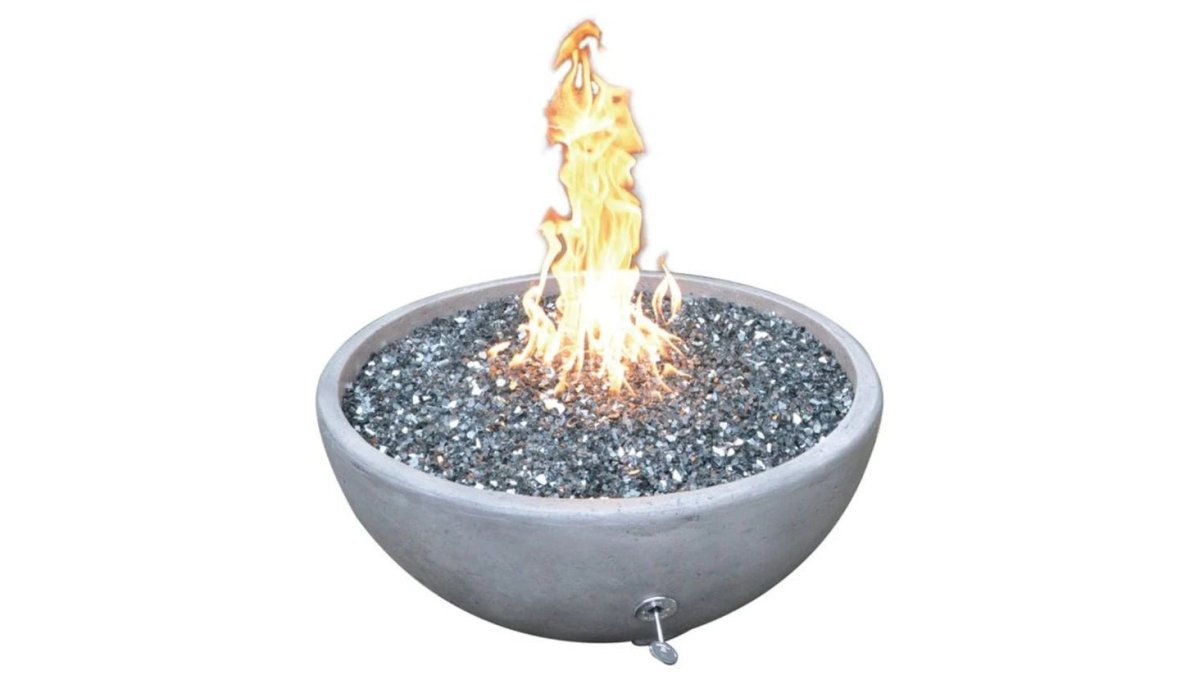
True Flame fire bowls use 304 stainless steel burners and pans. The Lume 24" pairs an 18-gauge 304 stainless steel flat pan with a 12" double-ring burner in 19-gauge 304 stainless steel, rated at 75,000 BTU. The Abode Series 30" fire and water bowl runs a 27" stainless steel disc with a 15" double fire ring in a four-spoke design, also at 75,000 BTU.

Fuel Type and Ignition Systems
Fuel and ignition most affect installation cost and daily convenience.
- Natural gas: Most True Flame bowls ship configured for natural gas, including the Abode Series 30" and the Lume 24", which uses a 1/2" NPT connection.
- Propane: Propane operation requires a conversion kit sold separately on the Abode and Lume bowls.
- Match throw or match lit: A key valve or manual light. Simple, reliable, no electrical run needed.
- Low-voltage electronic ignition: Push-button start, available on select Cazo configurations.
Authorized Dealer Benefits When Buying True Flame
Buying from an authorized dealer means a direct warranty path, configuration advice from someone who knows the product line, and fuel and ignition choices matched to your actual gas supply before you order.
How to Choose an Outdoor Fireplace for Your Space
Choosing an outdoor fireplace or fire bowl comes down to four questions: how much space you have, what fuel you can supply, where the unit sits relative to seating and foot traffic, and how the flame will be framed. Work through them in that order before looking at finishes.
Sizing: Match the Bowl to the Zone, Not the Patio
The most common sizing mistake is buying for the patio instead of the seating zone. A fire feature is a focal anchor, not a space heater for the whole yard. Most designers size a fire bowl so the seating circle sits roughly two to three bowl-diameters from the flame, close enough to feel radiant heat, far enough that guests are not shifting chairs back all evening.
- 24" bowl: compact patios, balcony-adjacent courtyards, and accent placements. Best for two to four people.
- 30"-36" bowl: the sweet spot for a standard four- to six-person conversation circle.
- 48" bowl: a true centerpiece. Needs a defined focal area and generous clear space around it, or it overwhelms the layout.
Clearance and Placement Mechanics
Clearance is where most DIY layouts go wrong. Two rules govern placement:
- Overhead clearance: any fire feature needs open air above the flame. Do not place a bowl under a pergola, roof overhang, or low tree canopy unless the manufacturer rates the unit for that installation.
- Venting: some bowls, including the Lume 24", are rated only for fully vented fireplaces or standalone exterior installation. Confirm the venting requirement on the spec sheet before you commit to a built-in surround.
- Foot traffic: keep the bowl out of the walking line between the door, the grill, and the seating.
- Wind: on exposed patios, a match-lit bowl can struggle in a crosswind. Low-voltage electronic ignition is more forgiving in those conditions.
Fuel and Ignition: Match the Supply Before You Order
Fuel is a hard constraint, not a preference. Natural gas requires a plumbed line; propane requires an external tank and, on several True Flame bowls, a conversion kit sold separately. Confirm your supply before checkout, ordering the wrong configuration is the most avoidable mistake in this category.
Ignition is the convenience choice:
- Match throw or match lit: a key valve or manual light. Simple, reliable, no electrical run needed. Best for standalone bowls and remodels where running power is impractical.
- Low-voltage electronic ignition: push-button start. Requires a low-voltage electrical run, which is easiest to plan during a build or hardscape project.
Media and Finish
Media affects both look and flame character. The Lume 24" needs roughly 30 lb. of lava rock or 50 lb. of fire glass; the Abode Series ships with lava rock included. Fire glass throws a cleaner, more reflective flame; lava rock reads more natural and hides the burner better. Finish selection should follow the climate guidance below, a finish that fades in intense sun is a poor choice for an exposed patio.
True Flame Abode Series 30" Fire and →
Long-Term Cost of Ownership and Climate Considerations
Most buying guides stop at purchase price. The real cost of a fire feature shows up over five to ten years in three places: fuel burn, replacement parts, and protection, and it is where the buying path you choose pays off or costs you.
The Three Ownership Cost Drivers
1. Fuel burn. BTU rating is a rate, not a total. A 75,000 BTU burner consumes roughly 75,000 BTU of fuel per hour at full output, meaning a higher-BTU bowl is not more efficient, it simply burns more fuel per hour of use. Match the BTU rating to the size of the zone you are actually heating. A 160,000 BTU bowl on a compact patio is fuel spent on heat that drifts away.
Material Durability: GFRC and 304 Stainless
GFRC, or glass fiber reinforced concrete, is used across most True Flame bowls and the Cazo line. It is lighter than cast concrete while still holding up outdoors, which matters for install and long-term weathering. The combination of GFRC body and 304 stainless burner and pan is what holds up across heat cycling and moisture.
Climate-Specific Recommendations
Where you live changes which spec matters most. This is the guidance most buying guides skip entirely.
| Climate | Primary Stressor | What to Prioritize |
|---|---|---|
| Arid / intense sun (Southwest) | UV degradation, finish fading | UV-resistant finishes; covered storage when not in use |
| Cold-winter / freeze-thaw | Freeze expansion, plumbing stress | GFRC construction; proper winterization of water features |
| Humid coastal | Salt and moisture corrosion | 304 stainless burner and pan; rinse and cover regularly |
| Temperate / mixed | Seasonal swings | Balanced spec; cover between seasons |
Fuel Efficiency Follows the Same Logic
A higher BTU rating is not more efficient; it means more heat output per hour, and more fuel consumed per hour. Match the BTU rating to the space you are actually heating, and choose ignition based on how often you will use the feature, a push-button electronic ignition gets used more often than a match-lit bowl, which changes the real cost-per-use calculation more than fuel type does.
Conclusion
The woodland direct vs true flame decision comes down to whether you want depth in a single manufacturer's line or breadth across a catalog. True Flame gives you consistent burner construction, published specs, and a clear fuel and ignition path. A multi-brand retailer gives you variety, but specs and support vary listing by listing.
Frequently Asked Questions
Is Woodland Direct a reputable retailer for outdoor fire features?
Woodland Direct is a well-known online retailer that carries a broad mix of fireplace, fire pit, and hearth products across many brands. Reputation is generally positive, but the buying experience differs from working with a brand-authorized dealer. A large multi-brand retailer stocks wide inventory, while an authorized dealer like Eternal Flame Outdoors focuses on a curated lineup, verifies warranty registration, and provides product-specific guidance. If warranty support and spec accuracy matter most to you, confirm dealer authorization before ordering.
Does True Flame offer direct-to-consumer sales or authorized dealer support?
True Flame products are sold through authorized dealers rather than a direct-to-consumer channel. Buying through an authorized dealer like Eternal Flame Outdoors means the warranty is registered correctly, fuel and ignition options are matched to your installation, and questions about burner sizing or venting go to someone who knows the line. True Flame fire bowls include models such as the Lume 24" and the Abode Series 30" fire and water bowl, both built for natural gas with propane conversion available.
What should I look for when choosing an outdoor kitchen retailer?
Look for four things: authorization to sell the brands you want, clear specifications for every product, help matching fuel type and ignition to your site, and a stated warranty path. Ask whether the retailer handles warranty claims directly or sends you to the manufacturer. A retailer that publishes dimensions, BTU ratings, and material grades, and that can answer venting and gas-line questions, will save you far more time than one that only lists a price.
How do I verify if an outdoor living retailer is an authorized dealer?
Check the brand's own website for a dealer locator, then confirm the retailer appears there. You can also ask the retailer directly which brands it is authorized to sell and request the manufacturer's warranty terms in writing. Authorized dealers can register your warranty at purchase, which matters if a burner, ignition system, or finish needs service later. If a retailer cannot confirm authorization, treat warranty coverage as uncertain.
How much does a True Flame fire bowl cost compared to buying through a general retailer?
True Flame fire bowls at Eternal Flame Outdoors start at $725 for the Lume 24" and $1,570 for the Abode Series 30" fire and water bowl. Pricing at a general retailer varies by brand mix and inventory, so a direct dollar comparison depends on which specific model you are viewing. What stays consistent with an authorized dealer is spec accuracy, correct fuel configuration, and warranty registration support rather than a stripped-down listing.
Choosing a fire feature is really a question of matching fuel, size, and materials to your actual patio, and that is where personalized guidance saves money. Eternal Flame Outdoors is an authorized dealer for True Flame and other premium brands, with nationwide delivery and products backed by trusted warranties. Explore the True Flame collection or contact our team for help matching a fire bowl to your space and gas setup.

Leave a comment
This site is protected by hCaptcha and the hCaptcha Privacy Policy and Terms of Service apply.