
Article: Best Weather Resistant Outdoor Grills: 2026 Guide
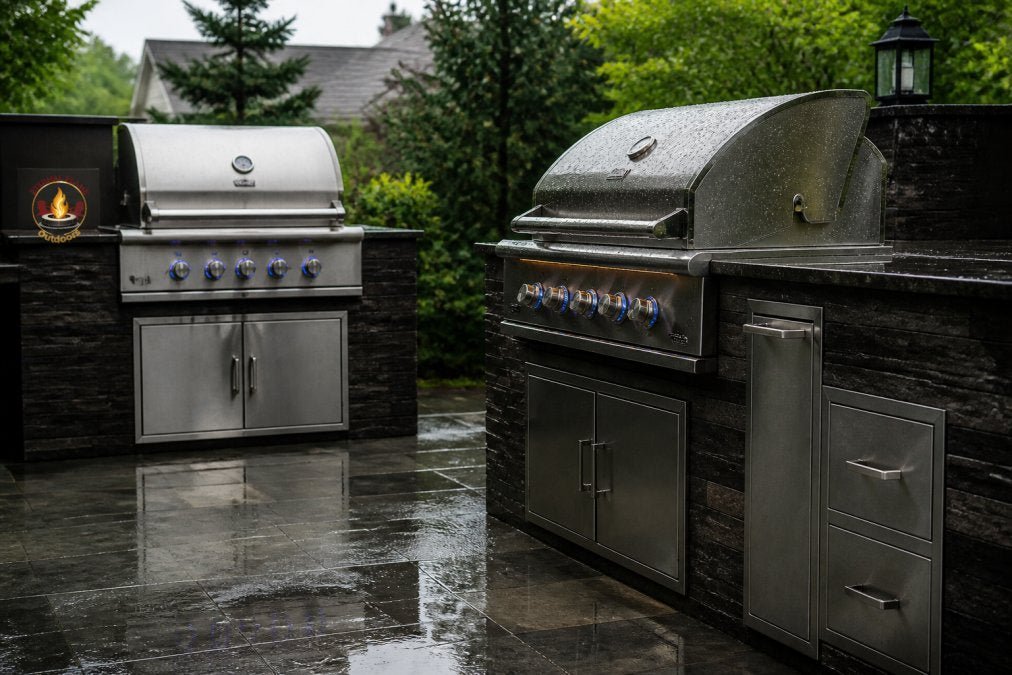
Best Weather Resistant Outdoor Grills: 2026 Guide
Table of Contents
- What Makes a Grill Truly Weather Resistant?
- 304 Stainless Steel vs 316 Stainless Steel Grills: Which Grade Do You Need?
- How to Choose a Weather Resistant Grill for Your Climate
- Top Weather Resistant Outdoor Grills: AOG and Fire Magic Compared
- Key Features to Look for in Outdoor Grills Built to Last
- How to Prevent Grill Rust in Coastal Areas: Long-Term Protection Tips
- Which Weather Resistant Grill Is Right for You?
- Conclusion
Last Updated: August 10, 2026
Finding the best weather resistant outdoor grills requires understanding the material science that separates a grill built to last from one that merely claims durability. At Eternal Flame Outdoors, we work with homeowners, contractors, and outdoor kitchen designers across every U.S. climate zone, and the most common regret we hear is buying a grill not engineered for its environment. Below, we break down what makes a grill truly weather resistant, compare the AOG and Fire Magic lines we carry, and provide a practical framework for choosing the right grill for your conditions.
Quick Picks:
- Best Built-In for Coastal Climates: AOG L-Series Built-In with 304 stainless steel throughout
- Best Premium Built-In with Smart Controls: Fire Magic Echelon E790i with digital thermostat
- Best Value Built-In: AOG T-Series Built-In, professional construction at a lower entry point
- Best Analog Option for Outdoor Kitchens: Fire Magic Aurora A790i, refined performance without digital complexity
What Makes a Grill Truly Weather Resistant?
Weather resistance is not a marketing claim, it's a set of specific material and construction decisions. A truly weather-resistant grill uses corrosion-resistant alloys throughout, has sealed ignition systems, and minimizes joints where moisture collects.

Material Quality and Corrosion Resistance
Stainless steel dominates premium outdoor grills, but grade matters enormously. Most quality outdoor grills use 304 or 316 stainless steel, both of which resist rust through a passive chromium oxide layer that reforms when scratched. Lower grades like 201 or 443 fall short in humid or salt air environments.
Powder-coated finishes add moisture and UV protection on non-cooking surfaces but can chip over time, exposing bare metal. On cooking surfaces and burner housings, stainless steel is essential.
Porcelain-enameled cast iron reduces maintenance with a glass-like coating that resists moisture, though chipping remains a risk.
Construction Details That Determine Long-Term Durability
Material grade alone doesn't guarantee durability. Look for:
- Welded construction over mechanically fastened joints, which eliminate gaps where moisture accumulates
- Heavy-gauge steel throughout, not just visible panels
- Marine-grade hardware: stainless steel fasteners, not zinc-plated screws
- Protected ignition systems: electronic modules shielded from direct moisture
- Drip management: channels that move moisture and grease away from burners
304 Stainless Steel vs 316 Stainless Steel Grills: Which Grade Do You Need?
The difference between 304 and 316 stainless steel comes down to one element: molybdenum. Grade 316 adds molybdenum to significantly improve resistance to chloride-induced pitting, the corrosion mechanism triggered by salt air.
304 stainless steel contains roughly 18% chromium and 8% nickel. It's the standard for quality outdoor grills and performs well in most U.S. climates. The passive chromium oxide layer protects against general oxidation, and with proper maintenance, 304 stainless grills last for decades.
316 stainless steel adds approximately 2-3% molybdenum, making it significantly more resistant to chloride attack. For homeowners within a mile of the ocean or in areas with heavy road salt exposure, 316 stainless is the more defensible choice for exposed components.
In practice, most premium built-in grills, including AOG and Fire Magic lines, use 304 stainless throughout. In the vast majority of U.S. locations, 304 stainless with proper care and a quality weatherproof cover will outlast any reasonable ownership period. The upgrade to 316 makes the most sense for beachfront properties where salt air is constant.

|
Stainless Grade |
Key Alloy Content |
Best For |
Chloride Resistance |
|---|---|---|---|
|
201 Stainless |
Lower nickel, higher manganese |
Budget grills, inland locations |
Low |
|
304 Stainless |
18% Cr, 8% Ni |
Most U.S. climates, quality built-ins |
Moderate |
|
443 Stainless |
Higher Cr, no Ni |
Mid-tier grills, non-coastal |
Moderate |
|
316 Stainless |
18% Cr, 10% Ni, 2-3% Mo |
Coastal, salt air, marine environments |
High |
How to Choose a Weather Resistant Grill for Your Climate
Climate is the variable most buyers underweight. Matching your grill's construction to your specific environment separates a 20-year investment from a 5-year disappointment.
Coastal and High-Humidity Environments
Salt air exposure accelerates corrosion on any metal surface. In coastal environments, corrosion resistance outranks BTU output, and marine-grade hardware becomes non-negotiable.
For homeowners within a mile of the ocean, prioritize:
- 304 stainless steel at minimum, with 316 stainless preferred for fully exposed installations
- Fully welded construction with no exposed fasteners
- A high-quality weatherproof cover used consistently when the grill is not in use
- Stainless steel burners rather than cast iron, which pit more readily in salt air
- Manual flash tube backup ignition for reliability when electronic systems need service
Arid and High-UV Climates
The Southwest presents different challenges. Intense UV exposure degrades powder-coated finishes faster, and extreme thermal cycling stresses welds and seals.
For desert and high-UV climates, prioritize:
- Brushed stainless finishes over powder-coated panels, which fade under sustained UV
- Heavy-gauge construction that handles thermal expansion without warping
- Natural gas conversion capability if running propane in extreme heat
- A UV-resistant weatherproof cover for when the grill isn't in use
Top Weather Resistant Outdoor Grills: AOG and Fire Magic Compared
The two premium built-in grill lines we carry at Eternal Flame Outdoors represent different approaches to professional-grade cooking performance built to last outdoors indefinitely. AOG (American Outdoor Grill) and Fire Magic both use heavy-gauge 300-series stainless steel construction, both offer natural gas conversion options, and both are engineered for permanent outdoor kitchen installation.
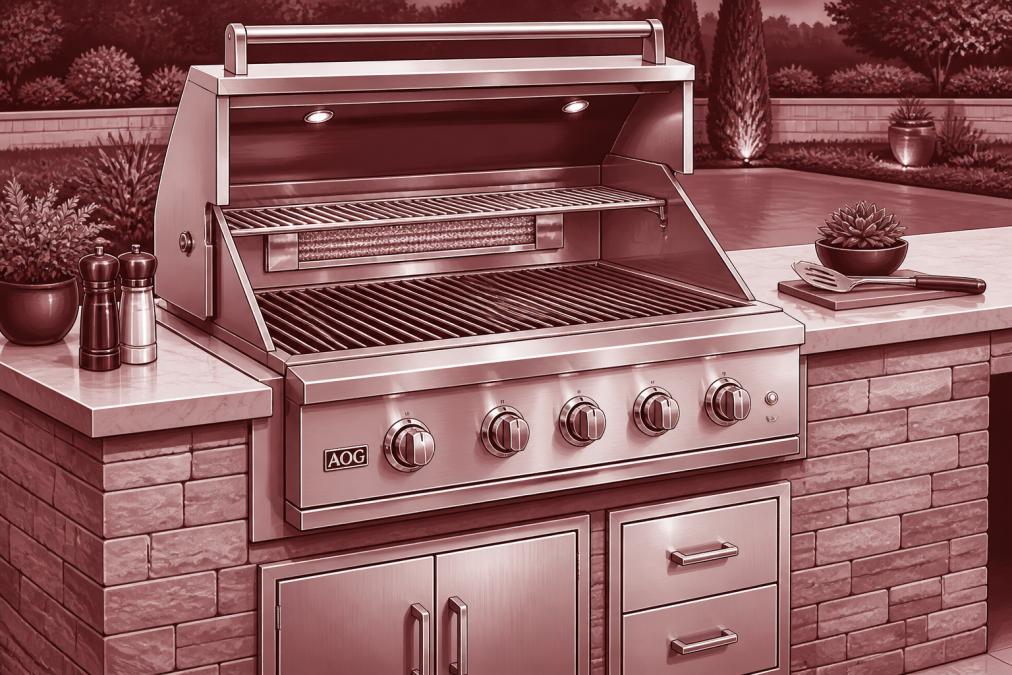
AOG T-Series and L-Series Built-In Gas Grills
The AOG built-in line is defined by architectural restraint and heavy-gauge 300-series stainless steel construction throughout. The firebox, cooking grates, and exterior panels all share the same corrosion resistance.
AOG T-Series Built-In Gas Grill Head (Propane): Available in 27", 30", and 36" configurations. The T-Series is the entry point into the AOG built-in lineup, offering the same material quality as the L-Series at a lower price point.

AOG L-Series Built-In Gas Grill Head (Propane): The L-Series steps up with 304 stainless steel construction explicitly specified, refined finishing, and a cooking surface configuration suited to serious outdoor kitchens. Available in 27", 30", and 36" configurations.
Both AOG built-in lines support propane operation and are compatible with natural gas conversion.
Pros:
- Heavy-gauge 300-series stainless throughout, including firebox
- Low-profile design integrates cleanly into stone or steel surrounds
- Multiple size configurations (27", 30", 36")
- Propane and natural gas compatible
Cons:
- More restrained feature set compared to Fire Magic's Echelon line
- Less visual drama than Fire Magic's black glass control panels
Fire Magic Echelon and Aurora Built-In Gas Grills
Fire Magic takes a more feature-forward approach. The Echelon and Aurora lines share the same commitment to heavy-gauge stainless construction, but add more cooking technology and, in the Echelon's case, digital controls.
Fire Magic Echelon E790i (36"): The flagship of the Fire Magic lineup we carry. A 36" gas grill head with a digital thermostat, black glass control panel, and touchscreen operation. The digital thermostat provides precise temperature control that analog systems can't match, making indirect grilling and low-and-slow cooking significantly more reliable.
Fire Magic Echelon E660i (30"): The 30" version of the Echelon platform, with the same digital thermometer and black glass touchscreen control panel.
Fire Magic Aurora A790i (36"): The Aurora line replaces digital controls with an analog thermometer, delivering the same heavy-gauge stainless construction and cooking performance with a traditional interface.
Fire Magic Aurora A660i (30"): The 30" Aurora configuration, combining elegant built-in design with analog thermometer controls.
Pros:
- Heavy-gauge stainless construction engineered for outdoor permanence
- Echelon's digital thermostat enables precise temperature control
- Black glass control panels add visual sophistication
- Multiple size configurations across both lines
Cons:
- Higher price point than AOG built-ins
- Digital controls add complexity that some homeowners prefer to avoid
|
Grill |
Size |
Control Type |
Best For |
|---|---|---|---|
|
AOG T-Series Built-In |
27", 30", 36" |
Analog |
Value-focused built-in installations |
|
AOG L-Series Built-In |
27", 30", 36" |
Analog |
Premium built-in with 304 SS spec |
|
Fire Magic Aurora A660i |
30" |
Analog thermometer |
Mid-size kitchen, traditional controls |
|
Fire Magic Aurora A790i |
36" |
Analog thermometer |
Large kitchen, refined analog experience |
|
Fire Magic Echelon E660i |
30" |
Digital thermometer |
Precision cooking, 30" format |
|
Fire Magic Echelon E790i |
36" |
Digital thermostat |
Flagship precision, largest format |
Key Features to Look for in Outdoor Grills Built to Last
Most buyers focus on BTU output and cooking surface area. Those matter, but they're not what separates a grill that lasts from one that doesn't.
Burners, Ignition Systems, and Cooking Surface Area
Burners are the component most subject to corrosion failure in outdoor grills. Stainless steel burners outlast cast iron in humid environments because they don't rust through. U-shaped and H-shaped burner designs provide more even direct heat across the cooking surface.
Ignition systems deserve scrutiny. Electronic ignition is convenient, but it's the component most likely to fail in moisture-heavy environments. Quality grills include a manual flash tube backup so you can light the grill with a match when the electronic system needs service.
Cooking surface area should match your actual cooking patterns. A 36" grill with 720+ square inches is genuinely useful if you regularly cook for large groups. For a household of four that grills a few times a week, a 30" configuration provides ample space.
Repairability, Parts Availability, and Warranty Coverage
A grill's long-term value depends not just on how it's built, but on whether you can service it when components wear. Burners, ignition electrodes, and cooking grates wear first. For premium brands like AOG and Fire Magic, replacement parts are available through authorized dealers.
When evaluating warranty terms, look for:
- Frame and firebox coverage: Lifetime warranties on structural components indicate manufacturer confidence
- Burner coverage: Multi-year burner warranties indicate confidence in corrosion resistance
- Parts availability commitment: Ask how long the manufacturer commits to stocking replacement parts
How to Prevent Grill Rust in Coastal Areas: Long-Term Protection Tips
Preventing grill rust in coastal areas requires a consistent routine. Even the best weather resistant outdoor grills will develop surface oxidation without proper care in salt air environments.
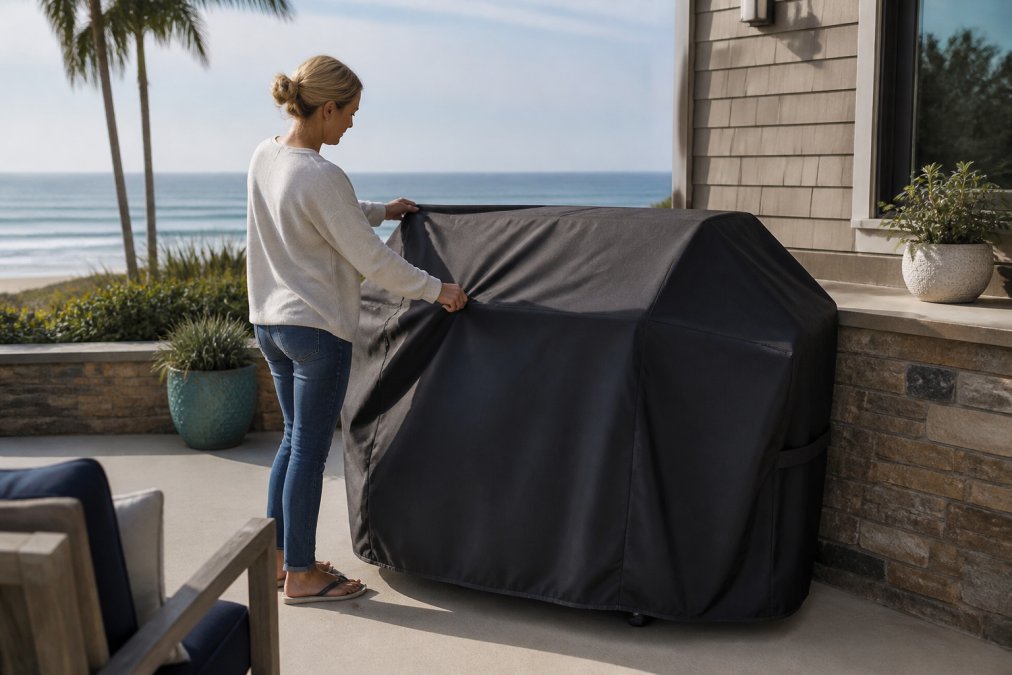
Weatherproof Covers and Accessories
A quality weatherproof cover is the single most impactful accessory for any outdoor grill, especially in coastal and high-humidity climates. The cover blocks salt air, moisture, and UV exposure when the grill is not in use.
What to look for in a weatherproof cover:
- Fitted design: A cover matching your grill's exact dimensions prevents wind from lifting it
- Breathable material: Vented panels or breathable waterproof fabric prevent condensation buildup
- UV resistance: UV-stabilized fabrics maintain their protective properties significantly longer
- Secure fastening: Velcro straps, drawstrings, or buckle closures keep the cover in place during coastal wind events
For built-in grills installed in outdoor kitchen surrounds, a fitted grill head cover protects the cooking surface and control panel.
Grill Maintenance and Cleaning Routines That Extend Lifespan
Grill maintenance in coastal areas follows a straightforward cadence. Regular cleaning with appropriate products prevents the surface pitting that allows corrosion to establish itself beneath the passive oxide layer.
After every use:
- Burn off food residue on high heat for 10-15 minutes after cooking
- Brush cooking grates while still warm with a stainless steel grill brush
- Wipe down exterior stainless panels with a dry cloth to remove moisture and salt deposits
- Replace the weatherproof cover once the grill is fully cooled
Monthly (or more frequently in coastal areas):
- Remove cooking grates and clean the firebox interior
- Inspect burner tubes for blockages
- Clean stainless exterior panels with a stainless steel cleaner applied in the direction of the grain
- Check and tighten any visible fasteners
- Inspect the ignition system and test all burners
Seasonally:
- Remove and inspect burners for corrosion or damage
- Check the propane tank connection or natural gas supply line for wear
- Apply a thin coat of stainless steel polish to exterior panels to reinforce the passive oxide layer
- Inspect the weatherproof cover for damage and replace if compromised
Which Weather Resistant Grill Is Right for You?
The right grill depends on three variables: your climate, your installation type, and how much cooking precision matters to you.
For coastal homeowners building a permanent outdoor kitchen who want maximum corrosion resistance, the AOG L-Series Built-In in 304 stainless steel is the most defensible choice. The material specification is explicit, the construction is heavy-gauge throughout, and the low-profile design integrates cleanly into any surround material.
For homeowners prioritizing cooking precision with digital temperature control, the Fire Magic Echelon E790i (36") or E660i (30") represents the top of the category. The digital thermostat enables the kind of temperature management that makes indirect grilling and extended low-heat cooking reliable.
For homeowners who want Fire Magic's construction quality with a traditional analog experience, the Aurora A790i or A660i delivers the same heavy-gauge stainless platform with an analog thermometer and a cleaner control interface.
For installations where budget matters without sacrificing material quality, the AOG T-Series Built-In provides professional-grade heavy-gauge 300-series stainless construction at the most accessible price point.
Regardless of which grill you choose, pair it with a fitted weatherproof cover and commit to a consistent cleaning routine. The best weather resistant outdoor grills are built to last decades, but they require a basic maintenance partnership to deliver on that promise.
Choosing the right grill for your outdoor kitchen is a decision that compounds over years. A grill that can't handle your climate becomes a liability; one that's properly matched to your environment becomes the centerpiece of your outdoor living space for decades. Eternal Flame Outdoors carries the AOG and Fire Magic built-in lines specifically because their construction standards hold up to the scrutiny we apply on behalf of our customers. Explore our full grill collection or reach out to our team for personalized guidance on which configuration fits your outdoor kitchen, your climate, and the way you cook.
Frequently Asked Questions
Is there a grill that won't rust out?
No grill is entirely rust-proof, but grills built from heavy-gauge 304 stainless steel come closest in most climates. The chromium content in 304-grade steel forms a passive oxide layer that resists surface oxidation. For coastal environments with constant salt air exposure, pairing a 304 stainless steel grill with regular cleaning, marine-grade hardware, and a fitted weatherproof cover significantly extends its lifespan. Ceramic kamado-style grills also resist rust well, since their ceramic bodies don't corrode.
What is the best grill for Florida weather or other coastal climates?
Coastal climates demand grills built from 304 stainless steel throughout — not just the exterior panels. Look for 304-grade burners, grates, and firebox components, since salt air attacks every exposed surface. Built-in gas grills from brands like AOG and Fire Magic use heavy-gauge 304 stainless steel construction and are well-suited to humid, salt-heavy environments. Consistent maintenance, including rinsing and drying after humid weather, matters as much as the material grade itself.
What is the typical lifespan of a high-end stainless steel grill?
A premium 304 stainless steel grill, properly maintained, can last 15 to 20 years or more. Budget-tier grills using thinner steel or lower-grade alloys typically show significant corrosion or warping within 5 to 8 years outdoors. Lifespan depends heavily on climate exposure, cleaning frequency, use of a weatherproof cover, and whether replacement parts — burners, grates, ignition components — are available when needed. Brands that offer strong warranty coverage and parts programs protect your investment further.
Are 304-grade stainless steel grills worth the investment?
For most homeowners who plan to keep a grill outdoors year-round, 304-grade stainless steel is worth the higher upfront cost. The alloy's chromium and nickel content provides genuine corrosion resistance, not just a surface finish that wears away. Grills using 201 or 430 stainless steel cost less initially but typically require earlier replacement, especially in humid or coastal regions. When factoring in long-term performance and parts availability, 304-grade grills deliver better value over a 10- to 15-year horizon.
What features should I look for in a weather-resistant outdoor kitchen grill?
Prioritize 304 stainless steel throughout — not just the hood and exterior. Look for double-walled hood construction for heat retention and moisture protection, a reliable ignition system with backup manual ignition, cast stainless or porcelain-enameled cast iron grates, and a grease management system that prevents buildup. Warranty coverage on burners and the frame signals manufacturer confidence in long-term durability. For outdoor kitchens, confirm the grill supports natural gas conversion if you plan to run a dedicated gas line.

Leave a comment
This site is protected by hCaptcha and the hCaptcha Privacy Policy and Terms of Service apply.