
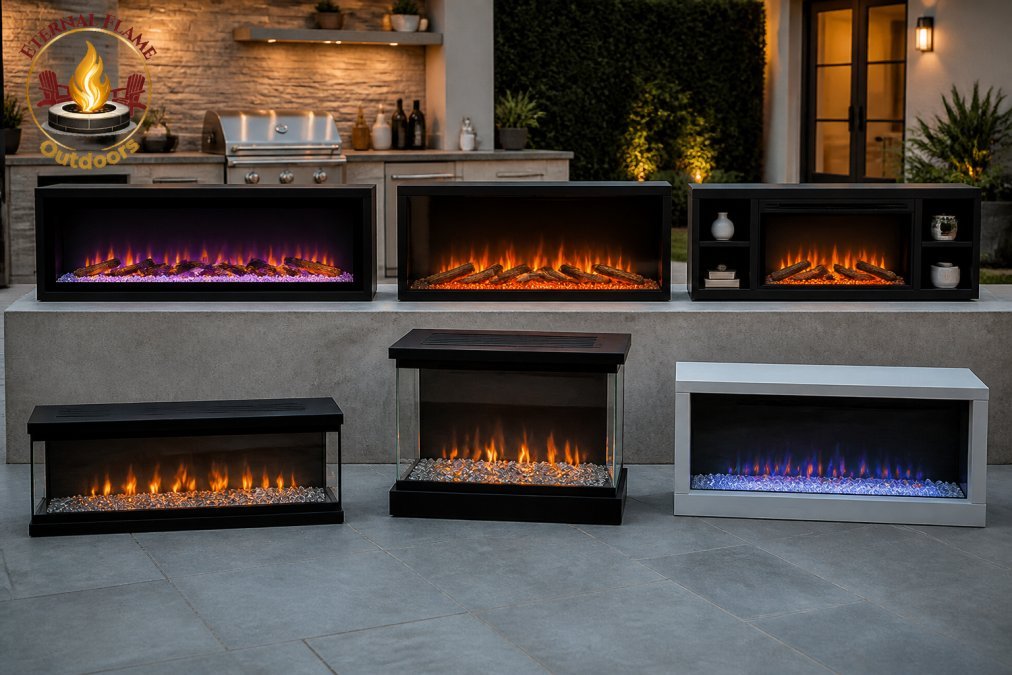
Best Electric Fireplaces for Outdoor Patios (2026)
Table of Contents
- What Makes Outdoor Electric Fireplaces Different From Indoor Models
- Top Outdoor Electric Fireplaces for Patios: Our Picks
- Side-by-Side Comparison: Heat Output, Size, and Price
- Electric Fireplace Installation Requirements for Outdoor Patios
- Regional Climate Compatibility: Choosing the Right Model for Your Area
- Long-Term Durability: Material Degradation and Maintenance
- Patio Layout and Design Considerations
- Conclusion
Last Updated: August 11, 2026
Finding the best electric fireplaces for outdoor patios means navigating a category that looks simple but hides real complexity. At Eternal Flame Outdoors, we work with homeowners, designers, and contractors who assume any indoor electric fireplace can move outside. That assumption leads to expensive failures. Outdoor-rated units are engineered from the ground up for moisture exposure, UV degradation, temperature swings, and outdoor electrical demands. This guide covers what separates a purpose-built outdoor electric fireplace from an indoor unit and how to install one safely for year-round use.

What Makes Outdoor Electric Fireplaces Different From Indoor Models
An outdoor-rated electric fireplace is purpose-built to withstand direct moisture exposure, UV radiation, and wide temperature ranges that would destroy a standard indoor unit within a single season.

Indoor fireplaces use electronics, flame assemblies, and cabinet materials calibrated for climate-controlled environments. Move one onto a covered patio and you introduce humidity cycling, condensation, UV exposure, and temperature extremes that degrade components rapidly, flickering LEDs, corroded control boards, and warped surrounds within 18 months.
Outdoor-rated models address each failure point through IP ratings, UV-protected components, corrosion-resistant materials, and weather-sealed construction.
IP Ratings, UV Protection, and Corrosion Resistance Explained
IP rating is the first specification to check on any outdoor-rated electric fireplace. IP stands for Ingress Protection, and the two-digit code tells you how well the unit resists solids and liquids. For a covered patio installation, look for a minimum IP44 rating, which protects against splashing water from any direction. Units in partially exposed positions benefit from IP55 or higher.
UV-protected components are equally critical. Polycarbonate lenses, flame media, and painted steel surrounds all degrade under prolonged UV exposure. Quality outdoor fireplaces use UV-stabilized materials that resist fading, chalking, and embrittlement. Without UV protection, light-colored surrounds can yellow visibly within one summer in high-sun climates.
Corrosion resistance applies to the cabinet, fasteners, and internal components. Powder-coated steel and stainless steel hardware resist oxidation in humid coastal environments. Cheaper units use zinc-plated hardware that shows rust within a single wet season.
Vent-Free Operation and Weather-Resistant Construction
Every outdoor electric fireplace operates vent-free. There are no combustion byproducts, no gas lines, and no clearance requirements for flue penetrations. The flame effect is produced entirely by LED technology, making the unit safe in enclosed covered patio spaces without ventilation concerns.
Weather-resistant construction goes beyond the IP rating. The best units seal wiring penetrations, use gaskets around glass panels, and route drainage away from electrical components.
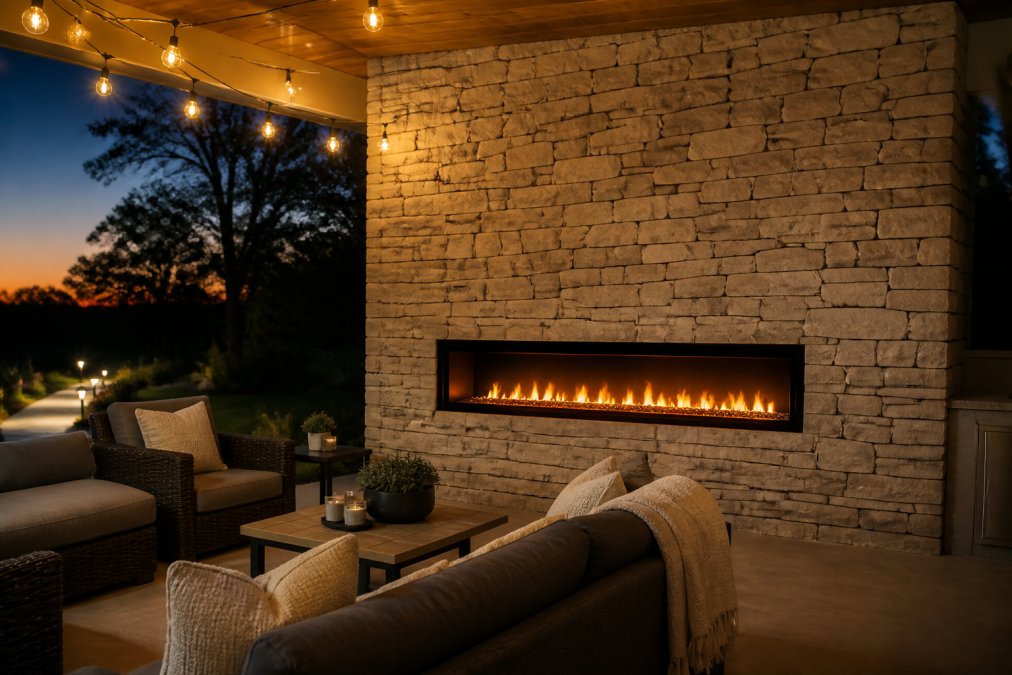
Top Outdoor Electric Fireplaces for Patios
The models below represent the range of outdoor electric fireplace options available through Eternal Flame Outdoors, from purpose-built outdoor linear units to indoor/outdoor-rated built-ins that perform well on covered patios.

True Flame Kalea Bay Outdoor Linear Fireplace with LED Lights
The True Flame Kalea Bay Outdoor Linear Fireplace with LED Lights is the most explicitly outdoor-focused unit in this lineup. Available in 36-inch, 48-inch, 60-inch, and 72-inch widths, and offered in a double-sided configuration, it delivers a ribbon of flame suitable for through-wall or peninsula installations. The LED technology adjusts in intensity for both ambient evening use and brighter daytime settings.
Best for: Covered patios with a dedicated fireplace wall, through-wall installations, and projects where architectural drama is the primary goal.
Amantii Panorama Xtraslim Full View Smart Electric Fireplace
The Amantii Panorama Xtraslim Full View Smart Electric Fireplace is rated for both indoor and outdoor installation. Its slim-profile built-in design recesses into walls with minimal depth requirements. The unit produces 5,000 BTUs of ambient heat and includes customizable decorative media with a black steel surround. WiFi connectivity allows remote operation from a smartphone, which matters outdoors when you are not sitting directly in front of the unit.
Best for: Covered patios with limited wall depth, budget-conscious projects, and installations where smart home integration is a priority.
Modern Flames Landscape Pro Slim Built-In Electric Fireplace
The Modern Flames Landscape Pro Slim Built-In Electric Fireplace brings Modern Flames' Hybrid-FX flame technology to covered patio installations. Heat output runs to 5,000 BTUs on 120V or 10,000 BTUs on 240V, the most meaningful heat specification in this lineup for patios in cooler climates. Multiple installation configurations, including front view, corner, and three-sided bay, make this the most versatile unit for complex patio designs.
Best for: Patios in cooler climates where heat output is a priority, complex installation geometries, and projects where flame realism matters.
Modern Flames Orion Multi-Sided Electric Fireplace
The Modern Flames Orion Multi-Sided Electric Fireplace features Heliovision flame technology that produces a three-dimensional flame effect visible from multiple sides. Available in 60-inch and 100-inch configurations, the scale is appropriate for large covered patio structures, outdoor pavilions, and commercial hospitality applications. The three-sided viewing configuration allows it to divide a large outdoor space into distinct zones while maintaining visual continuity.
Best for: Large covered patios, outdoor pavilions, commercial projects, and installations where a single fireplace needs to serve multiple seating areas.
Side-by-Side Comparison: Heat Output, Size, and Best Use
Model |
BTU Output |
Size Options |
Best For |
|---|---|---|---|
True Flame Kalea Bay (LED) |
Ambiance-focused |
36", 48", 60", 72" |
Outdoor linear architectural installs |
Amantii Panorama Xtraslim |
5,000 BTU |
Multiple widths |
Budget-conscious covered patio builds |
Modern Flames Landscape Pro Slim |
5,000 BTU (120V) / 10,000 BTU (240V) |
60", 100" |
Heat output priority, complex layouts |
Modern Flames Orion Multi-Sided |
Ambiance + zone heating |
60", 100" |
Large patios, multi-sided viewing |
If your covered patio is in a climate where temperatures drop below 50°F regularly and you want functional warmth, the Landscape Pro Slim on a 240V circuit is the most practical choice.
Electric Fireplace Installation Requirements for Outdoor Patios
Installation is where most outdoor electric fireplace projects go wrong. Electrical requirements are specific, clearance rules are non-negotiable, and mistakes range from nuisance tripping to genuine fire risk.
GFCI Outlets, Electrical Load, and Hardwired vs. Plug-In
The National Electrical Code requirements for outdoor receptacles mandate GFCI protection for all outdoor electrical outlets. This is not optional. A GFCI outlet detects ground faults and cuts power within milliseconds, protecting against electrocution in wet environments.
Electrical load planning is critical. A 120V plug-in unit drawing 1,500 watts requires a dedicated 15-amp or 20-amp circuit to avoid nuisance tripping. A 240V hardwired unit requires a dedicated circuit from the panel, typically a 30-amp circuit depending on specifications. Sharing circuits with landscape lighting or other patio appliances creates reliability problems.
For permanent built-in installations, hardwired is the right choice. Plug-in units are easier to install and relocate.
Installation Clearance and Covered Patio Requirements
Covered patio requirements for outdoor-rated electric fireplaces are less restrictive than gas fireplaces, but clearances still matter. Most manufacturers specify minimum clearances from combustible materials on all sides and above the unit, listed in the installation manual.
The "covered patio" requirement means a permanent roof structure that prevents direct rain contact. A pergola with open slats does not qualify for most manufacturer warranties. A solid roof structure, even partial, is what the rating assumes.
According to UL safety standards for electric heating appliances, outdoor-rated electric fireplaces must pass specific environmental exposure tests before receiving outdoor certification. Verify that any unit carries this certification, not just a manufacturer claim of weather resistance.
Regional Climate Compatibility: Choosing the Right Model for Your Area
Climate is the variable most buyers underweight. The right outdoor electric fireplace for a covered patio in Phoenix differs from the right choice for Seattle or Chicago.
High-heat, high-UV climates (Southwest, South): UV degradation is the primary concern. Prioritize units with UV-protected components and powder-coated or stainless steel surrounds. The True Flame Kalea Bay's outdoor-specific construction suits these conditions well.
High-humidity, coastal climates (Southeast, Pacific Coast): Corrosion resistance is the primary concern. Salt air accelerates oxidation on exposed metal. Look for stainless steel hardware, sealed electrical penetrations, and IP44 or higher ratings.
Cold climates (Midwest, Northeast, Mountain West): Heat output becomes a genuine functional requirement. The Modern Flames Landscape Pro Slim on a 240V circuit delivers 10,000 BTUs, providing meaningful zone heating on a covered patio down to around 35-40°F ambient temperature.
Freeze-thaw climates: Most manufacturers recommend disconnecting and storing units not rated for below-freezing temperatures. Check the operating temperature range in specifications before purchasing.
Long-Term Durability: Material Degradation and Maintenance
Long-term durability comes down to three material categories: the cabinet and surround, the LED flame assembly, and the electrical components.
Cabinet and surround: Powder-coated steel holds up well for many years but eventually shows wear at edges and mounting holes. Stainless steel surrounds are more durable but cost more. In high-UV environments, painted surfaces need annual inspection for chalking or fading.
LED flame assembly: LED technology has a long operational lifespan under normal conditions. The risk outdoors is moisture infiltration into the LED housing, causing premature failure. Units with properly sealed LED assemblies and IP-rated housings maintain their flame effect for years.
Electrical components: Control boards, wiring harnesses, and connectors are the most vulnerable components in outdoor applications. Quality outdoor-rated units use conformal-coated circuit boards that resist moisture and sealed connectors that prevent corrosion.
The three most important maintenance tasks are:
- Clean decorative media annually (crystals, logs, or stones accumulate dust)
- Inspect and clean the glass panel to maintain flame clarity
- Check all electrical connections and the GFCI outlet annually
Patio Layout and Design Considerations
The best outdoor electric fireplace for a given patio depends partly on the layout it needs to anchor.
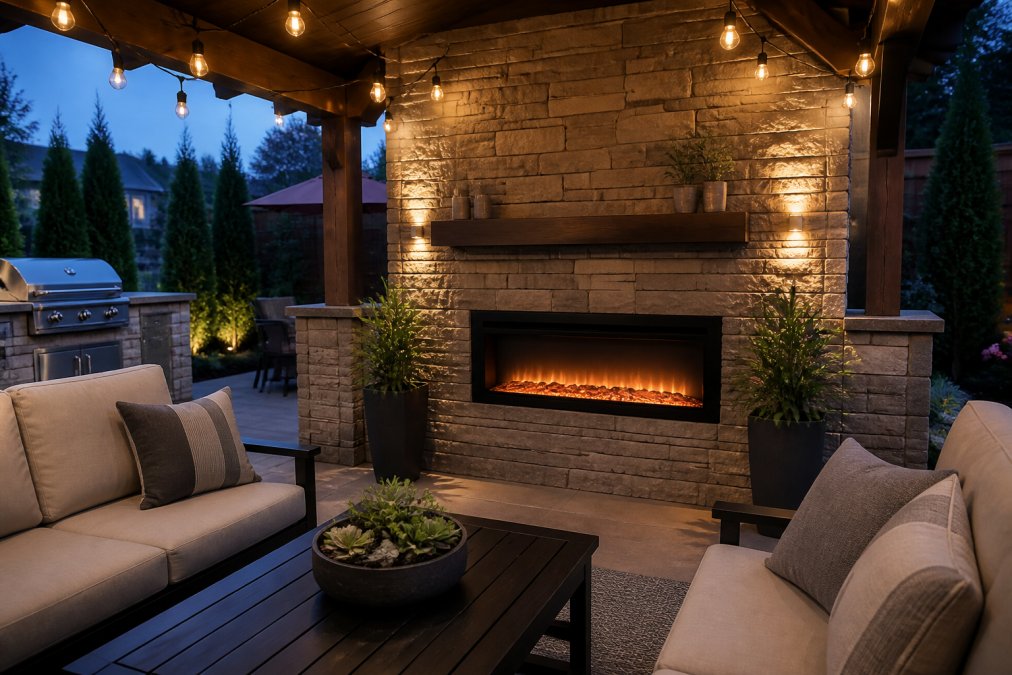
The most common design mistake is treating the fireplace as an afterthought. Electrical rough-in, wall framing for recessed installation, and surround material selection all need to happen early in a patio build. Retrofitting a built-in electric fireplace into a finished patio wall costs significantly more than planning for it from the start.
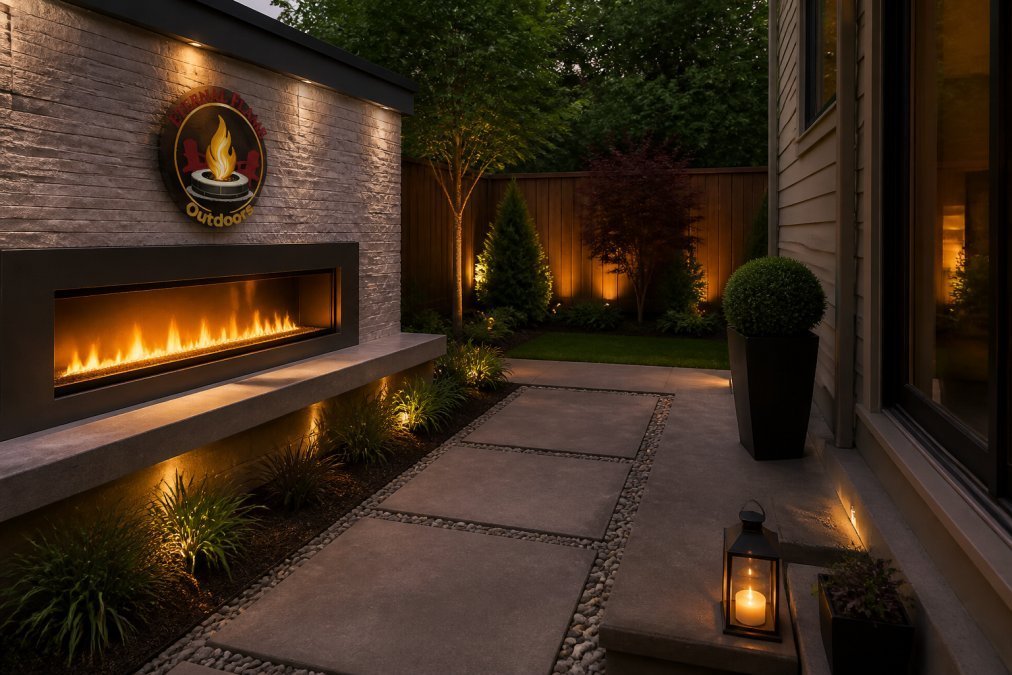
Fireplace as focal point: The most effective patio layouts position the fireplace on the wall that seating naturally faces. For a rectangular covered patio, this is typically the short wall opposite the entry point. The fireplace becomes the visual anchor, and seating arranges itself around it organically.
Multi-sided installations: The Modern Flames Orion's three-sided viewing capability opens a different layout strategy. Rather than anchoring a wall, a peninsula installation divides a large patio into distinct zones, with the fireplace visible from both sides.
Scale and proportion: A common error is selecting a fireplace too small for the wall it occupies. As a general principle, the fireplace width should occupy roughly half to two-thirds of the wall width it anchors. For a 12-foot wall, a 60-inch to 72-inch unit reads correctly.
Integration with patio structure: Recessed installation into a masonry or concrete block wall produces the cleanest aesthetic. The fireplace becomes part of the architecture rather than an appliance mounted to a surface. This approach requires planning wall depth and electrical rough-in during construction.
Choosing the right outdoor electric fireplace for your patio requires matching the unit's outdoor rating, heat output, and form factor to your specific climate, installation type, and design intent. Eternal Flame Outdoors carries the True Flame Kalea Bay, Amantii Panorama Xtraslim, Modern Flames Landscape Pro Slim, and Modern Flames Orion Multi-Sided, each backed by manufacturer warranties and available with expert guidance on installation requirements and regional suitability. Explore the full collection at Eternal Flame Outdoors or reach out to our team for personalized recommendations on the right model for your patio project.
Frequently Asked Questions
Can you use an electric fireplace on an outdoor patio?
Yes, but only models explicitly rated for outdoor use. A standard indoor electric fireplace lacks the moisture protection, UV-resistant components, and corrosion-resistant housing needed for patio environments. Outdoor-rated models carry IP ratings that confirm they can handle humidity and temperature swings. Most are designed for covered patios rather than fully exposed installations. Always verify the manufacturer's outdoor rating before purchasing.
What should I look for when buying an outdoor-rated electric fireplace?
Start with the IP rating, which tells you how well the unit resists moisture and debris. Look for corrosion-resistant housing, UV-protected components, and weather-resistant wiring. For heating, check the BTU output and whether the unit offers zone heating or is ambiance-only. Also confirm whether it requires a hardwired connection or works with a standard GFCI outlet, and verify it meets installation clearance requirements for your covered patio structure.
Do outdoor electric fireplaces provide enough heat for a patio?
It depends on the model and your patio's configuration. Built-in units like the Amantii Panorama Xtraslim deliver 5,000 BTUs of ambient heat, which works well for a smaller covered patio. Open or partially open spaces lose heat quickly, so electric fireplaces are best used for zone heating in defined seating areas rather than warming a large open yard. In colder climates, supplemental heating may still be needed alongside the fireplace.
What is the difference between indoor and outdoor electric fireplaces?
Outdoor electric fireplaces are built with weather-resistant materials, sealed enclosures, and components rated to handle humidity, temperature extremes, and UV exposure. Indoor units use standard electronics and finishes that can corrode, warp, or fail when exposed to outdoor conditions. Outdoor-rated models also meet different electrical safety standards, typically requiring GFCI-protected circuits. The flame effect technology and LED systems may also be sealed differently to prevent moisture intrusion.
Are electric fireplaces safe for covered outdoor areas?
Outdoor-rated electric fireplaces are designed specifically for covered patio use and include thermal safety shutoffs, cool-touch exteriors, and vent-free operation that eliminates combustion risks. They produce no carbon monoxide, making them safe under a covered structure. The key requirement is a GFCI-protected electrical circuit and proper installation clearance from combustible materials. Always follow the manufacturer's installation guidelines and consult a licensed electrician for hardwired installations.

Leave a comment
This site is protected by hCaptcha and the hCaptcha Privacy Policy and Terms of Service apply.