
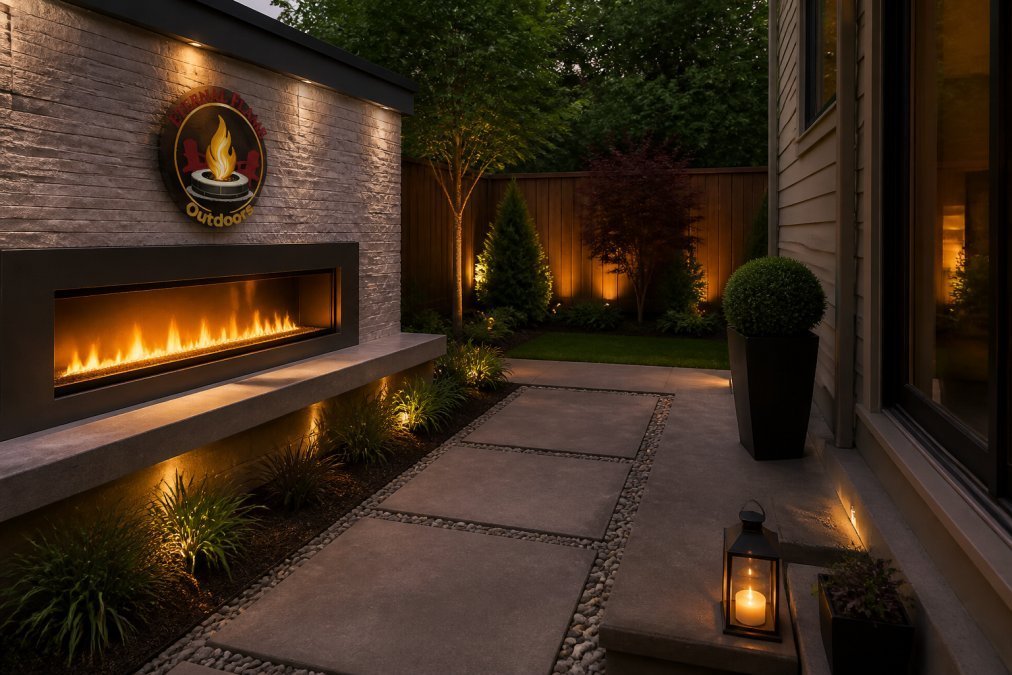
Small Backyard Patio Design Ideas (2026)
Table of Contents
- How to Plan a Small Backyard Patio That Actually Works
- Small Patio Fire Pit Ideas That Fit Any Footprint
- Compact Outdoor Kitchen Designs for Tight Spaces
- Small Backyard Lighting Layouts That Set the Mood
- Vertical Gardening, Privacy Screens, and Container Plants
- Sustainable Materials and Accessible Design Choices
- Maintenance Tips to Keep Your Small Patio Looking Its Best
- Conclusion
Last Updated: August 12, 2026
Planning a small backyard patio forces you to think deliberately about every square foot, and that constraint almost always produces a more intentional, cohesive space than a sprawling yard left to chance. At Eternal Flame Outdoors, we work with homeowners across the country designing outdoor living spaces on tight footprints. Below, we walk through every element of a well-designed small backyard patio, from hardscaping and fire features to lighting, vertical gardens, and sustainable materials.
How to Plan a Small Backyard Patio That Actually Works
Small backyard patio design succeeds or fails at the planning stage, before a single paver is laid or a fire table is ordered. The most common mistake is buying features first and then trying to arrange them. That approach almost always produces a cramped, incoherent result.
Define Zones Before You Buy Anything
A zone is a defined area with a single purpose: dining, lounging, cooking, or a fire feature. Even a 12x15-foot patio can support two distinct zones if planned correctly. Draw the layout on paper first, assigning each zone rough square footage.
A practical approach:
- Dining zone: A bistro set for two needs roughly 6x6 feet, including pull-out chair clearance
- Fire feature zone: Most fire tables require a minimum of 3 feet of clearance on all sides, which means the zone itself needs at least 9x9 feet
- Transition space: Leave at least 36 inches of walkway between zones so the patio doesn't feel obstructed
Once zones are defined, product selection becomes straightforward because you know exactly what dimensions you are working with.
Hardscaping and Flooring: Pavers, Decking, and Outdoor Rugs
Hardscaping is the structural backbone of any small patio. Pavers offer flexibility because they can be cut to fit irregular shapes and replaced individually if one cracks. Decking adds warmth but requires periodic sealing or staining. Outdoor rugs are the fastest way to define a zone without any construction.
For small-scale spaces, large-format pavers (18x18 inches or bigger) create an optical illusion of more space because fewer grout lines mean fewer visual interruptions. According to guidance from the Interlocking Concrete Pavement Institute, proper base preparation, typically 4-6 inches of compacted gravel, is the single most important factor in paver longevity.
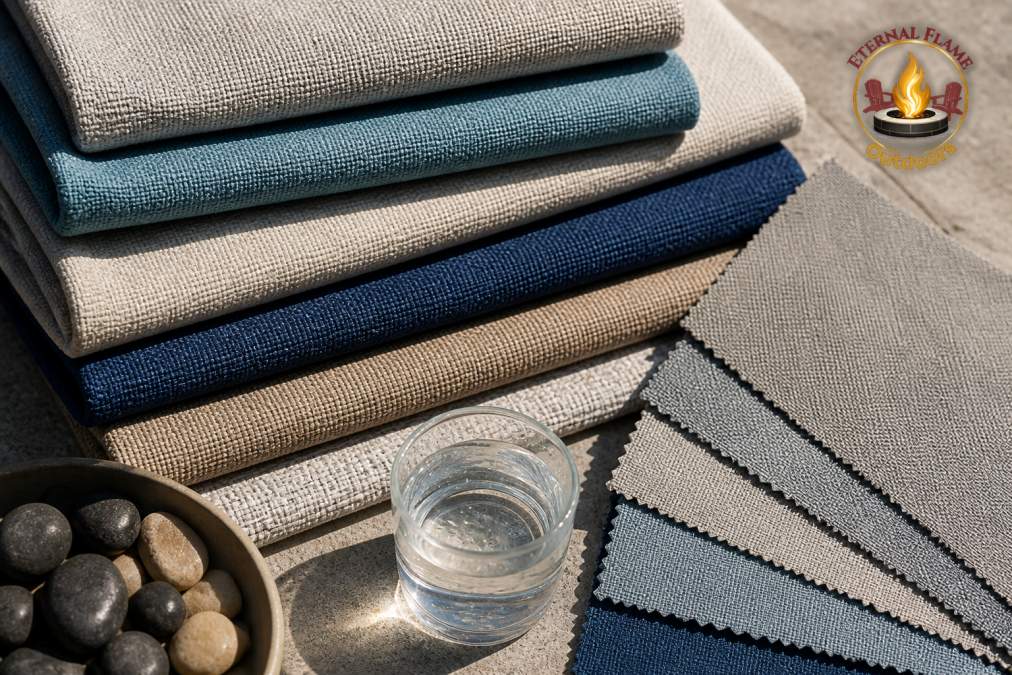
An outdoor rug layered over pavers or decking pulls a zone together visually and adds underfoot comfort. Choose a weather-ready, UV-resistant material; polypropylene rugs are among the most durable for outdoor use and clean up with a garden hose.
Small Patio Fire Pit Ideas That Fit Any Footprint
A fire feature belongs on almost every small backyard patio. The objection most homeowners raise, that their space is too small, is almost always wrong. The real question is which type of fire feature fits the footprint and how to place it safely.
Fire Tables as Space-Efficient Focal Points
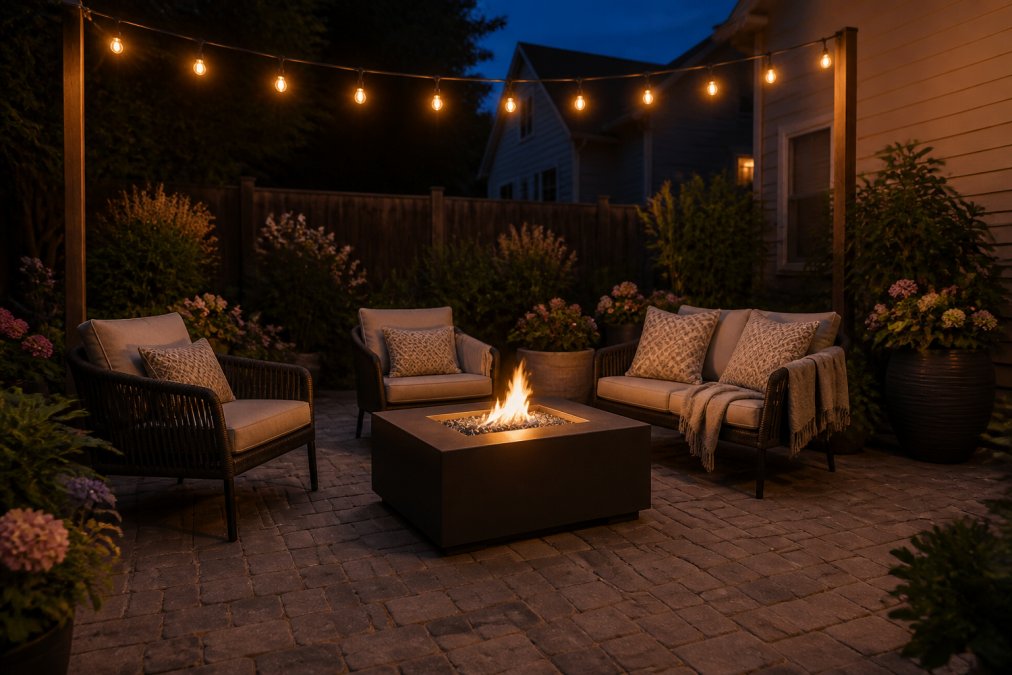
A fire table is the single most space-efficient fire feature for a small patio. Unlike a traditional wood-burning fire pit, which requires a large setback and produces unpredictable smoke, a propane fire table functions as both a focal point and a surface. Guests can set drinks on the surround while gathering around the flame.
The American Fyre Designs Fiesta Propane Fire Table is a strong choice for compact layouts. Its chat-height design positions the flame lower to the ground, reducing visual mass while keeping warmth at conversation level. The American Fyre Designs Contempo Propane Firetable with Tank Drawer conceals the propane tank inside the base, eliminating the external tank that would otherwise consume additional floor space. The Outdoor Plus Alameda Fire Table delivers a clean, contemporary aesthetic with integrated propane storage.


Clearance, Safety, and Surface Requirements
The National Fire Protection Association's outdoor fire safety guidelines specify minimum clearance requirements for gas fire features. For most propane fire tables, manufacturers require a minimum of 36 inches of clearance from combustible materials on all sides. Non-combustible hardscaping, such as concrete pavers or stone, is the preferred surface beneath any fire feature.
Check local ordinances before installation. Many municipalities have specific rules about gas fire features in residential settings, and some require a permit for permanent installations.
|
Fire Feature Type |
Footprint |
Fuel |
Best For |
|---|---|---|---|
|
Chat-height fire table |
Small (under 40" wide) |
Propane |
Intimate seating zones |
|
Dining-height fire table |
Medium (40-60" wide) |
Propane |
Combined dining and fire zone |
|
Fire bowl on stand |
Minimal floor space |
Propane or gas |
Accent focal point |
|
Built-in linear burner |
Varies by installation |
Natural gas |
Permanent, custom installs |
Compact Outdoor Kitchen Designs for Tight Spaces
Most homeowners assume an outdoor kitchen requires a sprawling L-shaped island with 20 feet of counter space. A compact outdoor kitchen is genuinely achievable in a space as narrow as 6 feet of linear run.
Linear Layouts and Built-In Storage
A linear layout, all components arranged along a single wall or fence line, is the most space-efficient outdoor kitchen configuration. Everything faces one direction, keeping the cooking zone contained and leaving the rest of the patio open for seating. A grill, small prep counter, and storage cabinet can occupy as little as 8 linear feet.
Built-in storage is non-negotiable in a small outdoor kitchen. Every tool, accessory, and propane connection that lives in a drawer or cabinet is one less item cluttering the patio surface. Stainless steel doors and drawers are the standard for weather resistance and clean up quickly after a cookout.
What to Prioritize When Space Is Limited
Prioritize the grill first, storage second, and counter space third. A quality grill is the functional heart of any outdoor kitchen. Counter space matters, but a fold-down side shelf or a freestanding prep table can substitute for a built-in counter if the budget or footprint doesn't allow for it.
Prioritization checklist for compact outdoor kitchens:
- Grill sized to cooking output, not to available space
- At least 12 inches of counter space on each side of the grill
- Enclosed storage for propane accessories and tools
- Weatherproof materials throughout (stainless steel, marine-grade polymer)
- Access panel or drawer for propane tank
Small Backyard Lighting Layouts That Set the Mood
Lighting separates the functional from the genuinely beautiful. A well-lit small patio feels larger, more intentional, and dramatically more inviting after dark. The mistake most homeowners make is relying on a single overhead fixture.
Layered Lighting: Ambient, Task, and Accent
Layered lighting combines three distinct types of light sources so no single source dominates. Ambient lighting provides overall illumination, task lighting serves functional areas like cooking zones, and accent lighting draws the eye to focal points like a fire table or vertical garden.
For small patios, a practical layered approach:
- Ambient: String lights draped between posts or along a pergola provide warm, diffused light without harsh shadows. Weatherproof LED string lights with dimmable capacity give you control over the atmosphere.
- Task: A directional LED fixture mounted above the grill or prep area provides focused light for cooking without spilling into the seating zone.
- Accent: Low-voltage path lights along the perimeter of pavers or uplighting aimed at a planter or fire table create depth and visual interest.
Smart Home Integration for Outdoor Lighting
Smart home integration is one of the most underutilized upgrades in small patio design. A smart outdoor lighting system allows you to schedule lights to come on at sunset, dim them when a fire table is lit, and control everything from a phone without stepping outside.
Most smart outdoor lighting systems connect via Wi-Fi or Zigbee and integrate with platforms like Amazon Alexa, Google Home, or Apple HomeKit. You can create lighting scenes: a "dinner" scene that brings task lighting up and dims ambient lights, and a "fire night" scene that turns everything low except accent lighting near the fire table.
According to the U.S. Department of Energy's guidance on LED outdoor lighting, LED fixtures use at least 75% less energy than incandescent equivalents and last significantly longer.
Vertical Gardening, Privacy Screens, and Container Plants
The vertical plane is the most underused resource in small backyard patio design. Going vertical solves two problems at once: it adds greenery and life, and it creates privacy without consuming any floor space.
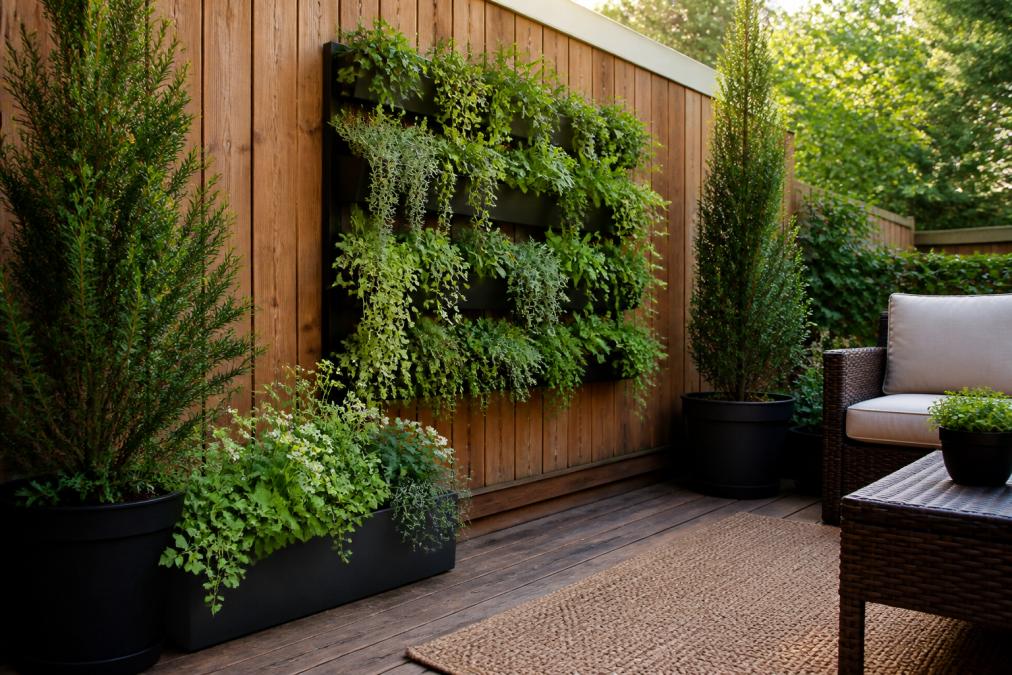
A vertical garden is a planting system mounted to a wall, fence, or freestanding frame. It can hold herbs, succulents, trailing plants, or flowers depending on sun exposure. Narrow planters at the base of a fence line add a second tier of greenery without extending more than 8-10 inches into the patio.
Privacy screens serve a dual function. A lattice panel with climbing plants provides both visual separation from neighbors and a living backdrop that softens the hardscape. Cedar or composite lattice panels are weather-ready and require minimal maintenance. Tall narrow planters with ornamental grasses or bamboo create a natural screen within a single growing season.
Container gardening is the most flexible option because pots can be repositioned as the layout evolves. Group containers in odd numbers, vary the heights, and choose a consistent planter material so the collection reads as intentional rather than random.
Sustainable Materials and Accessible Design Choices
Sustainable material choices are increasingly the default for homeowners who want outdoor spaces that perform well over time and minimize environmental impact.
For hardscaping, permeable pavers allow rainwater to pass through the surface rather than running off, reducing erosion and helping manage stormwater on small lots. Reclaimed wood decking and sustainably sourced cedar reduce the demand for virgin timber. Powder-coated aluminum is one of the most sustainable metal choices for fire features and outdoor structures because it resists corrosion without chemical treatments and is fully recyclable.

The American Fyre Designs Contempo Reclaimed Wood Propane Firetable combines visual warmth with material responsibility.
Accessible design is equally worth addressing. A small patio designed with universal design principles, wider pathways, level transitions between surfaces, and seating at varied heights, serves more people and adapts better as needs change. The ADA National Network's guidance on accessible outdoor spaces recommends a minimum 36-inch clear pathway width for wheelchair access, which aligns well with the zone-separation approach described earlier.
Maintenance Tips to Keep Your Small Patio Looking Its Best
A small patio shows neglect faster than a large one because every square foot is visible and in use. The good news is that a small footprint also means maintenance tasks take less time.
Hardscape maintenance:
- Sweep pavers weekly and rinse with a garden hose monthly to prevent organic buildup in joints
- Re-sand polymeric sand in paver joints every 2-3 years to prevent weed intrusion
- Inspect composite or wood decking annually for soft spots, loose fasteners, and surface weathering
Fire feature maintenance:
- Inspect burner ports on propane fire tables at the start of each season and clear any debris with compressed air
- Check gas connections and hoses annually for cracks or wear; replace any component that shows deterioration
- Cover fire tables during extended periods of non-use with a weather-rated cover
Lighting maintenance:
- Replace any failed LED bulbs promptly; a dark string light section ruins the ambient effect
- Check outdoor electrical connections and conduit annually for moisture intrusion
- Clean fixture lenses with a damp cloth at the start of each season to restore light output
Plant and container maintenance:
- Water container plants more frequently than in-ground plantings because pots dry out faster
- Refresh potting mix in containers every spring to restore nutrient content
- Prune vertical garden plants to prevent overgrowth that can damage mounting hardware
A 30-minute weekly routine covers most of what is needed. The spaces that look best year after year are the ones where small, consistent efforts replace annual overhauls.
Designing a small backyard patio that genuinely works requires deliberate choices at every step. The team at Eternal Flame Outdoors specializes in helping homeowners make those choices, from selecting the right fire table for a compact footprint to configuring an outdoor kitchen along a single wall. Explore our curated collection of fire tables, fire features, and outdoor kitchen equipment, or contact us directly for personalized guidance on your specific space and layout.
Frequently Asked Questions
Can you have a fire pit on a small patio?
Yes. The key is choosing the right format. A compact fire table works well on patios as small as 12x15 feet because it doubles as a surface for drinks and serves as a natural gathering focal point. Check local codes for clearance requirements — most require at least 10 feet between a gas fire feature and any combustible structure. Always place your fire feature on a non-combustible surface like pavers or concrete, never directly on wood decking.
How can I make a small backyard patio look bigger?
A few layout choices create the illusion of more space. Lay pavers diagonally to draw the eye outward. Use an outdoor rug to define a seating zone rather than filling the entire patio with hardscaping. Vertical gardening on walls and fences adds greenery without consuming floor space. Consistent materials across the patio and adjacent areas visually extend the space. Light-colored decking or pavers also reflect more light, making the area feel open.
How do I design a functional outdoor kitchen in a small space?
Focus on a linear layout along one wall or fence line. A grill, a compact prep surface, and a storage unit cover the essentials without requiring a full island build-out. Prioritize a quality grill first, then add storage and prep space around it. Built-in cabinetry rated for outdoor use keeps the area tidy. If a full built-in kitchen is not yet in the budget, a freestanding prep and storage station can hold the space until a permanent installation is feasible.
What are the top outdoor design trends for 2026?
The strongest 2026 trends favor outdoor spaces that function like extensions of the interior. That means durable, weather-ready materials in neutral tones, smart lighting systems controllable from a phone, and multi-functional pieces that serve more than one purpose. Fire tables that provide heat and a surface, compact kitchens with concealed storage, and vertical gardens that add privacy and greenery are all gaining traction. Sustainability is also front of mind, with reclaimed wood finishes and eco-conscious material choices appearing in premium collections.

Leave a comment
This site is protected by hCaptcha and the hCaptcha Privacy Policy and Terms of Service apply.