
Choosing Durable Outdoor Fire Pit Materials
Table of Contents
- Understanding Fire Pit Material Durability
- Natural Stone vs. Manufactured Materials for Fire Pits
- Stainless Steel vs. Cast Iron Fire Pit Performance
- Heat Retention, Thermal Mass, and Structural Integrity
- Best Fire Pit Materials for Coastal Areas
- Fire Pit Maintenance Tips for Long-Term Durability
- Foundation, Installation, and Weather Resistance
- Safety Standards, Fire Brick Lining, and Building Codes
Last Updated: August 21, 2026
Understanding Fire Pit Material Durability
Choosing durable outdoor fire pit materials is one of the most important decisions you'll make when building a backyard fire feature. The materials you select determine how long your fire pit lasts, how well it performs in your climate, and how much maintenance you'll need to invest over time. Durability in fire pit construction isn't just about rust resistance or structural strength, it's about how materials respond to extreme temperature swings, freeze-thaw cycles, intense UV exposure, and the chemical stresses of combustion. A material that performs beautifully in one climate may deteriorate rapidly in another. The best outdoor fire pit materials balance heat tolerance, weather resistance, thermal mass, and long-term maintenance requirements.
Natural Stone vs. Manufactured Materials for Fire Pits
Natural stone and manufactured materials each bring distinct advantages and trade-offs when choosing durable outdoor fire pit materials.
Natural Stone Options
Natural stone, including granite, basalt, limestone, and slate, offers authentic beauty and excellent thermal mass. These materials absorb and retain heat effectively, radiating warmth long after flames die down. Natural stone is non-combustible and doesn't rust, making it inherently fire-resistant.
However, natural stone has real limitations. Many stone types are porous and absorb moisture. In freeze-thaw climates, water trapped inside expands when frozen, causing spalling (surface flaking) and structural failure (usgs.gov). Limestone and sandstones are particularly vulnerable. You'll need to select stone specifically rated for your climate zone. Additionally, natural stone requires sealing to protect against staining and moisture penetration, a process needing renewal every 2-3 years in harsh climates.
River rock is popular because it's affordable and visually striking, but it's problematic around active flames. When river rock absorbs moisture and is exposed to intense heat, steam pressure can cause explosive spalling, with pieces flying outward and creating a safety hazard (the CDC). Urbanite (reclaimed concrete) performs better in most climates, though it still requires proper foundation and drainage.
Natural stone pros:
- Authentic, timeless aesthetic
- Excellent thermal mass and heat retention
- Non-combustible and fire-resistant
- Long lifespan if properly selected for climate
Natural stone cons:
- Vulnerable to freeze-thaw damage in cold climates
- Requires regular sealing and maintenance
- Risk of spalling with certain stone types near direct flames
- Higher initial cost for quality stone
Manufactured Materials
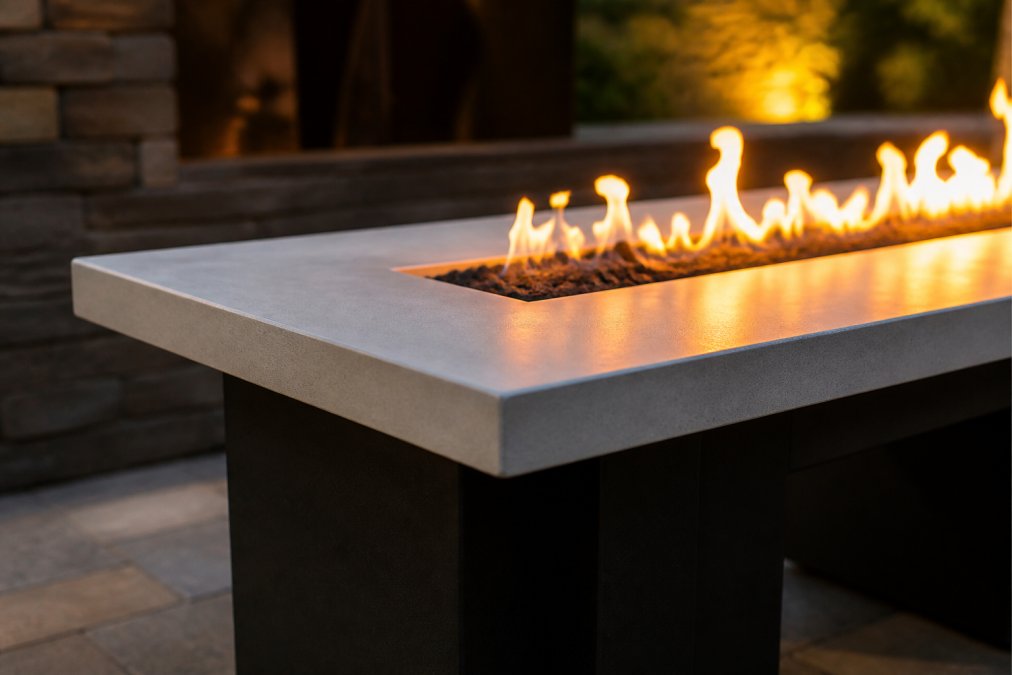
Manufactured materials, including GFRC (glass fiber reinforced concrete), concrete pavers, and composite materials, offer consistency and engineered durability. GFRC is increasingly popular because it's lightweight, can be cast into custom shapes, and resists freeze-thaw cycles better than standard concrete. The fiber reinforcement prevents cracking from thermal stress.
Concrete pavers are affordable and easy to install, making them practical for DIY builders. Standard concrete can crack under thermal stress, especially in climates with wide temperature swings. Using air-entrained concrete (with tiny air pockets that allow expansion) significantly improves freeze-thaw resistance.
Powder-coated steel and aluminum bases are common in manufactured fire tables. These materials are lightweight, durable, and rust-resistant when properly finished. Steel requires regular inspection for coating damage, while aluminum naturally resists corrosion.

Manufactured material pros:
- Consistent quality and predictable performance
- Better freeze-thaw resistance (especially GFRC)
- Lightweight and easier to install
- Wide design flexibility
- Lower maintenance for many options
Manufactured material cons:
- Less thermal mass than natural stone
- Concrete can crack under thermal stress
- Powder coatings require maintenance
- Some materials have shorter lifespans than quality stone
Stainless Steel vs. Cast Iron Fire Pit Performance
When choosing durable outdoor fire pit materials for functional components, the metal choice matters significantly. Stainless steel resists corrosion naturally because of its chromium content, which forms a protective oxide layer. This makes stainless steel ideal for coastal areas, humid climates, and regions with road salt exposure. Stainless steel requires minimal maintenance, occasional cleaning is usually sufficient. The trade-off is cost: stainless steel components are more expensive than cast iron equivalents.
Cast iron distributes heat evenly and retains warmth exceptionally well. It develops a seasoned surface (a protective layer of polymerized oil) that prevents rust when maintained properly. However, cast iron demands consistent care. It must be seasoned regularly, protected from moisture, and kept dry between uses. In humid or coastal climates, cast iron deteriorates rapidly unless actively maintained.
For outdoor fire pits, stainless steel is generally the better choice for durability with minimal maintenance. Cast iron works well in dry climates where you can commit to regular seasoning and protection. Many premium fire pit designs use stainless steel for critical structural and burner components while incorporating cast iron grates for heat distribution.
Heat Retention, Thermal Mass, and Structural Integrity
Thermal mass, the ability of a material to absorb, store, and release heat, directly impacts how long your fire pit radiates warmth. Materials with high thermal mass (like stone and concrete) absorb heat during the fire and continue releasing it for hours afterward. However, high thermal mass requires sufficient material thickness and proper foundation support. You need at least 6-8 inches of solid material to create noticeable heat retention.
Structural integrity depends on how materials respond to thermal cycling, repeated heating and cooling. Materials with different expansion rates can develop stress cracks if not properly engineered. The best designs account for thermal expansion by using flexible joints, proper spacing, and materials that expand at similar rates.
Fire brick lining is a critical component often overlooked. Fire brick is specifically engineered for high-temperature exposure and thermal cycling. It resists spalling, maintains structural integrity under extreme heat, and creates a proper thermal environment for efficient combustion. For wood-burning fire pits, fire brick lining is essential. For gas fire pits, it's highly recommended.
Best Fire Pit Materials for Coastal Areas
Coastal environments present unique material challenges. Salt spray, high humidity, and temperature fluctuations create aggressive conditions that degrade many materials rapidly. Stainless steel is the clear winner for coastal applications. The chromium in stainless steel resists salt spray corrosion far better than standard steel or cast iron. Marine-grade stainless steel (higher nickel content) provides even better protection.
Concrete and stone can work in coastal areas if properly sealed and maintained. However, salt spray accelerates concrete deterioration, and sealing needs more frequent renewal, potentially every 1-2 years instead of every 2-3 years. Natural stone must be selected carefully; porous stones like sandstone absorb salt water and deteriorate faster than dense granite or basalt.
Avoid cast iron, standard steel, and aluminum in coastal environments unless specifically treated for marine use. For coastal fire pit installations, consider materials with minimal maintenance requirements: GFRC composites engineered for coastal use, stainless steel components, and sealed stone with proper drainage.
Fire Pit Maintenance Tips for Long-Term Durability
Material selection is only half the equation. Maintenance practices determine whether your fire pit reaches its potential lifespan.
Regular inspection: Check your fire pit monthly for signs of damage, cracks in concrete, rust spots on metal, spalling on stone, or coating damage. Early detection prevents small problems from becoming structural failures.
Proper drainage: Water accumulation is the enemy of durability. Ensure your fire pit has adequate slope and drainage around the base. In wet climates, consider installing a gravel base and drainage tile to direct water away from the structure.
Seasonal protection: In freeze-thaw climates, prepare your fire pit for winter by removing debris and standing water. Store removable components indoors during winter. Some homeowners cover their fire pits during the off-season to reduce moisture exposure.
Cleaning and sealing: Stone and concrete should be cleaned annually and resealed according to manufacturer recommendations. Use appropriate sealers for your specific material and climate.
Metal maintenance: Stainless steel needs occasional cleaning with appropriate stainless steel cleaner. Cast iron components should be inspected for seasoning integrity and re-seasoned if necessary. Painted or powder-coated surfaces should be touched up if the coating is damaged.
Fire brick care: Fire brick linings should be inspected for cracks or deterioration. Minor cracks are normal, but significant damage requires replacement.
Proper use: Using your fire pit according to design specifications extends its life. Don't exceed recommended fire sizes. Use appropriate fuel (wood for wood-burning pits, natural gas or propane for gas pits). Avoid burning treated wood, plastic, or other materials that create excessive heat or corrosive byproducts.
Foundation, Installation, and Weather Resistance
The foundation is where durability begins. A poorly built foundation causes structural failure regardless of material quality. Your fire pit foundation must provide stable support, manage water drainage, and accommodate thermal expansion.
Proper base preparation: Excavate to undisturbed soil and compact thoroughly. A compacted crushed stone base (4-6 inches) provides drainage and stability. The foundation should slope slightly away from the fire pit structure to direct water outward.
Frost line considerations: In cold climates, your foundation must extend below the frost line, the depth at which soil freezes. Frost heave can crack and displace structures built on shallow foundations. Check local building codes for your frost line depth.
Proper spacing and joints: Materials expand and contract with temperature changes. Leave appropriate gaps between materials and use flexible joints that accommodate movement. Rigid connections between materials with different expansion rates cause cracking under thermal stress.
Weather-resistant construction: Use non-combustible materials for all structural elements. Ensure proper ventilation to prevent moisture accumulation beneath the structure. In wet climates, consider a moisture barrier under the foundation.
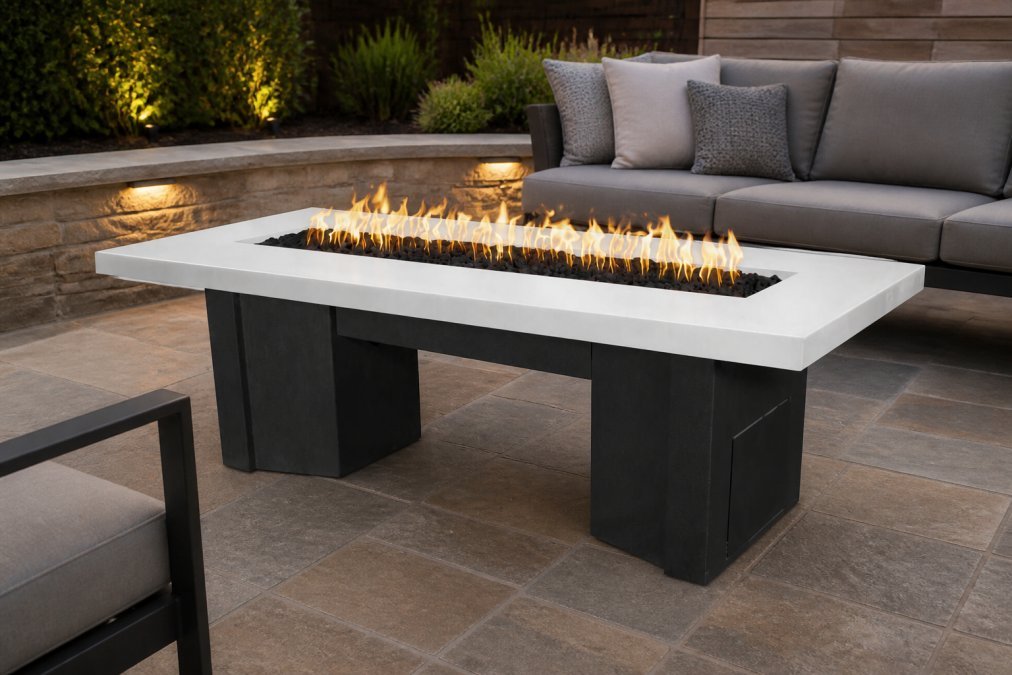
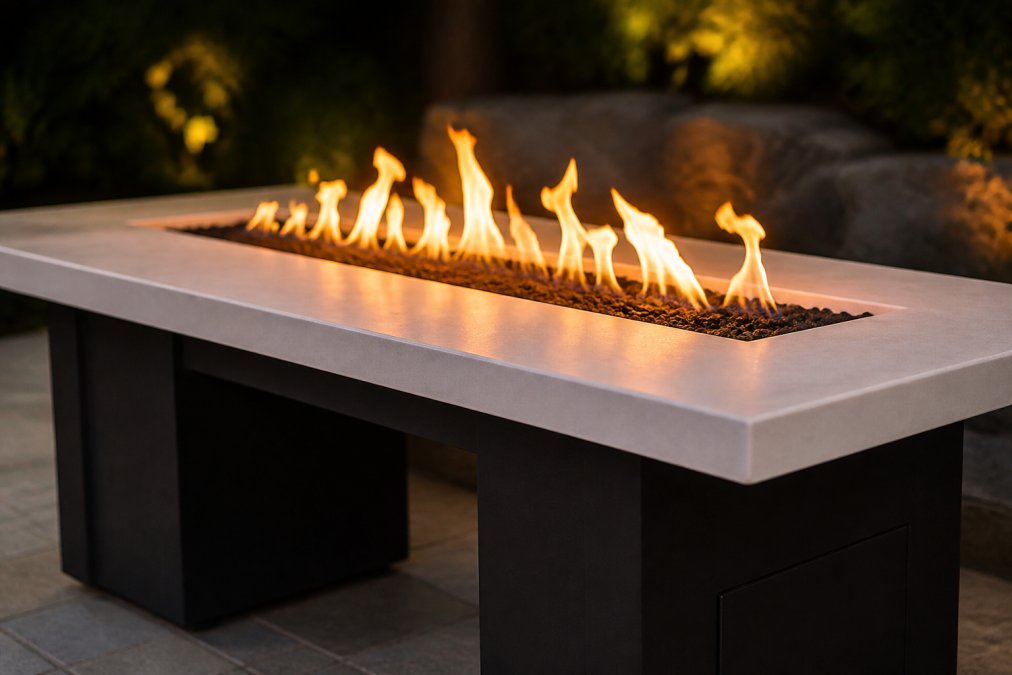
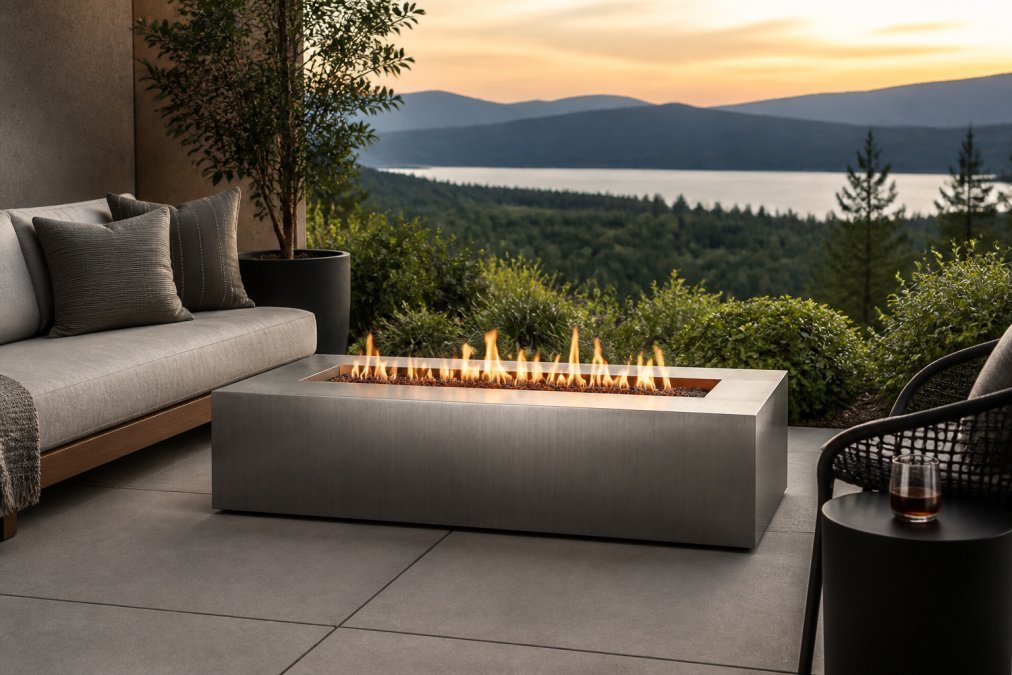
The Outdoor Plus Alameda Fire Table exemplifies engineered durability. Available with either a GFRC top or aluminum top, it features a powder-coated steel base designed for thermal cycling and weather exposure. The modular construction allows proper drainage, and the material combinations account for different expansion rates.

Safety Standards, Fire Brick Lining, and Building Codes
Building codes and safety standards exist because improper fire pit construction creates genuine hazards. Most jurisdictions require fire pits to meet specific clearance standards: typically 10-15 feet from structures and property lines, depending on local codes. Before building, check your local fire marshal's office or building department for specific requirements.
Fire brick lining is essential for wood-burning fire pits and highly recommended for gas pits. Fire brick is engineered to withstand temperatures exceeding 2,000°F and repeated thermal cycling without spalling (peer-reviewed research). Standard brick, concrete block, or stone cannot safely withstand direct flame exposure.
Non-combustible materials are required for all fire pit components in most jurisdictions. Gas fire pits have additional requirements. Proper gas line installation must meet code, typically requiring professional installation by a licensed contractor. Building permits may be required for permanent fire pit installations. A permitted installation protects your homeowner's insurance and resale value.
Building a fire pit that lasts decades requires thoughtful material selection, proper foundation work, and ongoing maintenance. The investment in quality materials and correct installation pays dividends through years of reliable performance. Eternal Flame Outdoors carries premium fire pit collections, including The Outdoor Plus Alameda Fire Table with engineered GFRC or aluminum tops, and American Fyre Designs fire tables built to withstand years of weather exposure and thermal cycling. Our team can help you select materials matched to your climate and design preferences, ensuring your outdoor fire feature becomes a lasting centerpiece of your home. Contact us for personalized guidance on choosing durable outdoor fire pit materials for your specific situation.
Frequently Asked Questions
What is the best material for a durable outdoor fire pit?
The best material depends on your climate and use. Stainless steel offers excellent corrosion resistance and low maintenance, making it ideal for coastal or humid areas. Cast iron provides superior thermal mass and heat retention but requires regular seasoning. Natural stone like granite or slate offers aesthetic appeal and durability but needs proper sealing. For maximum longevity, pair your chosen material with a solid foundation of compacted crushed stone and fire brick lining to ensure structural integrity and heat safety.
How do I choose between stainless steel and cast iron for a fire pit?
Stainless steel resists rust and corrosion better, especially in coastal or wet climates, and requires minimal maintenance. Cast iron retains heat longer and develops character over time but needs regular seasoning and protection from rust. Stainless steel is better for low-maintenance outdoor living; cast iron suits those willing to invest in upkeep for superior heat retention and traditional aesthetics. Consider your climate and maintenance commitment when deciding.
What fire pit materials won't rust in coastal environments?
Stainless steel (316-grade specifically) is the most rust-resistant option for coastal areas due to its chromium content and corrosion resistance. Aluminum and powder-coated steel with marine-grade finishes also perform well. Natural stone like granite, slate, and river rock are non-combustible and won't rust, though they may require sealing. Avoid standard carbon steel and untreated cast iron in salt-air environments; they corrode quickly. Pair any material with proper drainage and a sealed base to prevent moisture damage.
What maintenance do different fire pit materials require?
Stainless steel needs occasional cleaning with appropriate cleaner but resists staining. Cast iron requires regular seasoning and rust prevention with oil or wax. Natural stone should be sealed annually and cleaned of debris. All materials benefit from a covered storage or fire-resistant cover during off-season months. Fire brick lining should be inspected for cracks and replaced if needed. Regular maintenance extends the lifespan of any fire pit material and ensures safe operation.

Leave a comment
This site is protected by hCaptcha and the hCaptcha Privacy Policy and Terms of Service apply.