
How to Prevent Rust on Outdoor Grills
Table of Contents
- Why Rust Forms on Outdoor Grills
- Daily and Weekly Maintenance to Prevent Rust
- Seasoning Grill Grates to Prevent Rust
- Removing Rust from Cast Iron Grates
- How to Clean Stainless Steel Grill Exterior
- Best Grill Covers for Rust Prevention
- Material-Specific Rust Prevention Strategies
- Environmental Factors and Year-Round Protection
Last Updated: August 20, 2026
Why Rust Forms on Outdoor Grills
Rust develops on outdoor grills through metal oxidation. When iron or steel surfaces are exposed to moisture and oxygen, they corrode. Rain, humidity, temperature swings, and salt air all accelerate this process.
The problem compounds because grills operate at high heat. After cooking, hot grates cool and contract, creating microscopic gaps where water seeps in. If that moisture sits on the metal overnight, oxidation begins. Cast iron grates are particularly vulnerable because they're porous. Stainless steel resists rust better, but discoloration and pitting can still occur with neglect.
Understanding why rust forms is the first step toward preventing it. Most homeowners practice reactive maintenance, scrubbing away visible corrosion. The real solution is preventative maintenance: stopping oxidation before it starts by creating barriers between metal and moisture.
Daily and Weekly Maintenance to Prevent Rust
The best defense against rust happens right after you cook.
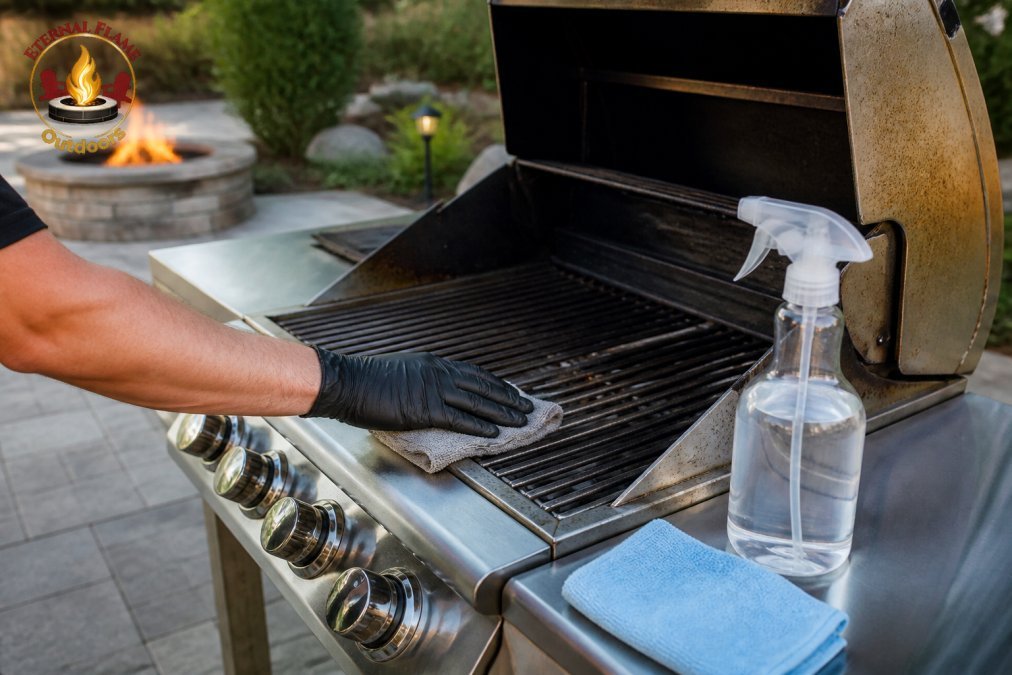
Cleaning grill grates after each use
Clean your grill grates while they're still warm, ideally within minutes of finishing. Warm metal is easier to clean, and you'll remove food residue before it hardens.
Use a stiff wire brush to scrub the grates thoroughly, removing all food particles and buildup. Leftover food and grease trap moisture against the metal surface. After brushing, wipe the grates with a clean cloth or paper towel to remove loose debris and excess moisture.
For cast iron grates, a quick wipe with a lightly oiled cloth prevents rust from developing overnight. For stainless steel, a damp cloth followed by a dry cloth is sufficient. The goal is to leave the surface clean and dry.
Inspecting for early signs of corrosion
Look at your grates and exterior weekly, especially during humid months or in coastal environments. Early rust appears as light discoloration or a thin orange-brown film. Catching it at this stage means you can remove it with minimal effort.
Run your hand over the grates and exterior surfaces, feeling for rough spots or pitting. Pitting, small holes where corrosion has begun, requires prompt attention. If you spot light surface rust on cast iron, a quick scrub with a wire brush and a light coat of vegetable oil will stop it. For stainless steel, a specialized stainless steel cleaner will remove discoloration before it becomes permanent.
Seasoning Grill Grates to Prevent Rust
Seasoning is one of the most effective rust prevention strategies for your grill.
Why seasoning works as a moisture barrier
Seasoning creates a protective polymer layer on the metal surface that acts as a barrier between the metal and moisture. When you apply oil and expose it to high heat, the oil polymerizes, it bonds to the metal at a molecular level. This isn't a thin coating that washes away; it's a durable, heat-resistant shield.
The seasoning process works best on cast iron because its porous surface allows the oil to penetrate and bond deeply. Each time you season, you're building up layers of protection. Over time, a well-seasoned cast iron grate becomes highly resistant to rust.
Even stainless steel benefits from a light seasoning, though the effect is less dramatic. A thin oil coating helps prevent moisture from sitting directly on the surface and causing discoloration.
How to season cast iron and steel grates
Heat your grill to medium-high temperature and let it run for 10-15 minutes to ensure the grates are hot and any moisture has evaporated.
While the grates are hot, apply a thin coat of high-heat oil, vegetable, canola, or grapeseed oil all work well. Use a cloth or paper towel to apply the oil in a thin, even layer. You want coverage, not excess; heavy coating will smoke and create buildup rather than a protective layer.
Keep the grill running at medium heat for another 5-10 minutes to allow the oil to polymerize. You'll notice the grates develop a slightly darkened appearance and may see some smoke, this is normal.
Turn off the grill and let it cool completely. Repeat this process every 2-4 weeks during the grilling season, or whenever the seasoning layer wears thin. After each use, a quick wipe with an oiled cloth maintains the seasoning between full sessions.
Removing Rust from Cast Iron Grates
If rust has already appeared, the removal process depends on how deep the corrosion goes.
Light surface rust vs. deep corrosion
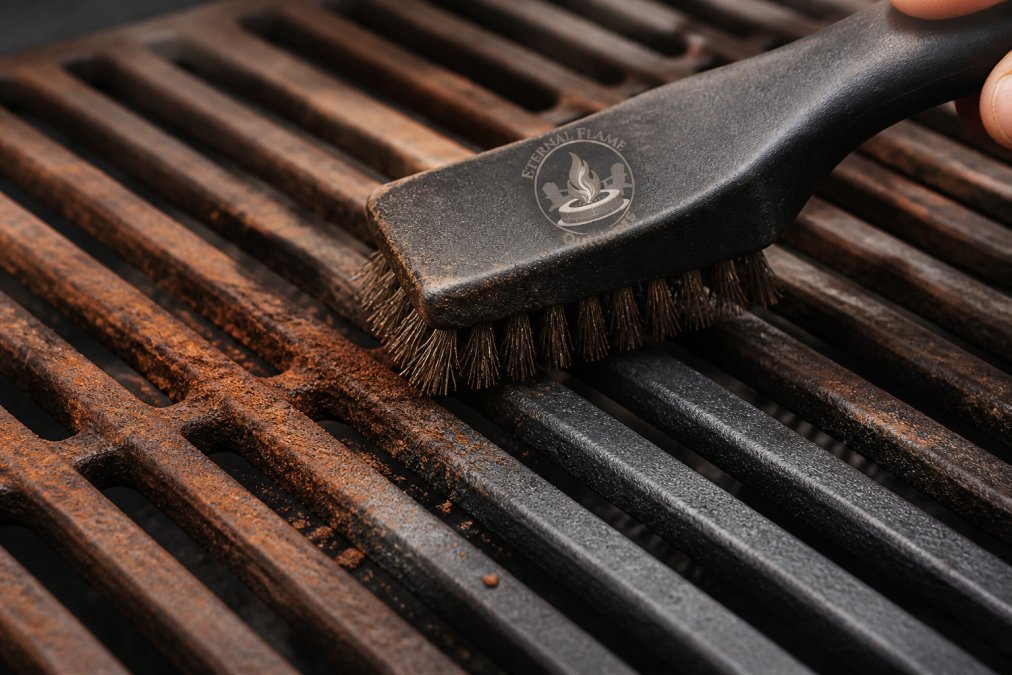
Light surface rust appears as a thin, orange-brown discoloration on the surface. Deep corrosion shows as pitting, small holes where rust has eaten into the metal. If you run your finger across it, you feel texture and irregularity.
Most rust you'll encounter on a grill is light surface rust, especially if you're catching it during weekly inspections.
Step-by-step rust removal process
For light surface rust:
Use a stiff wire brush or steel wool to scrub the affected area with firm pressure in circular motions. This typically takes 2-5 minutes depending on rust amount.
Wipe away debris with a damp cloth, then dry completely. Apply a thin coat of vegetable or canola oil to the cleaned area to prevent new rust from forming immediately. Season the grate following the process described earlier to restore the protective layer.
For deeper rust or stubborn spots:
A wire wheel attachment on a power drill works faster than hand scrubbing, but requires care to avoid damaging the grate. Alternatively, use a chemical rust remover designed for grills, following product instructions. After removing rust chemically, dry the grate completely and apply oil immediately to prevent flash rust. Then season the grate to restore protection.
How to Clean Stainless Steel Grill Exterior
Stainless steel resists rust better than cast iron, but discoloration and staining can occur and are harder to reverse than light surface rust.
Choosing the right stainless steel cleaner
Avoid harsh abrasive cleaners or steel wool, which can scratch the surface and create small pits where corrosion can start.
Use a dedicated stainless steel cleaner or a mild solution of white vinegar and water. Apply the cleaner with a soft cloth, rubbing in the direction of the grain if the stainless steel has a grain pattern. For stubborn stains, let the cleaner sit for a few minutes before scrubbing gently.
Protecting stainless steel from discoloration
After cleaning, dry the stainless steel completely with a clean cloth. Moisture left on the surface causes water spots and discoloration.
Apply a thin coat of stainless steel protectant or food-grade mineral oil to create a temporary barrier against moisture and help prevent fingerprints and water spots. Reapply every 2-4 weeks or after cleaning. Wipe down the grill exterior monthly with a stainless steel cleaner to prevent buildup of grime and mineral deposits.
Best Grill Covers for Rust Prevention
A quality grill cover is one of the most effective investments you can make for rust prevention. It reduces moisture exposure dramatically, especially during rain, snow, and high-humidity periods.
How protective covers reduce moisture exposure
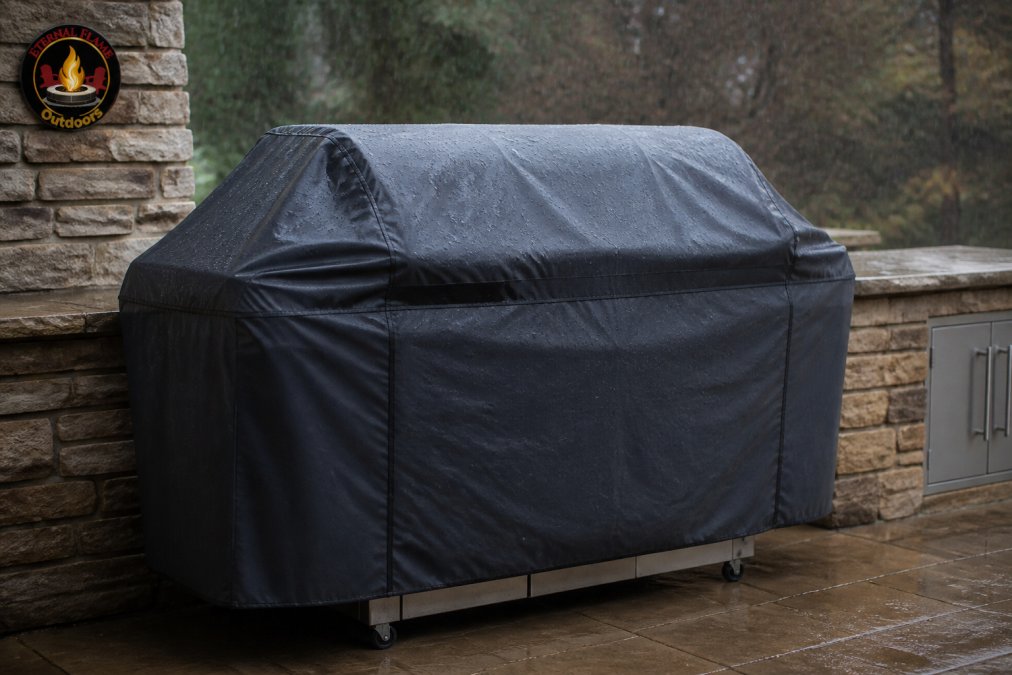
A cover prevents rain from falling directly on your grill and reduces humidity exposure by creating a barrier between the grill and the air. During humid months or in coastal environments, this barrier makes a measurable difference in rust development.
However, a cover only works if it's actually used. Quality matters, a thin, cheap cover won't shed water effectively. Look for covers made from heavy-duty, water-resistant material with reinforced seams and secure fastening straps that fit snugly to minimize gaps where moisture can enter.
Ventilation is also important. A cover that traps moisture underneath is almost as bad as no cover at all. Look for covers designed with ventilation panels or materials that allow some air circulation while blocking rain.
Winterizing and long-term storage
If you won't use your grill during winter, proper storage is critical for rust prevention.
Clean the grill thoroughly before storing it, removing all food residue, grease, and buildup. Season the grates one final time before storage to create a protective layer that lasts through the off-season.
If possible, store the grill in a covered area like a garage or shed. If outdoor storage is your only option, use a high-quality cover and consider placing the grill under an eave or overhang to reduce direct rain exposure.
Before using the grill again in spring, inspect the grates and exterior for any rust that may have developed. Clean and season as needed to restore the surface.
Material-Specific Rust Prevention Strategies
Different grill materials require slightly different approaches to prevent rust effectively.
Cast iron vs. stainless steel vs. porcelain-enameled grates
Cast iron is porous and requires regular seasoning to prevent rust. It's the most maintenance-intensive option but also the most forgiving, light rust is easy to remove and doesn't indicate permanent damage.
Stainless steel resists rust better but is prone to discoloration and staining. It requires regular cleaning and protection with specialized cleaners and oils. Once staining occurs, it can be difficult to remove completely.
Porcelain-enameled grates have a ceramic coating over steel, providing excellent rust resistance as long as the coating remains intact. If the coating chips or cracks, rust can develop quickly beneath it. Avoid dropping or striking these grates, and use a soft brush for cleaning to prevent damaging the coating.
Each material benefits from the same core maintenance: cleaning after each use, regular seasoning or protection, and prompt attention to early signs of corrosion.
Chemical vs. natural rust inhibitors
Natural rust inhibitors like vegetable oil, canola oil, and mineral oil work well for maintenance seasoning. They're food-safe, affordable, and effective when applied regularly.
Chemical rust inhibitors are stronger and longer-lasting. Specialized grill-care products designed for rust prevention often contain compounds that create more durable protective layers. For regular maintenance, natural oils are sufficient. For long-term storage or in coastal environments, a chemical rust inhibitor applied before storage provides extra insurance.
Environmental Factors and Year-Round Protection
Where you live and how you store your grill affects rust development significantly.
Coastal environments and high-humidity climates
Salt air accelerates rust formation dramatically. If you live near the ocean, rust prevention becomes even more critical. Use your grill cover consistently, clean and season more frequently than homeowners in dry climates, and consider applying chemical rust inhibitors during storage.
In high-humidity climates, moisture is constantly in the air, so barriers between metal and moisture become essential. Seasoning, covers, and regular cleaning are non-negotiable.
Seasonal maintenance routines
Develop a maintenance schedule that matches your climate and usage patterns. During the active grilling season, clean grates after each use and inspect weekly for early rust.
As the season winds down, increase the frequency of protective treatments. Season cast iron grates more often, and ensure the cover is in place whenever the grill isn't in use.
Before winter storage, perform a thorough cleaning and final seasoning. After winter storage, inspect carefully for any rust that developed during the off-season and address it immediately.
At Eternal Flame Outdoors, we understand that a quality grill is an investment in your outdoor living space. Preventing rust ensures your grill remains functional and beautiful for years to come. Whether you're looking for guidance on seasonal care or need to explore grill options designed with rust resistance in mind, we're here to help. Contact us for personalized advice on maintaining your grill or to discover our selection of premium grills from trusted brands built to withstand the elements with proper care.
Frequently Asked Questions
Is it safe to cook on rusted grill grates?
Light surface rust is generally not harmful to consume, but it indicates your grill needs maintenance. Heavy rust can flake into food and compromise the non-stick properties of the grates. More importantly, rust signals that oxidation is progressing and your grill's structural integrity is at risk. Address rust promptly to prevent deeper corrosion and extend your grill's lifespan. If rust is extensive or deep, replace the grates rather than cook on them.
How often should I clean my grill to prevent rust?
Clean grill grates after every use while they're still warm, this removes food debris and moisture that accelerate corrosion. Weekly, inspect the grill exterior and interior for early signs of discoloration or surface rust. Monthly, apply a protective oil coating to cast iron grates and check your grill cover for damage. In humid or coastal environments, increase inspection frequency to every two weeks. Seasonal deep cleaning before and after winter storage is essential for long-term rust prevention.
Does covering a grill actually prevent rust?
Yes, a quality protective cover significantly reduces rust risk by blocking moisture, humidity, and rainfall from reaching the grill surface. However, covers only work if they're breathable, trapping moisture underneath accelerates corrosion. Ensure your grill cover allows air circulation and is removed periodically to let the grill dry. In coastal environments or high-humidity climates, a cover combined with regular maintenance is crucial. Even with a cover, seasonal cleaning and protective oil applications are necessary for complete rust prevention.
What's the difference between stainless steel and cast iron when it comes to rust prevention?
Stainless steel resists rust naturally due to a chromium oxide layer that forms on its surface, making it ideal for grill exteriors and some grate materials. However, stainless steel can still develop discoloration and pitting corrosion, especially in coastal environments. Cast iron requires seasoning, a protective oil coating, to prevent rust, but it develops superior non-stick properties over time with proper maintenance. Porcelain-enameled grates offer rust resistance without seasoning but can chip, exposing the underlying steel. Choose your maintenance strategy based on your grill's material composition.

Leave a comment
This site is protected by hCaptcha and the hCaptcha Privacy Policy and Terms of Service apply.