
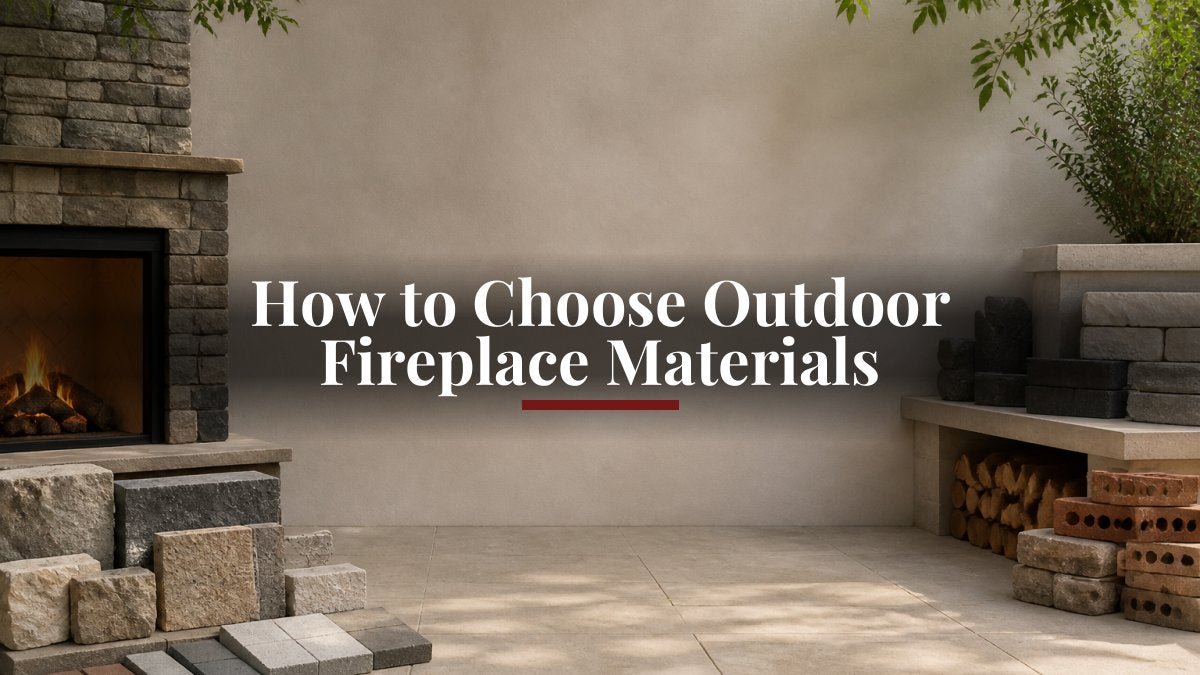
How to Choose Outdoor Fireplace Materials
Table of Contents
- What to Know Before You Choose Outdoor Fireplace Materials
- How to Choose Outdoor Fireplace Materials by Fuel Type and Heat Exposure
- The Best Materials for an Outdoor Fireplace, Ranked by Use Case
- Outdoor Fireplace Firebrick Lining: What It Does and When You Need It
- Outdoor Fireplace Materials for Cold Climates and Freeze-Thaw Cycles
- Outdoor Fireplace Maintenance by Material
- Conclusion: Matching Materials to Your Space
- Frequently Asked Questions
Last Updated: October 14, 2026
What to Know Before You Choose Outdoor Fireplace Materials
Choosing outdoor fireplace materials comes down to one question: what will this surface face? Heat, water, and freeze-thaw cycles destroy the wrong material fast; the right one lasts decades. At Eternal Flame Outdoors, we help homeowners and builders match materials to climate, fuel type, and design goals. Start with three facts:
- Fuel type decides your firebox materials. Wood burns hotter and dirtier than gas.
- Climate decides your finish materials. Freeze-thaw cycles crack porous stone.
- Placement decides everything else. Wind exposure and roof cover change the rules.
Get these wrong and even expensive stone fails within a few seasons. Get them right and a mid-range material outlasts a premium one installed badly.
How to Choose Outdoor Fireplace Materials by Fuel Type and Heat Exposure
Fuel type is the first filter. Wood-burning fireplaces need materials rated for direct flame contact. Gas fireplaces run cooler at the firebox but still throw serious heat at the facing.
Wood-Burning Fireplaces: Materials That Touch the Flame
Wood fires demand firebrick and refractory mortar at the firebox; standard brick spalls and crumbles under repeated heating and cooling. The facing and chimney still need heat-rated materials: natural stone, brick, stucco over a proper substrate, or manufactured stone rated for the application. The smoke path matters as much as the firebox, a chimney built from the wrong material cracks and leaks smoke indoors.
Gas Fireplaces: Where Finish Materials Matter More Than Fire Ratings
Gas fireplaces give you far more finish freedom because the firebox is factory-built and rated. Common options include natural stone veneer, manufactured stone, brick and thin brick, stucco, tile over cement board, and metal surrounds. The catch is heat clearance: every gas unit lists minimum clearances to combustibles, and building past those numbers creates a fire risk.
The Best Materials for an Outdoor Fireplace, Ranked by Use Case
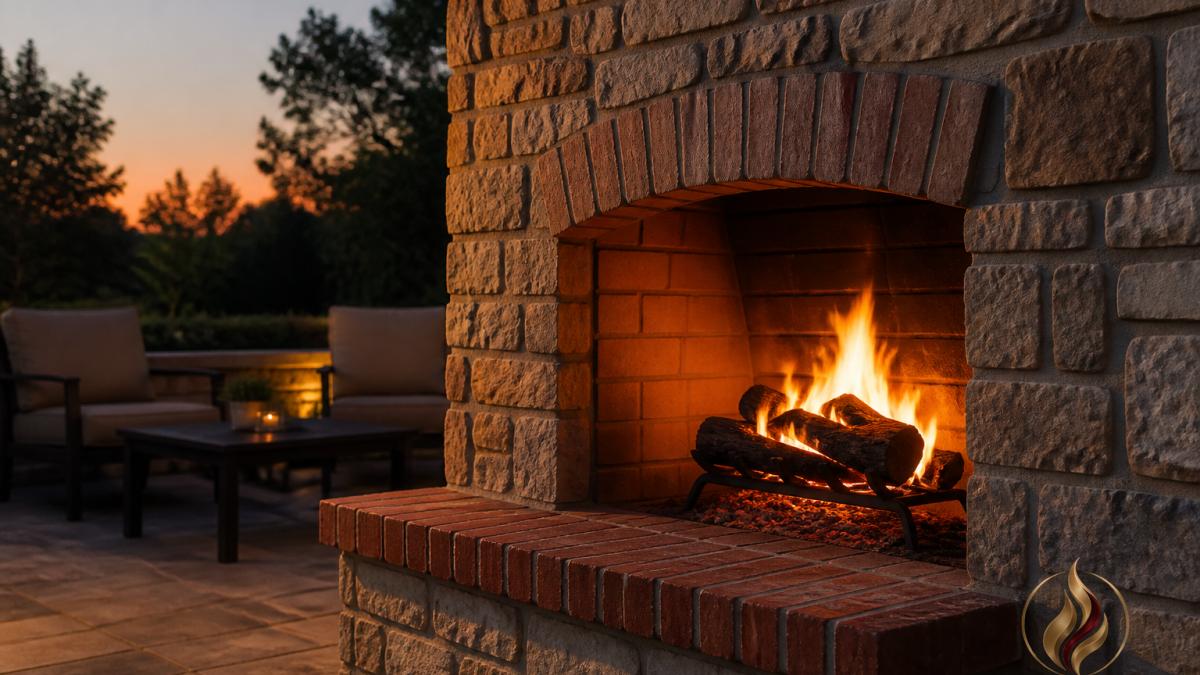
No single material wins everywhere. Match it to your climate, budget, and use.
Natural Stone, Manufactured Stone, Brick, and Concrete Compared
| Material | Best For | Watch Out For | Relative Upfront Cost |
|---|---|---|---|
| Natural stone | Cold climates, high-end builds | Weight, skilled mason required | Highest |
| Manufactured stone | Budget builds, quick installs | Can fade or crack in harsh freeze-thaw | Low to moderate |
| Brick | Classic look, wood-burning | Needs sealing in wet climates | Moderate |
| Concrete | Modern designs, custom shapes | Cracks without reinforcement | Moderate to high |
| Stucco | Smooth, seamless finishes | Cracks if substrate moves | Low |
| Tile | Widest design range | Needs outdoor-rated product and cement board | Low to moderate |
| Metal | Contemporary gas surrounds | Clearance from firebox required | Moderate |
Natural stone handles freeze-thaw best; its density resists water absorption but means higher cost and heavier structural demands. Manufactured stone gives you the stone look for less and works in mild climates, but can spall in hard winters if moisture gets behind it. Brick remains a classic choice for wood-burning fireplaces, pairing naturally with firebrick linings, seal it in wet climates.
A Decision Framework: Built-In Versus Portable
Before you pick a material, decide whether you're building in or placing a portable unit, the material question changes entirely.
Choose built-in when:
- You own the home and plan to stay at least five years
- You have a dedicated patio or hardscape zone with room for a footing
- You want a masonry chimney, a specific finish, or a matched hardscape look
Choose portable when:
- You rent, or you may move within a few years
- You want a fire feature this season without permitting or construction
- Your yard is small, sloped, or has no gas line access
Choose a factory-built gas fireplace when:
- You want the built-in look with a rated firebox and simpler clearances
- You want push-button ignition and no ash cleanup
- You want to finish the surround in stone, stucco, or tile without a masonry firebox
Installation and Planning Sequence
A built-in fireplace is a construction project. Most contractors follow this sequence; skipping a step usually means rework.
- Site selection. Confirm setbacks from the home, property lines, and combustible structures, and check local code before you dig.
- Utility planning. For gas, confirm line size, route, and shutoff location. For wood, plan chimney height and clearance to the roofline.
- Footing and substrate. A masonry fireplace needs a reinforced concrete footing sized for the finished weight. Manufactured stone and stucco need a stable substrate, cement board or masonry, not bare framing.
- Firebox and flue. Wood-burning units need firebrick and refractory mortar; gas units use a factory-rated firebox and listed vent.
- Finish materials. Apply the facing only after clearances are confirmed against the manufacturer's listing.
- Commissioning. Test the burn, check draft, verify clearances, and confirm shutoff and safety features work before first use.
Metal, Stucco, and Tile: Where Each Works and Where It Fails
Metal surrounds work best with gas units. They heat fast, cool fast, need clearance from the firebox, and suit contemporary designs.
Stucco gives a smooth, seamless finish over masonry or cement board, but cracks in cold climates if the substrate moves.
Tile offers the widest design range. It needs a cement board substrate and flexible thinset. Outdoor-rated tile resists frost; indoor tile does not.
Permits, Codes, and Insurance
Most jurisdictions treat a built-in outdoor fireplace as a structure, not furniture, meaning permits, inspections, and sometimes a conversation with your insurer before you break ground.
- Permits. Many municipalities require a building permit for a masonry fireplace or any feature with a chimney. Check with your local building department before ordering materials.
- Setbacks. Minimum distances from the home, property lines, and combustible fences vary by jurisdiction. Confirm the numbers for your address.
- Burn restrictions. Some areas restrict wood-burning on certain days or require a spark arrestor; gas units typically avoid these restrictions.
A short call to your building department and insurance agent before you buy materials saves far more time than a failed inspection.
Long-Term Operating Costs
Upfront material cost is only part of the picture; plan for ongoing fuel, maintenance, and repair costs.
- Fuel. Gas units run on a utility line or propane tank; wood units need a steady supply of seasoned firewood. Gas is typically more predictable month to month.
- Maintenance. Stone and brick need periodic resealing. Gas burners and ignition systems need seasonal inspection. Wood chimneys need annual cleaning.
- Repairs. Mortar joints, cracked tile, and rusted metal are the most common repairs. Dense materials fail less often but cost more to replace.
For a full breakdown of ongoing care, see our guide to outdoor fireplace maintenance.
Outdoor Fireplace Firebrick Lining: What It Does and When You Need It
An outdoor fireplace firebrick lining is a heat-resistant brick layer inside the firebox that protects the structure from direct flame and thermal shock.
Firebrick handles temperatures that would destroy standard brick and spreads heat evenly, reducing cracking in the surrounding masonry.
The Outdoor Plus Regal 60" Round GFRC Concrete Gas Fire Pit →
You need a firebrick lining if:
- You burn wood or any solid fuel
- The firebox sees direct flame contact
- The fireplace runs for long periods
You may not need one if:
- The unit is a factory-built gas fireplace
- The manufacturer lists a rated firebox
- The fireplace is decorative only
Firebrick must be set with refractory mortar, not standard mortar. Standard mortar breaks down under heat and lets the lining shift.
Outdoor Fireplace Materials for Cold Climates and Freeze-Thaw Cycles
Freeze-thaw cycles are the top killer of outdoor fireplaces in cold climates. Water seeps into porous materials, freezes, expands, and cracks them from the inside, any material that holds water will eventually be split by it.
Why Some Materials Survive and Others Don't
What separates a material that lasts decades from one that fails in three winters is water absorption and pore structure.
- Low absorption, dense pore structure. Granite, slate, and well-fired brick shed water before it can soak in, the safest bets in cold climates.
- Moderate absorption. Limestone and cast concrete perform well when sealed and detailed correctly, but need more attention.
- High absorption, weak pore structure. Many manufactured stone products and indoor-rated tile absorb water and spall when it freezes.
Materials that hold up best: natural stone (granite, limestone, slate), brick with proper sealing, and concrete with air entrainment and reinforcement. Materials that struggle: porous manufactured stone, indoor-rated tile, and unsealed stucco.
Weather Protection: Flashing, Caps, and Drainage
Proper flashing and a chimney cap matter as much as the material itself; water entering from the top does more damage than water hitting the sides.
- Chimney cap. Keeps rain out of the flue and off the crown, a cracked crown is one of the most common entry points for water.
- Flashing. Where the chimney meets a roof or wall, flashing directs water away from the joint. Failed flashing shows up as interior staining.
- Weep holes and drainage planes. In veneer assemblies, weep holes let moisture escape; blocked weep holes trap water behind the veneer, where it freezes and pushes the finish off.
A Seasonal Maintenance Calendar
Cold-climate fireplaces need attention at three points in the year.
Fall (before the first freeze)
- Clean the firebox and flue
- Inspect mortar joints for cracks and repoint as needed
- Apply sealer to stone, brick, or concrete surfaces
Mid-winter (after heavy snow or ice)
- Clear snow and ice from the cap and crown, do not chip at it with a metal tool
- Check for new cracks in the firebox or facing
- Look for staining that suggests water is getting behind the veneer
Spring (after the thaw)
- Inspect for spalling, popped tile, or loose mortar
- Repoint or replace damaged sections before the next season
- Reseal if the previous application has worn thin
Common Repairs and What They Signal
- Spalling (flakes or chunks coming off the surface). Moisture is getting into the material and freezing. Check the sealer, flashing, and weep holes.
- Cracked mortar joints. Thermal movement or water intrusion. Repoint with the correct mortar, not standard mortar on a firebox.
- Popped or cracked tile. Usually a substrate or thinset failure; the tile is the symptom, not the cause.
Outdoor Fireplace Maintenance by Material
Outdoor fireplace maintenance depends on the material. Each surface has different cleaning needs and resealing schedules.
- Natural stone: Reseal every 1-2 years. Clean with a pH-neutral stone cleaner.
- Brick: Inspect mortar joints yearly. Repoint as needed. Seal in wet climates.
- Concrete: Check for cracks each season. Fill small cracks before winter.
For gas units, also inspect the burner and ignition system each season. For wood-burning units, have the chimney cleaned annually.
Conclusion: Matching Materials to Your Space
Picking outdoor fireplace materials is a matching exercise, not a popularity contest. Fuel type, climate, and placement narrow the field; budget and style decide the rest.
If you want a fireplace that's ready to install with a rated firebox and premium finish options, explore our collection at Eternal Flame Outdoors. We stock gas fire features like The Outdoor Plus Regal 60" Round GFRC Concrete Gas Fire Pit and the Cabo Linear Fire Pit, both built for lasting outdoor performance.

Have questions about your specific climate or build? Our team offers personalized guidance to help you choose with confidence.
Frequently Asked Questions
What materials are best for an outdoor fireplace?
The best outdoor fireplace materials depend on the fuel type and climate. For wood-burning builds, firebrick and refractory mortar form the firebox, while natural stone, brick, or manufactured stone handle the surround. For gas fireplaces, GFRC concrete and powder-coated aluminum are strong choices because they resist moisture, UV fading, and cracking. Match the material to how much heat it will face and how much maintenance you want to do each year.
Does an outdoor fireplace need a firebrick lining?
A wood-burning outdoor fireplace needs a firebrick lining because the firebox interior reaches temperatures that standard brick and mortar cannot handle without spalling or cracking. Firebrick, laid with refractory mortar, is rated for direct flame contact. Gas fireplaces typically do not need firebrick because the burner produces a controlled flame, though the manufacturer's installation instructions always govern the final requirement.
Can you use regular brick for an outdoor fireplace?
Regular brick works for the outer surround, chimney, and base, but not for the firebox interior of a wood-burning fireplace. Standard brick absorbs moisture and can crack under repeated high heat. Use firebrick for any surface that touches the flame, and save standard brick for the visible masonry where temperatures stay lower and the brick can dry out between uses.
What is the most durable material for an outdoor fireplace?
Natural stone and Glass Fiber Reinforced Concrete (GFRC) rank among the most durable options. Natural stone resists heat and weather for decades but costs more to install. GFRC resists cracking, fading, moisture, and UV exposure while weighing less than traditional concrete, which makes it easier to place on patios and decks. Products like The Outdoor Plus Regal 60-inch GFRC fire pit show how the material performs in a finished fire feature.
Choosing the wrong material for your climate means repairs within a few seasons. Eternal Flame Outdoors carries premium fire features built to last, backed by trusted warranties and nationwide delivery. Browse our fire pits and fireplaces, or contact our team for personalized guidance on your project. Get started with Eternal Flame Outdoors and build an outdoor retreat that lasts.

Leave a comment
This site is protected by hCaptcha and the hCaptcha Privacy Policy and Terms of Service apply.