
How to Design a Small Backyard Oasis: 7 Steps
Table of Contents
- Step 1: Assess Your Space and Set Your Vision
- Step 2: Plan Your Layout and Zoning
- Step 3: Small Backyard Patio Design Ideas for 2026
- Step 4: Select a Luxury Fire Pit for Small Patio Spaces
- Step 5: How to Create Privacy in a Small Backyard
- Step 6: Add Lighting and Ambiance
- Step 7: Hardscaping, Softscaping, and Maintenance
- Conclusion
Last Updated: August 17, 2026
Step 1: Assess Your Space and Set Your Vision
Creating a small backyard oasis starts with honest assessment. Measure your space precisely, length, width, and height constraints matter. Walk your backyard at different times of day to observe sun exposure, wind patterns, and existing sight lines. This directly determines what will thrive and what will wilt.
Next, define what "oasis" means for you. Are you designing a retreat for solitude, a gathering space for entertaining, or both? Do you want to cook outdoors, or is your focus purely on relaxation? How much maintenance are you willing to commit to?
Consider your climate zone and seasonal use patterns. If you're in a region with harsh winters, your oasis design needs year-round appeal, this is where fire features become essential. A fire pit or fire table transforms a small backyard into a destination even in cold months. According to the USDA Plant Hardiness Zone Map, understanding your zone helps you select plants that will actually survive your climate.

Document your vision with photos, sketches, or a Pinterest board to keep you aligned as you move forward.
Step 2: Plan Your Layout and Zoning
Layout determines whether your small backyard oasis feels cramped or intentional. The key is zoning, dividing your space into distinct functional areas even if those areas are small. A 12-by-15-foot backyard can accommodate multiple zones if you're thoughtful about it.
Start by identifying an anchor point: a focal feature that draws the eye and organizes the space around it. For many homeowners, this is a fire feature, a fire pit, fire table, or fireplace. Anchors create natural gathering points and make small spaces feel purposeful.

From your anchor, create three zones: entry/transition, gathering, and accent. The entry zone is where people first arrive; keep this open and uncluttered. The gathering zone clusters around your anchor feature with seating and conversation space. The accent zone is a smaller area for plants, water features, or visual interest.
Hardscaping defines these zones more effectively than softscaping alone. A small patio area, stepping stones, or gravel pathways create visual boundaries and prevent the space from feeling accidental. Hardscaping also reduces the footprint needed for circulation while creating defined gathering areas.
Consider vertical space aggressively. A small backyard oasis must reach upward since it can't sprawl. Pergolas, trellises, and vertical gardens compress your design into three dimensions rather than two, making the space feel larger and more luxurious.
| Zone | Purpose | Size | Key Element |
|---|---|---|---|
| Entry/Transition | Arrival point | 4-6 sq ft | Stepping stones or small patio |
| Gathering | Main social area | 8-12 sq ft | Fire feature or seating cluster |
| Accent | Visual interest | 2-4 sq ft | Plants, water feature, or sculpture |
Step 3: Small Backyard Patio Design Ideas for 2026
Modern small backyard patio design balances minimalism with warmth, emphasizing quality over quantity. This aesthetic actually favors small spaces because restraint is built in.
Consider a contemporary patio built from natural stone or composite materials. A 10-by-12-foot patio provides enough room for a gathering space without dominating a small backyard. Position it to capture the best light and views while providing access to the house.
Layered textures create visual interest without clutter. Mix materials: stone pavers, gravel, wood decking, or composite boards. Each texture zone should serve a purpose, a stone patio for seating, gravel pathways for circulation, and wooden edging for definition.
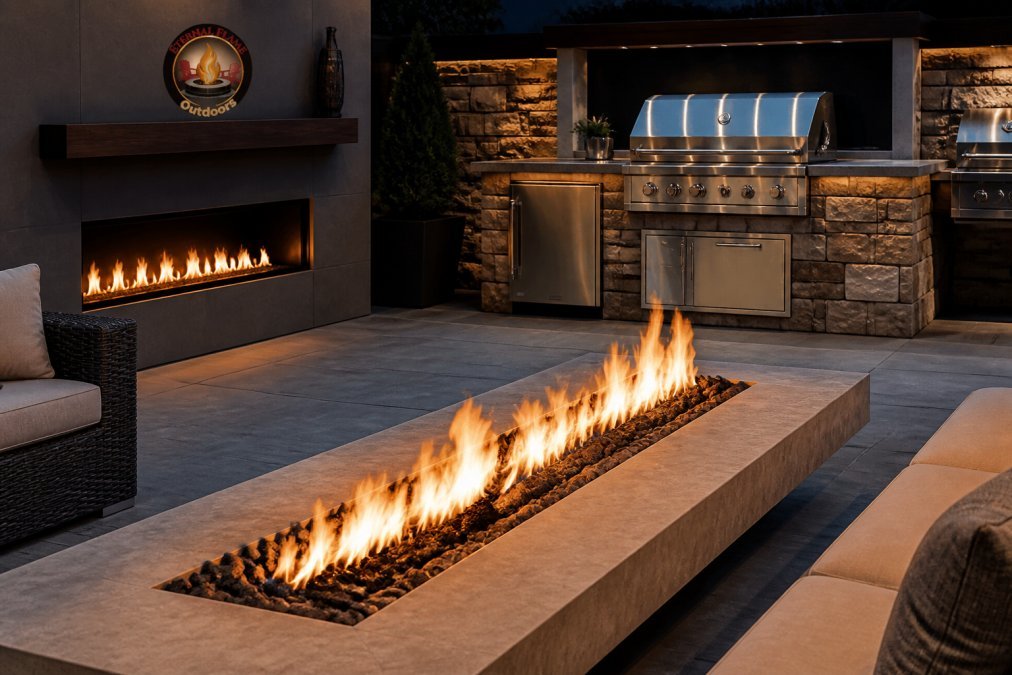
Incorporate a fire table or fire pit as your patio centerpiece. Fire features are the defining element of luxury outdoor living in 2026, providing warmth, ambiance, and a natural focal point that anchors your entire design. The American Fyre Designs Contempo collection offers contemporary fire tables that work beautifully in compact spaces, with linear designs that maximize seating efficiency.

Color palette matters in small spaces. Neutral backgrounds expand the visual space, while accent colors draw the eye to specific features. A single vibrant plant container becomes more powerful when the surrounding palette is restrained.
Step 4: Select a Luxury Fire Pit for Small Patio Spaces
A luxury fire pit for small patio spaces serves multiple purposes: functional warmth, visual anchor, and conversation starter. The key is selecting a scale-appropriate fire feature that doesn't overwhelm your compact backyard oasis.
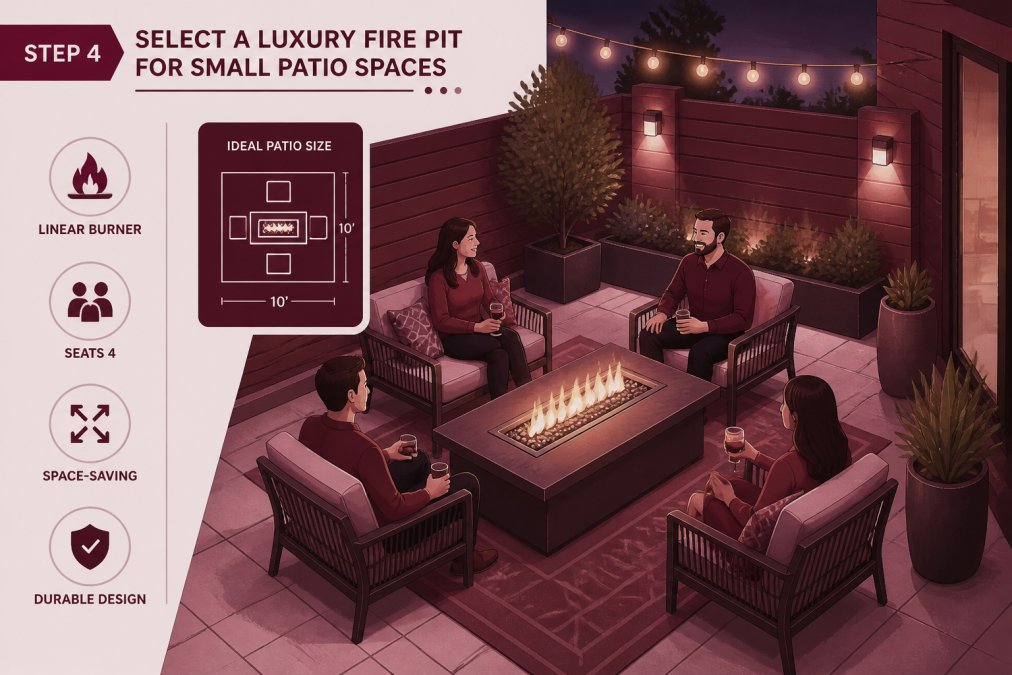
For a small backyard, a fire table typically works better than a traditional fire pit. Fire tables have a smaller footprint, provide seating surface, and create a more refined aesthetic. The True Flame Sanctuary 1 Fire Table, with its 56-inch linear design, fits naturally into small patios while providing genuine heat and ambiance. The AWS ignition system means reliable startup without hassle.
If you prefer a traditional fire pit, look for compact models in the 36-48 inch range. The Outdoor Plus Del Mar Fire Pit at 48 inches provides authentic fire experience in a footprint that doesn't dominate a small backyard. GFRC concrete construction ensures durability in varied climates without the maintenance burden of traditional fire pits.
Consider fuel type based on your lifestyle. Propane fire tables offer clean, controllable heat and require minimal maintenance. Wood-burning pits provide authentic fire experience but demand more active management. Natural gas is ideal if you have a line available, though it requires professional installation. For most small backyard oasis projects, propane offers the best balance of convenience and ambiance.
Heat output matters in small spaces. You want enough heat to be functional, typically 40,000-60,000 BTU for a small gathering area, but not so much that you're uncomfortable sitting nearby. Most luxury fire tables hit this sweet spot.
Position your fire feature where it's visible from your house, creates natural seating circulation, and doesn't block sightlines across your small backyard oasis.
Step 5: How to Create Privacy in a Small Backyard
Privacy transforms a small backyard into a true retreat. The challenge is creating privacy without making a small backyard feel like a box.
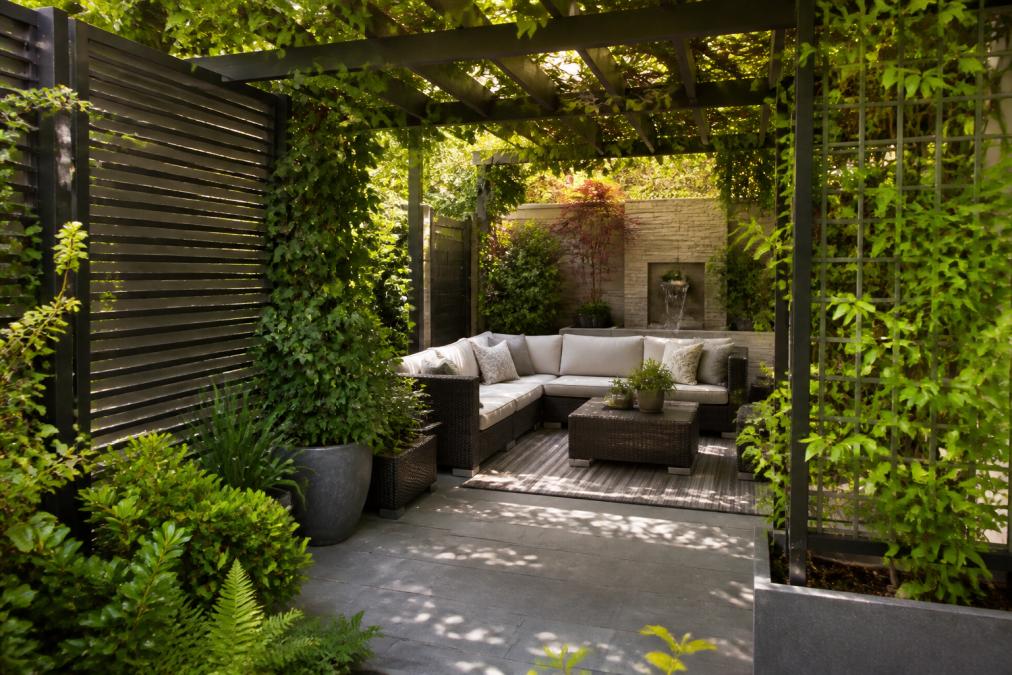
Vertical solutions work best in compact spaces. A pergola overhead creates psychological privacy. Climbing plants on a trellis add living privacy screening while improving air quality. Bamboo screening or slatted fence panels create defined boundaries without a fortress-like feel.
Layered privacy is more effective than a single barrier. Start with a base layer of plants (evergreens or fast-growing shrubs), add a middle layer of hardscape screening (lattice, slatted panels, or pergola), and top with overhead elements (pergola, shade sail, or tree canopy). This creates depth and makes the space feel larger while providing genuine privacy.
Consider sight lines strategically. You don't need privacy from every angle, just from the most visible ones. A privacy screen on the side where neighbors overlook your patio matters more than complete enclosure.
Water features add sound masking, which creates privacy even when visual privacy isn't complete. The gentle sound of a fountain or small water feature masks neighbor noise and creates a sense of separation.
Plant selection for privacy depends on your climate zone and available light. Fast-growing evergreens provide year-round screening. Deciduous plants offer privacy in warm months and views in winter.
Step 6: Add Lighting and Ambiance
Lighting transforms a small backyard oasis from a daytime space into a destination for evening use. The right lighting extends your outdoor season and makes the space feel larger and more sophisticated.
Layered lighting creates depth and functionality. Start with task lighting for cooking, seating, or pathways. String lights overhead create ambient glow and define the space vertically. Accent lighting highlights architectural features or plants. Together, these layers create a balanced, inviting atmosphere.
String lights are the workhorse of small backyard ambiance. They're affordable, flexible, and instantly transform a space. Warm white bulbs (2700K color temperature) create cozy ambiance. Drape string lights overhead in geometric patterns or simple lines.
Uplighting plants or architectural features creates visual interest without requiring ground-level space. A single uplighter on a tree or pergola post can define your entire small backyard oasis after dark.
Consider the light source's relationship to your fire feature. A fire pit or fire table provides its own ambient light and warmth. Supplementary lighting should enhance this, not compete with it. Softer accent lighting works better than bright task lighting near your fire feature.
Solar pathway lights are practical for small backyards, marking circulation routes without requiring electrical work. Modern LED technology provides useful illumination rather than dim decoration.
Dimmers give you flexibility. The same lighting setup works for intimate gatherings or active entertaining if you can adjust brightness.
Step 7: Hardscaping, Softscaping, and Maintenance
Hardscaping and softscaping are the backbone of a sustainable small backyard oasis. Understanding the difference helps you make choices that work for your climate and lifestyle.
Hardscaping includes all permanent, non-living elements: patios, pathways, pergolas, fences, and fire features. In a small backyard, hardscape typically occupies 40-50% of the total area, enough to define zones without feeling sterile.
Softscaping includes plants, soil, mulch, and living elements. In small spaces, quality matters more than quantity. Three well-chosen plants create more impact than a dozen mediocre ones.
Climate-specific plant selection is essential for long-term success. Your USDA hardiness zone determines what will survive winter outdoors. Within your zone, consider your microclimate, areas near heat-reflecting walls, under tree shade, or in wind tunnels have different conditions than average. Select plants that thrive in your specific microclimate rather than forcing plants that require constant intervention.
Maintenance requirements scale with your design choices. A small backyard oasis with mostly hardscape and evergreen plants requires minimal maintenance. One with seasonal annuals and high-maintenance shrubs demands consistent attention. Be honest about your time commitment before you design.
Container gardening solves multiple problems in small spaces. Containers provide seasonal color without permanent planting, allow you to move plants as light conditions change, and create vertical interest.
Mulch and ground covers reduce maintenance while improving aesthetics. Hardwood mulch suppresses weeds and retains moisture. Decorative gravel or ground covers like creeping thyme create visual interest while minimizing upkeep.
Irrigation efficiency matters in small spaces. Drip irrigation delivers water directly to plant roots, reducing waste and preventing fungal issues. Soaker hoses work for container gardens. Hand watering is fine for small spaces if you're consistent.
Seasonal maintenance keeps your small backyard oasis looking intentional. Spring cleanup, deadheading through summer, fall preparation, and winter protection of tender plants create rhythm and keep the space functional year-round.
| Element | Purpose | Maintenance Level | Best For |
|---|---|---|---|
| Hardscape (patio, paths) | Define zones, provide functional space | Low | Year-round structure, drainage |
| Evergreen plants | Year-round privacy and color | Low | Screening, backdrop, reliability |
| Seasonal containers | Color and interest variation | Medium | Flexibility, seasonal changes |
| Fire feature | Warmth, ambiance, focal point | Medium | Evening use, gathering, luxury feel |
| Mulch/ground cover | Suppress weeds, reduce maintenance | Low | Appearance, water retention |
Designing a small backyard oasis requires balancing ambition with realism. Your compact space isn't a limitation, it's an opportunity to create something intentional and luxurious. The key is choosing quality focal points, creating defined zones, and maintaining ruthless restraint in everything else.
At Eternal Flame Outdoors, we help homeowners transform small backyards into premium outdoor living spaces. Our curated selection of luxury fire pits, fire tables, and outdoor features gives you the focal point your small backyard oasis deserves. Whether you choose the contemporary elegance of the American Fyre Designs Contempo collection or the architectural presence of the True Flame Sanctuary 1, we provide products backed by trusted warranties and expert guidance.
Ready to start your small backyard oasis project? Explore our fire pit and fire table collections, or contact our team for personalized design guidance. We offer nationwide delivery and can help you select the perfect fire feature for your space.
Frequently Asked Questions
What are the essential elements of a small backyard oasis?
A well-designed small backyard oasis combines four core elements: a focal point (fire pit or water feature), comfortable seating and gathering space, privacy screening to define the area, and ambient lighting for evening use. Hardscaping like pavers or gravel defines zones, while softscaping with container gardens and vertical plantings adds greenery without overwhelming the space. The key is intentional layering, each element should serve both function and atmosphere.
How do I maximize space in a small backyard for an oasis feel?
Start by zoning your space into distinct areas: a gathering zone around a fire feature, a seating area, and a garden section. Use vertical elements like pergolas, trellises, and wall-mounted planters to draw the eye upward rather than outward. Choose a quality fire pit or fire table as your centerpiece, it anchors the space and creates the focal point that makes a small area feel intentional and luxurious rather than cramped.
What are the best fire features for a small backyard?
Fire tables and compact fire pits are ideal for small spaces because they combine function with sophisticated design. A 48-inch fire pit like the Outdoor Plus Del Mar offers architectural presence without dominating the area, while propane fire tables with tank drawers provide clean lines and flexible placement. Consider your layout: a rectangular fire table works well for linear patios, while a circular pit suits more organic designs. Fire tables also double as functional surfaces for drinks and snacks.
How much does it cost to create a backyard oasis on a budget?
Budget-friendly approaches focus on DIY hardscaping with pavers or mulch, container gardening instead of in-ground landscaping, and strategic use of string lights or solar lighting. However, investing in one quality focal point, like a fire pit or fire table, transforms the entire space. Premium fire features range significantly, but choosing the right centerpiece ensures your oasis feels complete and lasts for years. Prioritize durability over quantity; one lasting piece beats multiple cheap alternatives.

Leave a comment
This site is protected by hCaptcha and the hCaptcha Privacy Policy and Terms of Service apply.