
Outdoor Heating Solutions for Patios: A 2026 Guide
Table of Contents
- Understanding Outdoor Heating Solutions for Patios
- Infrared vs. Propane Patio Heaters: Key Differences
- How to Calculate BTU for Outdoor Heating
- Comparing Heating Types: Gas, Electric, and Wood-Burning
- Safety Features and Installation Clearances
- Fire Tables and Fire Features as Heating Solutions
- Choosing the Right Outdoor Heating Solution for Your Space
- Conclusion
Last Updated: August 16, 2026
Understanding Outdoor Heating Solutions for Patios
When the sun dips below the horizon, most patios become unusable without the right heating solution. Outdoor heating solutions for patios extend your outdoor living season from months into years, transforming your backyard into a destination regardless of temperature. The question isn't whether to add heat; it's which type works best for your space, climate, and lifestyle.
Today's options span infrared technology, propane and natural gas systems, electric plug-in units, wood-burning fireplaces, and integrated fire tables that blend aesthetics with function. Each delivers warmth differently and suits different spaces and use cases.
Infrared vs. Propane Patio Heaters: Key Differences
These two categories dominate residential patio heating, yet they work on fundamentally different principles.
How Infrared Technology Works
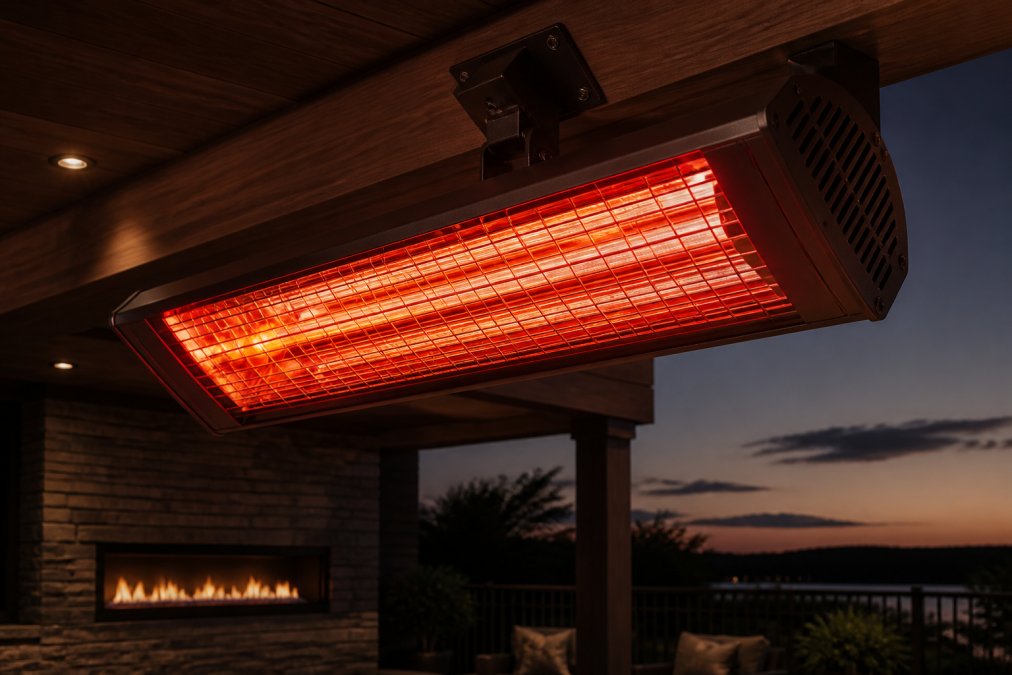
Infrared heating emits electromagnetic radiation that directly warms objects and people, not the air around them. Think of standing in sunlight on a cool day, the air might be 50°F, but the sun's infrared rays make you feel warm.
Infrared heaters use electric elements (typically quartz tubes or halogen bulbs) that glow when powered. Heat travels in straight lines from the element to whatever it strikes. The directional approach means an infrared heater warms people in front of it more effectively than heating a broad outdoor area uniformly.
The practical advantage: infrared heaters reach full power instantly, typically within 3-8 seconds. There's no flame, no gas smell, no combustion byproducts. For renters, apartment dwellers, or anyone with strict HOA rules, electric infrared heaters often slip through restrictions that prohibit open flames or gas equipment.
Coverage and BTU considerations for infrared heaters:
- A 1,500W plug-in infrared heater (like the True Flame Plug in Electric Infrared Patio Heater) delivers roughly 5,100 BTU, enough for a small seating area (8x10 feet) when wall-mounted or ceiling-mounted.
- Hardwired 240V models (like the True Flame DSH Electric Infrared Heater - 240V, 2000W at 6,824 BTU) handle larger patios.
- Higher-output units like the True Flame Heatstrip Electric Infrared - Classic With Remote and App deliver 2400W to 3200W, suitable for covered dining areas.
When infrared wins:
- You need instant heat with no warm-up time
- Your patio is small to medium (under 300 square feet)
- You want a low-maintenance, clean heating option
- You're renting or subject to strict HOA restrictions
- Your patio is covered (infrared works best with a ceiling or overhang)
Where infrared falls short:
- Uncovered patios: wind disperses radiant heat quickly
- Large open spaces: you'll need multiple units
- All-night gatherings: electricity costs accumulate
- Aesthetic integration: infrared heaters look utilitarian, not like a focal point
Propane Heating: Direct Flame and Efficiency
Propane heaters burn fuel to create a visible flame, which heats the surrounding air through convection and radiation combined. Unlike infrared's point-source directional heat, propane creates ambient warmth that spreads throughout a space.
Propane heaters come in two main styles: tall mushroom-shaped patio heaters and tabletop fire tables, which double as gathering points.
How propane heaters deliver BTU:
- Traditional propane patio heaters typically produce 40,000-60,000 BTU and stand freely on a patio.
- Fire tables like the American Fyre Designs Contempo Propane Firetable with Tank Drawer deliver 60,000 BTU while sitting at coffee height, allowing people to gather around them. The tank tucks into a drawer beneath the table.
- Larger rectangular fire tables like the American Fyre Designs Contempo Reclaimed Wood Propane Firetable - Rectangle generate 65,000 BTU and measure 76 inches wide, ideal for entertaining groups.
Propane heaters warm through both visible flame (radiation) and hot air circulation (convection), so warmth spreads more naturally across a patio than with infrared. They also create ambiance, the flame becomes a visual focal point that encourages gathering.


When propane heating excels:
- Medium to large patios (300-800 square feet)
- You want a gathering centerpiece, not just a heat source
- You entertain frequently and value the social element
- You prefer lower operating costs than electric heating for extended use
- You want a solution that works in uncovered spaces
Where propane heaters require trade-offs:
- Tank refills and storage logistics
- Flame flickers in strong wind
- Some municipalities restrict open flames
- Propane heaters take 5-10 minutes to reach full warmth
- Visual footprint: even compact models occupy floor space
How to Calculate BTU for Outdoor Heating
BTU (British Thermal Units) measures heat output. For patios, BTU capacity determines whether a heater will actually warm your space or just create a warm spot in front of it.
The basic formula for outdoor spaces: Multiply your patio's square footage by 20. This accounts for heat loss to open air, wind, and the fact that outdoor heating is less efficient than indoor heating.
Example calculations:
- 200 square feet × 20 = 4,000 BTU minimum
- 400 square feet × 20 = 8,000 BTU minimum
- 600 square feet × 20 = 12,000 BTU minimum
Adjustments for climate and conditions:
- Cold climates (below 40°F average): multiply by 25 instead of 20
- Mild climates (50-65°F): multiply by 15
- Covered patios (with roof or pergola): multiply by 15
- Uncovered, windy patios: multiply by 25
Real-world example: You have a 300-square-foot uncovered patio in a cold climate. Calculation: 300 × 25 = 7,500 BTU. A single 6,000 BTU infrared heater won't suffice. You'd need either two infrared units, one 8,000+ BTU propane heater, or a fire table in the 60,000+ BTU range positioned centrally.
Undersizing leads to disappointment; oversizing wastes energy and money. This calculation gives you a realistic starting point based on your specific setup.
Comparing Heating Types: Gas, Electric, and Wood-Burning
Each heating fuel type has distinct operational and aesthetic characteristics.
Natural Gas vs. Propane Tank Systems
Natural gas heaters connect to your home's existing gas line and produce consistent, on-demand heat without tank refills.
Propane tank systems require a 20-pound horizontal tank (for fire tables) or larger tanks for standing heaters. You refill them at gas stations or have them delivered.
Natural gas advantages:
- No tank refills needed
- Slightly lower fuel cost per BTU than propane
- Works for high-BTU applications like outdoor fireplaces
- Ideal for permanent installations
Propane advantages:
- Works anywhere without requiring a gas line
- Portable and flexible for temporary or rented spaces
- Easier to install (no trenching or gas-line work)
- Refills are widely available
For most residential patios, propane is the practical choice because it doesn't require gas-line installation. Fire tables use standard 5-gallon propane tanks, making refills straightforward. For high-end permanent installations, especially outdoor fireplaces, natural gas makes sense if your home already has gas service.
Electric Plug-In and Hardwired Options
Plug-in electric heaters (120V) are the simplest to install. You plug them into an outdoor outlet and they're ready to use.
Hardwired electric heaters (240V) require an electrician to install a dedicated circuit but deliver significantly higher wattage and BTU output.
Electric heating advantages:
- Instant on/off with no warm-up time
- Cleanest option: zero emissions, no smell
- Works indoors and outdoors
- No fuel storage or refills
- Often eligible for smart home integration (app control, scheduling)
- Lowest maintenance of any heating type
Electric heating disadvantages:
- Ongoing electricity costs can exceed propane for frequent, extended use
- Requires outdoor electrical outlet (plug-in) or professional installation (hardwired)
- Directional heating: infrared heaters don't warm the entire patio uniformly
- No visual flame or ambiance
- Less effective in very cold climates without multiple units
The True Flame Heatstrip Electric Infrared - Classic With Remote and App represents the premium end of electric heating, with app control, high output, and suitability for covered outdoor dining areas.
Wood-Burning Fireplaces for Traditional Warmth
Wood-burning fireplaces create a real fire, provide substantial heat output, and serve as an architectural focal point that elevates your entire outdoor living space.
Heat output from wood-burning fireplaces: A wood-burning fireplace like the Majestic 42" Castlewood Outdoor Wood Fireplace or Majestic 42" Cottagewood Outdoor Wood Fireplace generates substantial ambient heat through convection. A full-size outdoor fireplace typically produces 40,000-80,000 BTU equivalent warmth.
Wood-burning advantages:
- Creates an authentic gathering experience with a real fire
- Serves as a year-round architectural feature
- No fuel lines or electricity required
- Aesthetic impact: the fireplace becomes the focal point
- Works in any climate and season
Wood-burning disadvantages:
- Requires firewood storage and management
- Ash cleanup after use
- Smoke dispersal depends on wind and weather
- Highest installation cost and complexity
- May require permits or inspections
- Less precise heat control than gas or electric
- Not ideal for small patios
Best for: Large patios or outdoor rooms where you want a permanent, high-impact heating and gathering feature. Homeowners who value ambiance and entertaining over pure heating efficiency.
| Heating Type | Setup Complexity | Heat Control | Ambiance | Best Patio Size | Operating Cost |
|---|---|---|---|---|---|
| Infrared Electric | Very simple | Precise | None | Small (under 200 sq ft) | Higher for extended use |
| Propane Fire Table | Simple | Moderate | High | Medium (200-400 sq ft) | Moderate |
| Natural Gas Heater | Complex (requires gas line) | Precise | Moderate | Any | Lower for frequent use |
| Wood-Burning Fireplace | Very complex | Low | Very high | Large (400+ sq ft) | Moderate (wood cost) |
Safety Features and Installation Clearances
Every outdoor heater requires proper clearance and safety features to prevent burns, fires, or gas-related hazards.
Standard safety requirements:
Clearance from combustibles (for propane and wood-burning):
- Minimum 3 feet from walls, fences, or structures
- Minimum 10 feet from tree branches or overhanging structures
- Minimum 5 feet from any flammable material
Electrical safety (for electric heaters):
- Outlet must be GFCI-protected (Ground Fault Circuit Interrupter)
- Outdoor outlet should be rated for wet locations (IP65 or higher)
- Extension cords should be outdoor-rated
Propane-specific safety features:
- Automatic shut-off valve if the heater tips over
- Pressure regulator to control gas flow
- Flame sensor that ignites the burner safely
- Tank securely fastened and stored upright
- Regular inspection for leaks
Wood-burning fireplace safety:
- Chimney clearance from roof and structures (typically 2-3 feet minimum, per local code)
- Spark arrestor or chimney cap to prevent embers
- Hearth protection (non-combustible surface) around the fireplace opening
- Regular chimney cleaning to prevent creosote buildup
Propane fire tables are designed for simple setup, unpacking, placing on level ground, connecting a propane tank, and testing ignition. Most homeowners can handle this without professional help. Electric heaters may require an electrician if hardwiring is necessary. Wood-burning fireplaces almost always require professional installation due to venting, clearances, and local building codes.
Fire Tables and Fire Features as Heating Solutions
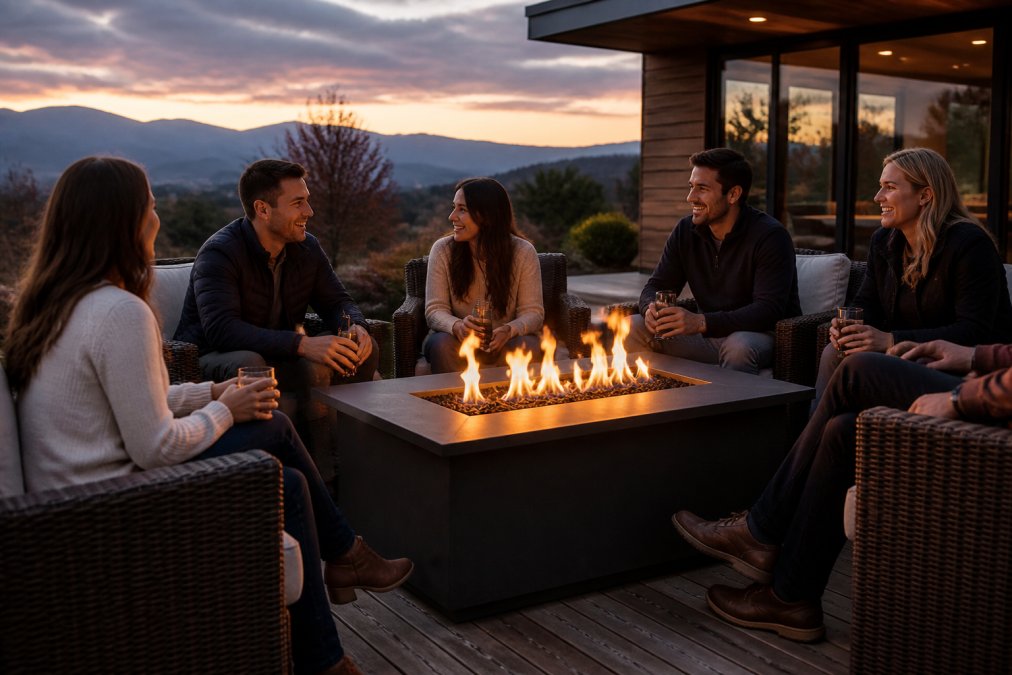
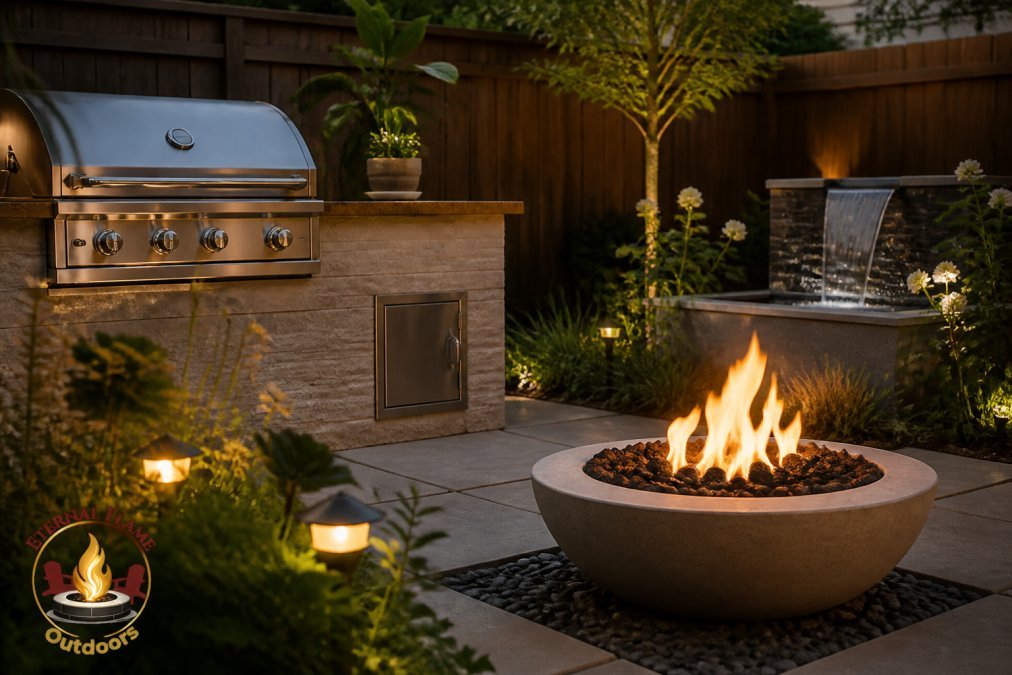
Fire tables blur the line between heating appliance and gathering centerpiece. They sit at coffee height (18-25 inches tall), allowing people to gather around them comfortably while enjoying warmth and flame.
Unlike tall propane heaters that stand in a corner, fire tables become the centerpiece of your patio, social focal points that encourage conversation and entertaining.
How fire tables deliver heat: A fire table combines a propane burner with a wide, shallow firebox. The flame spreads across the surface rather than pointing upward, creating both upward radiation (warming faces and upper bodies) and outward radiation (warming people seated around the table).
The American Fyre Designs Contempo Propane Firetable with Tank Drawer features a 24-inch stainless steel linear burner producing 60,000 BTU. The hidden tank drawer keeps the propane tank out of sight while providing easy access for refills.
The American Fyre Designs Contempo Reclaimed Wood Propane Firetable - Rectangle extends to 76 inches wide with 65,000 BTU output, ideal for larger entertaining groups.
Fire tables vs. standing heaters:
- Coverage: Fire tables warm people seated around them; standing heaters warm a zone in front of them
- Aesthetic: Fire tables are centerpieces; standing heaters are appliances
- Fuel efficiency: Fire tables deliver heat more efficiently to a group
- Space efficiency: Fire tables occupy the same footprint as a dining table
- Entertaining: Fire tables encourage gathering; standing heaters are functional but less social
Outdoor fireplaces take this concept further. Models like the True Flame Kalea Bay Outdoor Linear Fireplace or True Flame Kalea Bay Outdoor Linear Fireplace with LED Lights are built into walls or outdoor structures. They deliver high BTU output (43,500-65,000 BTU depending on size) while serving as an architectural focal point.

When fire tables and fireplaces make sense:
- You entertain frequently and want a gathering centerpiece
- Your patio design includes a designated entertaining area
- You want heating that also adds visual interest and ambiance
- You're willing to invest in a permanent or semi-permanent installation
- You value the social element as much as the warmth
Choosing the Right Outdoor Heating Solution for Your Space
Your ideal heating solution depends on four variables: patio size, climate, how often you entertain, and your aesthetic priorities.
Start with patio size and BTU needs: Use the calculation from earlier: square footage × 20 (or 15-25 depending on climate and coverage). This tells you the minimum BTU capacity you need.
- Under 4,000 BTU: single infrared heater for a small seating nook
- 4,000-8,000 BTU: infrared heater or compact propane fire table
- 8,000-15,000 BTU: propane fire table or standing propane heater
- 15,000+ BTU: large fire table, fireplace, or multiple heaters
Consider your climate: Cold climates favor propane or natural gas heaters because they produce sustained ambient warmth. Infrared works but requires multiple units and loses effectiveness in wind.
Mild climates suit infrared heaters well, you're not fighting severe cold, just taking the edge off.
Evaluate your entertaining patterns: Frequent entertainers benefit from a fire table or fireplace that becomes a social focal point. Occasional users might prefer a simple infrared heater that's low-maintenance.
Prioritize ambiance vs. pure function: If the flame and gathering experience matter, choose propane or wood-burning. If you just need warmth and don't care about visual appeal, electric infrared is efficient and practical.
Factor in installation and maintenance: Infrared heaters are plug-and-play. Propane fire tables require tank refills but minimal maintenance. Fireplaces demand professional installation and ongoing chimney care.
At Eternal Flame Outdoors, we help customers navigate these decisions by understanding their specific space, climate, and entertaining style. Our team can recommend products that balance heating performance with aesthetic impact.
Conclusion
Outdoor heating solutions for patios transform seasonal outdoor spaces into year-round destinations. Whether you choose infrared for instant, directional warmth; propane for a gathering-focused fire table; natural gas for permanent efficiency; or a wood-burning fireplace for architectural drama, the right choice depends on your patio's dimensions, your climate, and how you entertain.
Calculate your BTU needs honestly. Consider whether you prioritize ambiance or pure function. Factor in installation complexity and ongoing maintenance. Then match those needs to the heating type that fits your lifestyle.
Eternal Flame Outdoors carries premium heating solutions from trusted brands like True Flame, American Fyre Designs, and Majestic. Our team understands how to integrate heating into cohesive outdoor living designs, whether you're outfitting a small patio or planning a complete backyard transformation.
Explore our fire tables, infrared heaters, and outdoor fireplaces to find the heating solution that fits your space. Contact our team for personalized guidance on sizing, placement, and integration with your outdoor design, we're here to help you create the sophisticated, comfortable outdoor retreat you've envisioned.
Frequently Asked Questions
What size outdoor heating solution do I need for my patio?
Size depends on your patio dimensions and desired comfort level. For a 12x15-foot space, a 40,000-50,000 BTU heater typically provides adequate warmth. Larger patios or open areas may need 60,000+ BTU output. Calculate total square footage, then multiply by 5 for moderate climates or up to 10 for colder regions to determine BTU requirements. Wind exposure and ceiling height also affect heating capacity.
How do I calculate BTU for outdoor heating in my specific climate?
Start with your patio's square footage and multiply by 5 (mild climates), 7-8 (moderate climates), or 10+ (cold climates). Account for wind exposure, ceiling height, and insulation. A 200-square-foot patio in a moderate climate needs approximately 1,400-1,600 BTU. If your space is partially covered or exposed, increase the multiplier. Consult product specifications to match your calculated BTU to available heaters.
Are infrared patio heaters more efficient than propane heaters?
Infrared and propane heaters serve different needs. Infrared heaters convert 90%+ of energy directly to radiant heat with minimal waste, making them highly efficient for targeted warmth. Propane heaters produce ambient warmth across larger areas but lose heat to the environment. Infrared works best for covered spaces and smaller gatherings; propane suits open patios and frequent entertaining. Operating costs depend on local energy prices and usage patterns.
What are the safety considerations for outdoor patio heaters?
All outdoor heaters require proper clearance from combustible materials, typically 3-10 feet depending on type. Ensure adequate ventilation to prevent carbon monoxide buildup in covered spaces. Check for anti-tilt switches, automatic shut-off features, and weatherproof ratings (IP65 or higher for electric models). Wall-mounted and ceiling-mounted heaters need secure fastening. Never use indoor heaters outdoors, and always follow manufacturer installation guidelines and local building codes.
Which outdoor heating solution is best for a small patio?
For compact spaces (under 150 square feet), infrared heaters or small fire tables work well. Electric infrared heaters like the True Flame plug-in model provide instant warmth without fuel storage concerns. Alternatively, a propane fire table such as the American Fyre Designs Fiesta combines heating with ambiance and serves as a focal point. Both options deliver comfort without overwhelming a tight footprint and allow flexible placement or removal as needed.

Leave a comment
This site is protected by hCaptcha and the hCaptcha Privacy Policy and Terms of Service apply.