
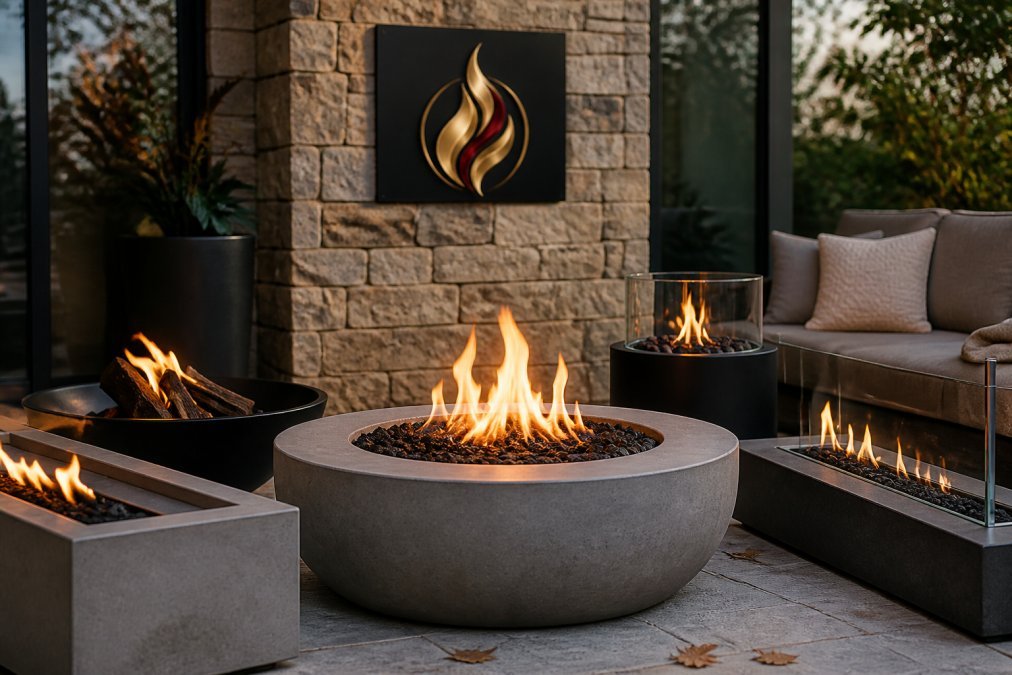
Top 5 Luxury Outdoor Fire Pit Brands: 2026 Buyer's Guide
Table of Contents
- What Separates a Luxury Fire Pit Brand From the Rest
- Quick Comparison: Top 5 Luxury Outdoor Fire Pit Brands
- 1. The Outdoor Plus: Handcrafted in the USA, Built to Order
- Best Materials for Outdoor Fire Pits: Steel, Copper, GFRC, and Aluminum
- Gas vs Wood Burning Fire Pit Maintenance: What Owners Should Expect
- Luxury Outdoor Fire Table Design: Matching the Feature to Your Space
- How to Choose the Right Luxury Fire Pit Brand for Your Project
- Frequently Asked Questions
Last Updated: September 20, 2026
What Separates a Luxury Fire Pit Brand From the Rest
A luxury fire pit brand is defined by American handcrafting, commercial-grade 304 stainless steel burners, and made-to-order construction rather than mass-produced inventory. Luxury outdoor fire pit brands compete on materials, ignition systems, and customization depth. At Eternal Flame Outdoors, we work with these manufacturers daily and see which builds actually hold up.
Quick Comparison: Top 5 Luxury Outdoor Fire Pit Brands
Here's how the top 5 luxury outdoor fire pit brands stack up on material, signature strength, and best use case. Each name below is a distinct manufacturer we work with as an authorized dealer, not a sub-collection of a single brand.
| Brand | Signature Material | Standout Strength | Best For |
|---|---|---|---|
| The Outdoor Plus | Steel, copper, GFRC | Made-to-order handcrafting in the USA | Custom residential and commercial |
| Dimplex | Metal and composite housings | Electric flame technology with no fuel line required | Patios, balconies, and covered spaces |
| True Flame | Steel and stainless | Gas fire features built for straightforward installation | Contractors and builders on tight schedules |
| Modern Flames | Steel and glass | Linear electric and gas designs with contemporary profiles | Modern architectural settings |
| Amantii | Steel and glass | Electric fireplaces and fire features with flexible sizing | Indoor-outdoor transitions and remodels |
What the Table Doesn't Show
A comparison table can only carry so much. Three variables matter more than any single spec sheet:
- Fuel flexibility. Gas fire pits require a natural gas line or propane supply.
- Lead time. Made-to-order gas builds take longer than electric units that ship from stock. If your project has a hard deadline, confirm availability before ordering.
- Ignition and controls. Gas units range from match lit to CSA electronic ignition with flame sense, model dependent. Electric units use remote, wall switch, or app controls depending on the model.
1. The Outdoor Plus: Handcrafted in the USA, Built to Order
The Outdoor Plus is the strongest luxury fire pit brand for buyers who want American craftsmanship and full customization. Every unit is handcrafted in the USA after your order is placed, so finish, fuel type, and ignition are built to your specification.
Standout Models From The Outdoor Plus
A few models show the range clearly:
- Regal Fire Pit, 60" round: Heavy-duty steel, up to 65,000 BTUs, commercial-grade 304 stainless steel burner. A strong pick for a round gathering focal point. Explore the Regal Fire Pit
- Coronado Fire Pit, 84" linear: Up to 90,000 BTUs with a long ribbon flame, ideal for expansive patios and rooftop terraces. See the Coronado Fire Pit
- Cazo Fire Pit, hammered copper: A hand-hammered copper bowl with a wide ledge that develops a natural patina over time. View the Cazo Fire Pit
- Sedona Fire Pit, 60" GFRC: Glass Fiber Reinforced Concrete with a wide ledge for drinks and appetizers. Shop the Sedona Fire Pit
If a finish must match an existing stone or stucco, request a physical sample before ordering. Hand-finished copper and GFRC vary slightly from screen to screen, and a sample removes the guesswork.


Best Materials for Outdoor Fire Pits: Steel, Copper, GFRC, and Aluminum
The best material for an outdoor fire pit depends on climate, style, and how much maintenance you'll accept. Steel suits modern architecture, copper suits traditional spaces, GFRC handles weather extremes, and aluminum keeps weight down. What separates a luxury build from a budget one is what happens beneath the finish.
Steel: The Workhorse
Heavy-duty steel with a powder-coated finish resists corrosion and fading, and it holds clean architectural lines. The mechanism that matters is the burner, not the shell. Commercial-grade 304 stainless steel resists corrosion far better than stamped steel because of its chromium and nickel content, which forms a passive oxide layer that self-heals when scratched. Budget units often use lower-grade stainless or aluminized steel that pits and discolors within a few seasons.
Copper: The Artisan Choice
Hand-hammered copper develops a living patina, so no two pieces age the same way. The patina is a copper carbonate layer that forms as the metal reacts with moisture and air; it's protective, not damage. It reflects flame beautifully, which is why it suits traditional and resort-style spaces. Copper is softer than steel, so it dents more easily and needs a gentler hand during installation and cleaning.
GFRC Concrete: The Durability Play
Glass Fiber Reinforced Concrete stands up to sun, freeze-thaw cycles, and poolside splash while holding a refined finish. The glass fibers act as internal reinforcement, which is why GFRC can be cast thinner and lighter than traditional concrete while resisting the hairline cracking that plagues unreinforced cast concrete. For anyone in a harsh climate, this is the material to weigh first.
Aluminum: The Low-Maintenance Option
Aluminum won't rust the way untreated steel can, because its oxide layer is stable and doesn't flake. It keeps a fire table light enough to reposition, which matters for renters, event spaces, and anyone who rearranges a patio seasonally. The tradeoff is that aluminum is softer, so it dents more easily and can feel less substantial underhand than steel.
The Outdoor Plus Regal Fire Pit - Metal →
| Material | Weather Resistance | Maintenance Level | Style Fit |
|---|---|---|---|
| Powder-coated steel | High | Low | Contemporary |
| Hand-hammered copper | High | Patina develops | Traditional, artisan |
| GFRC concrete | Very high | Low | Modern, architectural |
| Aluminum | High | Very low | Transitional |
The Material Nobody Talks About: The Burner
Most buyers focus on the shell. The burner is what actually determines how the fire pit performs and how long it lasts. A commercial-grade 304 stainless steel burner with properly sized ports will hold a clean flame pattern for years. A thinner burner will warp, clog, and lose flame consistency. When you compare brands, ask what the burner is made of, not just what the housing is made of.
Gas vs Wood Burning Fire Pit Maintenance: What Owners Should Expect
Gas fire pits need far less routine maintenance than wood burners, which is the main reason luxury buyers lean gas. No ash removal, no firewood storage, no ember cleanup after every gathering.
Never cover a gas fire pit with a non-breathable cover while the burner is still warm. Trapped moisture and heat can corrode the burner pan and shorten its life.
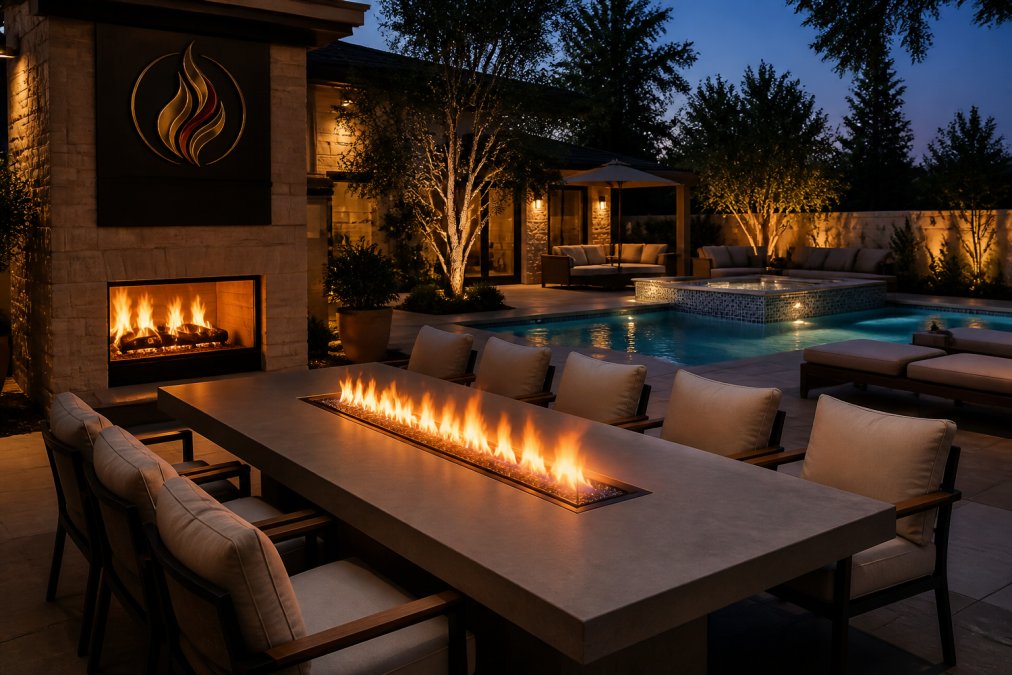
Luxury Outdoor Fire Table Design: Matching the Feature to Your Space
Fire table design starts with scale. A feature that's too large crowds a patio; one that's too small disappears into it. Match the footprint to the space before you fall in love with a finish.
How to Choose the Right Luxury Fire Pit Brand for Your Project
- What material fits your climate and architecture? Steel, copper, GFRC, or aluminum.
- Natural gas or liquid propane? Confirm your fuel source before ordering.
- Which ignition system? Match lit, flame sense, or CSA electronic ignition, model dependent.
- What's your installation deadline? Made-to-order builds need confirmed lead times.
- Who handles installation? Confirm support before the unit ships.
A brand that builds to order gives you control over every one of these variables. That's the real luxury: a fire feature specified for your space, not a compromise pulled from a shelf.
Frequently Asked Questions
What features define a luxury outdoor fire pit?
Luxury fire pits share a few consistent traits: commercial-grade 304 stainless steel burners, handcrafted construction, and premium finishes such as hammered copper, GFRC concrete, or powder-coated steel. They also offer configurable ignition systems, including match lit, flame sense, and electronic ignition, plus generous tabletop ledges for entertaining. Heat output typically runs from 65,000 to 90,000 BTUs, and most are made to order rather than stocked, so the finish, fuel type, and ignition match your specific outdoor space.
What materials are most durable for high-end outdoor fire features?
The four materials that hold up best outdoors are heavy-duty steel with a powder-coated finish, hand-hammered copper, Glass Fiber Reinforced Concrete (GFRC), and powder-coated aluminum. Steel and aluminum resist corrosion and fading, copper develops a natural patina that many owners prefer, and GFRC handles freeze-thaw cycles and intense sun without cracking. All four appear across The Outdoor Plus collections. Pairing any of them with a 304 stainless steel burner is what keeps the flame performance reliable season after season.
Are gas or wood burning fire pits better for luxury outdoor spaces?
Gas wins for most luxury installations because it starts instantly, produces no ash or sparks, and works with electronic ignition and remote or wall-switch control. Gas vs wood burning fire pit maintenance also favors gas: there is no ash cleanup, no firewood storage, and no chimney sweeping. Wood burning suits properties where a traditional crackle and smoke aroma matter more than convenience. If you want a fire feature on a covered patio, rooftop terrace, or near a pool, gas is the practical choice.
How do I choose the right size fire pit for my patio?
Start with your seating layout, not the fire pit. A round 60-inch pit like the Regal works well for a circle of four to six chairs, while a linear or rectangular design such as the 66-inch Cabo or 84-inch Coronado suits longer seating rows and outdoor kitchens. As a rule, leave at least 3 feet of clearance on every side for chairs and foot traffic. For a compact patio, a square 60-inch model often fits better than a round one of the same width.
Do luxury fire pits require professional installation?
Most luxury gas fire pits need a licensed installer for the gas line connection, and many local codes require a permit for permanent natural gas hookups. The fire pit itself arrives with minimal assembly, but the fuel line, shutoff valve, and ignition wiring are the parts that matter for safety. Liquid propane models that use a standard tank are simpler, though electronic ignition still benefits from a qualified technician. Always confirm local requirements before scheduling the work.

Leave a comment
This site is protected by hCaptcha and the hCaptcha Privacy Policy and Terms of Service apply.