
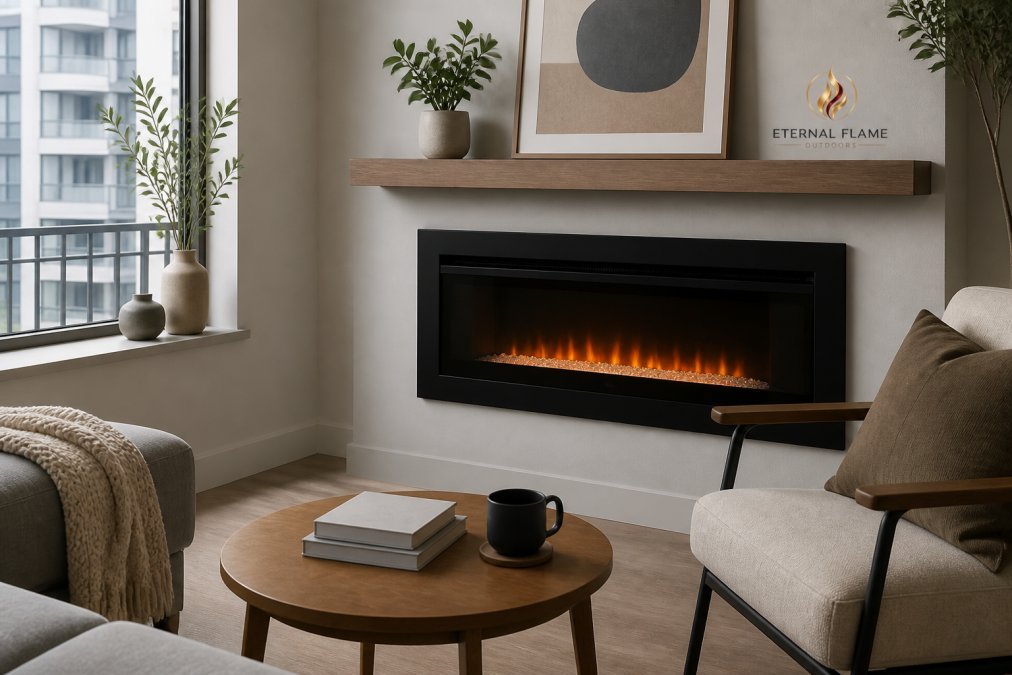
Apartment Fireplace Alternatives: Wood-Free Options
Table of Contents
- Why Wood Burning Fireplaces Fail in Apartments
- Apartment Fireplace Alternatives Compared: Electric, Gas, and Gel
- Electric Fireplace Installation Requirements for Renters
- Ventless Fireplace Safety Standards Every Renter Should Know
- Best Electric Fireplace Brands for Apartments in 2026
- Air Quality, Humidity, and Insurance: What Apartment Dwellers Often Miss
- Smart Home Integration and Lease-Friendly Installation Tips
- Frequently Asked Questions
Last Updated: September 16, 2026
Why Wood Burning Fireplaces Fail in Apartments
A traditional wood burning fireplace is a non-starter in most apartment buildings for structural reasons. Masonry fireboxes need a dedicated full-height flue, seasoned firewood, and clearance from combustible framing that most multi-unit construction does not provide. Even where a chimney exists, the shared flue serves other units and tapping into it is rarely permitted.
Then there is the smoke. Wood combustion produces fine particulate matter that drifts into neighboring units through shared ventilation, which is why most leases prohibit solid-fuel burning outright. Add ash cleanup, creosote buildup requiring professional sweeping, and firewood storage in a space measured in square feet, and the math stops working.
That is the gap apartment fireplace shoppers are trying to close: flame, warmth, and atmosphere without a chimney, a fuel supply, or a landlord's permission slip. This guide from Eternal Flame Outdoors covers the alternatives that work in a leased unit, what each requires for installation, and the safety and air-quality questions most buyers never think to ask.
Apartment Fireplace Alternatives Compared: Electric, Gas, and Gel
The five categories that dominate apartment installations are electric, bio-ethanol, water vapor, ventless gas, and gel fuel. They differ on three things that matter most to renters: whether they burn fuel, whether they need a flue, and whether they move with you.
Electric fireplaces generate flames with LED lighting and mirror or holographic projection technology, so there is no combustion, no emissions, and no venting. They plug into a standard outlet or hardwire to a dedicated circuit, and most models let you run the flame effect with the heater switched off.
Bio-ethanol fireplaces burn liquid alcohol fuel in a ventless firebox, producing a real flame and ambient heat along with water vapor and carbon dioxide, which is why manufacturers specify room size and ventilation requirements.
Water vapor fireplaces use ultrasonic technology to create a cool mist that is lit from below, producing a flame-like effect with no heat and no combustion byproducts.
Ventless gas fireplaces run on natural gas or propane and are rated for indoor use without a chimney, but require a gas line, a licensed plumber, and landlord approval.
Gel fuel fireplaces burn canned isopropyl alcohol gel in a self-contained burner. They are the most portable option and the least efficient, and each can delivers roughly two to three hours of burn time.
| Type | Fuel Source | Venting | Heat Output | Renter-Friendly |
|---|---|---|---|---|
| Electric | None (120V/240V) | None | Supplemental | Yes, plug-in or hardwire |
| Bio-ethanol | Liquid ethanol | Ventless | Moderate ambient | Yes, portable |
| Water vapor | Water + electricity | None | None (flame only) | Yes, plug-in |
| Ventless gas | Natural gas / propane | Ventless | High | No, needs gas line |
| Gel fuel | Alcohol gel canisters | Ventless | Low | Yes, fully portable |
Electric Fireplace Installation Requirements for Renters
Electric fireplace installation requirements are the mildest of any category: a standard 120V outlet for plug-in models or a dedicated circuit for hardwired units. No flue, gas line, chimney, or combustion means nothing to vent and nothing to sweep.
Hardwired vs. Plug-In Models
Plug-in models are the lease-friendly default: they draw from a standard household circuit and can be unplugged and moved without leaving a mark. The Dimplex Multi-Fire Slim, for example, can be hardwired to a 120V supply or run from an optional 120V plug-in cord kit, giving you a path to upgrade later.

Recessed, Wall-Mounted, and Freestanding Options
Recessed (built-in) fireplaces sit inside a framed opening. The Dimplex Multi-Fire Slim is only 4 inches deep and installs flush into standard 2" x 4" framing, unusually shallow for a built-in and a real advantage where you cannot steal depth from an adjoining room.
Dimplex Ignite XL Bold Deep Built-in →
Ventless Fireplace Safety Standards Every Renter Should Know
Ventless fireplace safety standards exist because unvented combustion releases byproducts directly into the room. Electric units fall under UL 60335-2-30, the safety certification for household room heaters, while ventless gas appliances fall under ANSI Z21.11.2 for unvented room heaters. Look for the certification mark on the unit itself, not just in the marketing copy.
- Oxygen depletion sensors. Ventless gas heaters are required to include an oxygen depletion safety shutoff that cuts the gas if room oxygen drops.
- Carbon monoxide detection. Install a CO alarm in the same room as any fuel-burning appliance, and test it monthly. This is not optional in a sealed apartment.
- Manufacturer room-size limits. Bio-ethanol and gel units specify minimum room volume. A 500-square-foot studio with the windows closed is not the same environment as an open-plan loft.
Best Electric Fireplace Brands for Apartments in 2026
The best electric fireplace brands for apartments in 2026 are Dimplex, Modern Flames, and Amantii, each with a distinct strength: Dimplex for shallow-profile fit, Modern Flames for smart control and flame realism, and Amantii for a holographic statement piece. Eternal Flame Outdoors carries all three as an authorized dealer, which means manufacturer-backed warranties rather than third-party resale.

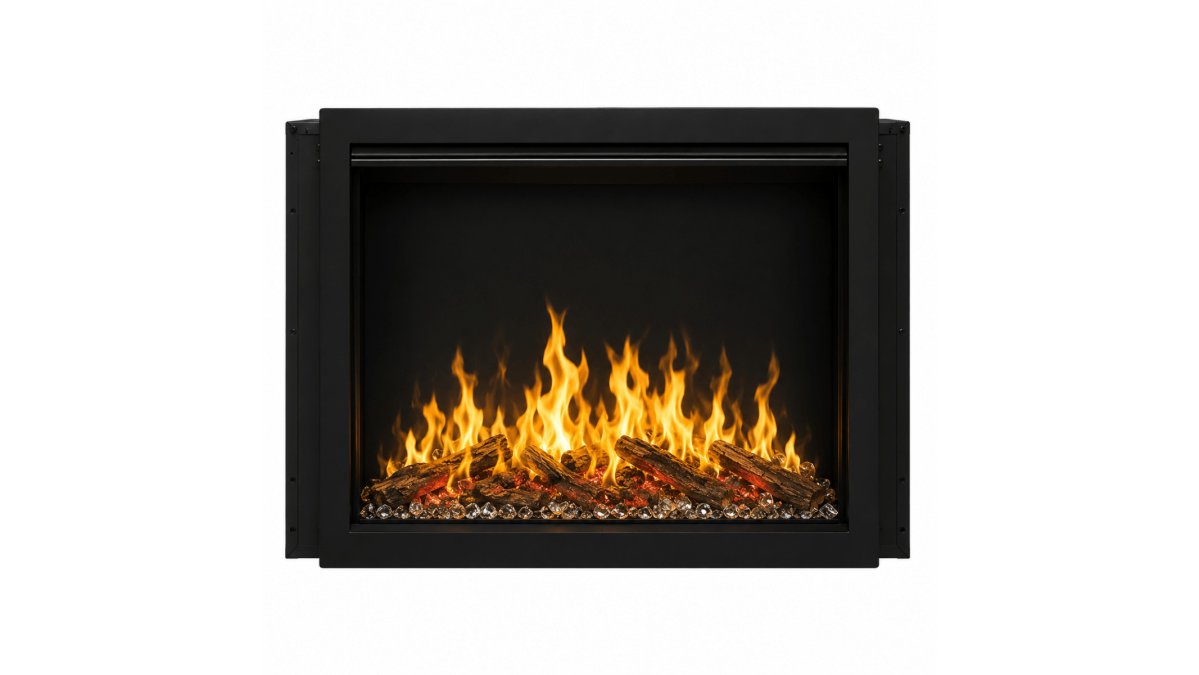
Dimplex: Slim Profiles for Tight Walls
Dimplex is the pick when floor space and wall depth are the binding constraints. The Multi-Fire Slim is built for condos, townhouses, and apartments, with a 4-inch depth that sits flush in 2" x 4" framing and a 14-inch viewing height. It is the first Dimplex series to include the Flame Connect app and supports both hardwired and plug-in 120V connection.
Modern Flames: Smart Controls and Realistic Flame Effects
What most reviews miss about Modern Flames is the control layer. The Orion Traditional offers Wi-Fi control through the Modern Flames app plus Alexa and Google Home integration, so the fireplace responds to voice commands alongside your other smart devices. Its HelioVision flame technology produces up to a 30-inch viewing area with a 5-inch ember bed, three flame styles, and six colors per style.
Amantii: Holographic Flames for a Statement Wall
Amantii's Signature MultiView Holo is the one to choose when the fireplace is the room. It uses projection technology rather than LED simulation, producing dimensional flames with sparks, smoke effects, and glowing embers across two or three holographic screens. The 3-sided glass design installs as single-sided, left or right corner, or full bay.
Air Quality, Humidity, and Insurance: What Apartment Dwellers Often Miss
Air quality separates a good apartment fireplace decision from a regretted one, and it rarely appears in product listings. Any combustion-based unit, including bio-ethanol and gel, adds moisture and combustion byproducts to the air, and in a sealed, tightly built apartment that moisture has nowhere to go.
Smart Home Integration and Lease-Friendly Installation Tips
Smart home integration separates a good apartment fireplace from a great one, because it solves a problem renters actually have: you cannot rewire the room, but you can automate the devices in it. Modern Flames units with the Modern Flames app support Alexa and Google Home, and Dimplex models with the Flame Connect app let you schedule flame settings, adjust ember-bed colors, and manage heat from your phone.
- Get written landlord approval before any recessed or hardwired installation, and keep the email.
- Choose plug-in and wall-mounted configurations when your lease forbids modification.
- Photograph the wall before and after, and keep the original hardware for restoration at move-out.
- Confirm the circuit. A 1,500W heater draws roughly 12.5 amps, so avoid sharing the outlet with a space heater or microwave.
Frequently Asked Questions
Can you have a fake fireplace in an apartment?
Yes, electric fireplaces are the most common apartment fireplace alternative because they require no chimney, gas line, or venting. They run on standard household electricity and produce flames without combustion. Plug-in models work well for renters since they don't require hardwiring. Always check your lease for rules on wall mounting or built-in installation before purchasing.
What are the best ventless fireplace options for small spaces?
Electric fireplaces are the top choice for small apartments. Models like the Dimplex Multi-Fire Slim fit into 2x4 framing with just a 4-inch depth, and the Dimplex Multi-Fire XHD Plug-In Firebox requires no installation at all. Both offer supplemental heat and flame-only operation. Bio-ethanol and gel units are also ventless but produce real combustion, so they need more ventilation.
Are electric fireplaces safe for apartment use?
Electric fireplaces are generally safe for apartments because they produce no carbon monoxide, no open flame, and no emissions. They use LED technology for the flame effect and a fan-forced heater for warmth. Look for UL-listed models and keep curtains, bedding, and other combustibles at least three feet from the heater outlet. Overheat protection is a standard safety feature on most quality units.
Do I need a permit to install an electric fireplace in an apartment?
Plug-in electric fireplaces typically don't require a permit since they use a standard outlet. Hardwired or recessed installations may need a permit and a licensed electrician, depending on local building codes. Renters should get written approval from their landlord before any permanent modification. Always confirm requirements with your local building department before starting work.
What is the difference between electric and bio-ethanol fireplaces?
Electric fireplaces use LED lights and a heater to create flames with no combustion, making them ventless and safe for apartments. Bio-ethanol fireplaces burn liquid fuel, producing real flames and some emissions, so they need ventilation. Electric models offer instant on/off, remote control, and smart home integration. Bio-ethanol units provide a more authentic flame but require fuel storage and more frequent maintenance.

Leave a comment
This site is protected by hCaptcha and the hCaptcha Privacy Policy and Terms of Service apply.