
Are Smokeless Fire Pits Good for Small Backyards?
Last Updated: November 1, 2026
Quick Summary
Smokeless fire pits suit small backyards because they reduce smoke drift, ash, and soot while delivering more heat from the same firewood, so you can seat guests on all sides of a compact patio. They reduce smoke rather than eliminate it, and clearance from fences, walls, and overhead structures still governs placement.
- A smokeless fire pit reburns its own smoke using double-wall construction, controlled air intake, and upper vents.
- Damp wood, cold startup, and gusty wind can still produce visible smoke in a well-designed unit.
- Keep the unit on a non-combustible surface and maintain the manufacturer's minimum distance from walls and fences.
- Gas fire pits start instantly and produce no ash, which suits small patios with no room for firewood storage.
- Tape the footprint and clearance zone on your patio and test the layout with chairs before buying.
Table of Contents
- Why Smokeless Fire Pits Fit Small Backyards
- How Do Smokeless Fire Pits Work?
- Smokeless Fire Pit Pros and Cons for Tight Spaces
- Fire Pit Clearance Requirements and Safety in Compact Yards
- Wood-Burning vs Gas Fire Pit: Which Suits a Small Yard?
- Small-Yard Buying Criteria: Space Planning and Operating Costs
- Choosing the Right Fire Feature for Your Patio
- Frequently Asked Questions
Why Smokeless Fire Pits Fit Small Backyards
A fire feature has to earn its square footage.
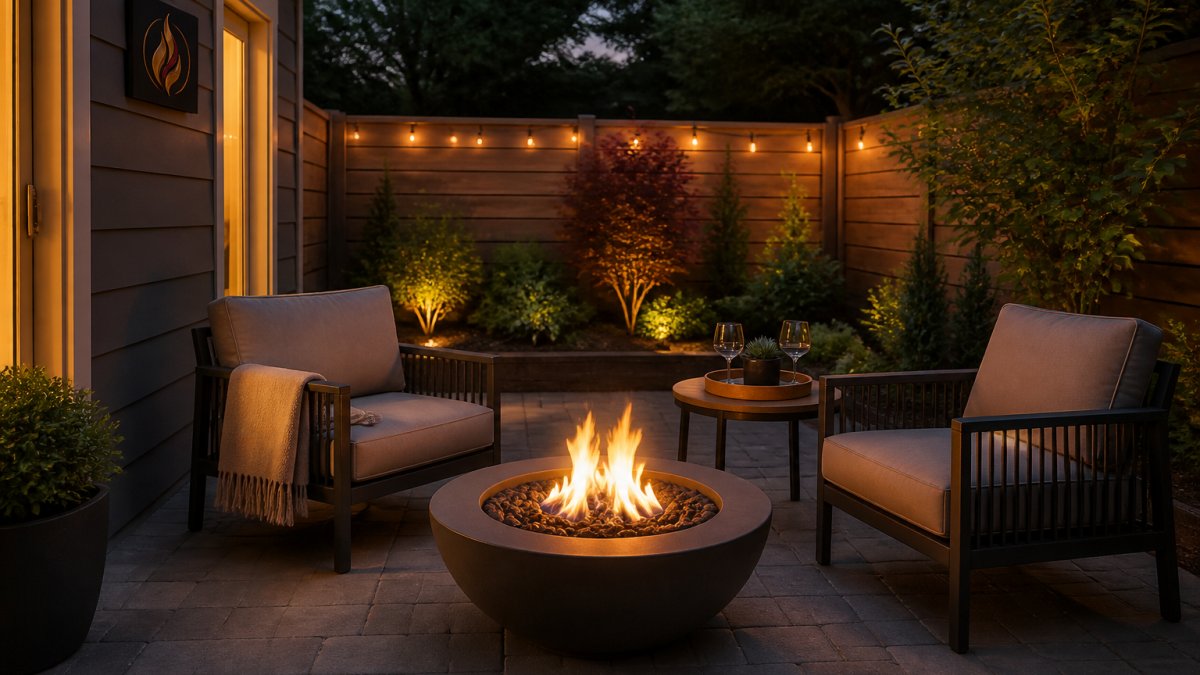
The appeal is not just size. A smokeless design changes how the fire behaves, which changes how close you can sit, how much smoke you deal with, and how often you have to clean up.
Below, we break down how these units actually work, where the benefits stop, and how to choose one that fits a patio measured in feet rather than acres.
How Do Smokeless Fire Pits Work?
A smokeless fire pit is a wood-burning fire pit designed to reburn its own smoke before it escapes the bowl. It does this through a combination of a double-wall construction, controlled air intake, and a ring of upper vents that feed oxygen into the rising gases.
Here is the sequence in plain terms:
- Wood burns in the bottom of the burn chamber and releases gases.
- The double-wall construction preheats incoming air as it travels up between the walls.
- That heated air enters the top of the fire through the upper vents.
- The gases ignite a second time, producing a hotter, more complete burn.
- Less unburned material leaves the bowl as smoke, soot, or ash.
That fourth step is the whole trick. You are not filtering smoke. You are burning it.
Secondary Combustion and Airflow, Explained Simply
Secondary combustion is the ignition of gases that a normal fire releases as smoke. A traditional fire pit sends those gases straight up and out. A smokeless design routes oxygen into them while they are still hot enough to ignite.
Airflow is the control knob for that process. Too little air and you get a lazy, smoky fire. Too much and you burn through firewood fast without much gain.
Smokeless Fire Pit Pros and Cons for Tight Spaces
The honest answer is that these units are excellent for small yards, with real trade-offs you should know before you buy.
Pros:
- Less smoke drift into seating, windows, and neighboring yards
- Less ash and soot to clean up afterward
- More complete combustion means you get more heat from the same firewood
Cons:
- Higher upfront cost than a basic traditional fire pit
- Fuel-specific design means some units cannot be converted between natural gas and propane
- Not truly smoke-free in every condition, which we explain below
For a small patio, the pros usually win. Less smoke means you can seat people on all sides, not just upwind. Less ash means fewer cleanup sessions on a surface you also use for morning coffee.
Where the Benefits Stop: Smoke Reduction vs Smoke-Free
This is where most guides oversell. Smokeless fire pits reduce smoke, they do not eliminate it. Cold starts, damp firewood, and gusty wind can all produce visible smoke even in a well-designed unit.
Three conditions bring smoke back:
- Damp wood. Wet fuel spends heat drying out instead of burning cleanly.
- Cold startup. The fire needs to reach temperature before secondary combustion kicks in.
- Wind direction. A strong crosswind can disrupt the airflow pattern the unit depends on.
Set expectations accordingly. You are buying a fire that smokes far less, not a fire that never smokes. In practice, that difference is what makes a small yard usable.
Fire Pit Clearance Requirements and Safety in Compact Yards
A practical checklist for a tight space:
- Keep the unit on a non-combustible surface such as concrete, stone, or pavers
- Maintain the manufacturer's minimum distance from walls, fences, and railings
- Keep overhead structures, pergolas, and tree limbs well clear of the flame
Watch out: placing a fire feature too close to a fence or under a low pergola is the single most common small-yard mistake. It creates a real safety hazard and can void a warranty.
Sanctuary 3 - 29" Fire Bowl Only →
Noise and neighbors deserve a mention too. A gas unit runs quietly, while a wood unit crackles. In a close-set neighborhood, check local rules on wood burning and be considerate about smoke drift toward open windows.
Wood-Burning vs Gas Fire Pit: Which Suits a Small Yard?
For most small yards, a gas fire pit is the easier choice.
Wood-burning offers a real fire with crackle and radiant heat. A smokeless wood unit can manage smoke well enough for a small yard, though it still requires firewood storage and ash cleanup.
| Factor | Wood-Burning Smokeless | Gas Fire Pit |
|---|---|---|
| Startup | Needs kindling and time | Instant ignition |
| Smoke | Reduced, not eliminated | None |
| Cleanup | Ash to empty | No ash |
| Fuel storage | Firewood pile | Propane tank or gas line |
| Ambience | Crackle and flame | Clean flame |
| Best for | Cool evenings, real-fire feel | Small patios, easy hosting |
If you want to explore non-traditional options that suit tight spaces, our guide to alternatives to traditional stone fire pits covers the trade-offs in more depth.
Small-Yard Buying Criteria: Space Planning and Operating Costs
Measure first, shop second. A fire feature that crowds the walkway or blocks a door will annoy you every time you use it. This is the section most smokeless fire pit guides skip, and it is the one that determines whether the unit actually works in your yard.
Space planning: the numbers that matter
Start with the patio, not the product page. A few practical rules of thumb used by landscape designers and outdoor living professionals:
- Footprint plus clearance. The unit's diameter is only part of the equation. Add the manufacturer's required clearance to combustibles on every side, then add the seating zone. A fire feature that fits the patio but leaves no room for chairs has not solved the problem.
- Walking paths. Leave a clear path, generally a few feet wide, between the fire feature and doors, steps, and grill zones. Guests should not have to sidestep the fire to reach the table.
- Seating distance. Heat output and seating distance are linked. A low, wide bowl radiates differently than a tall fire table. Confirm the comfortable seating radius for the unit you are considering rather than assuming.
Storage and fuel access
Small yards rarely have a shed or spare corner. Plan for where the fuel lives:
- Wood-burning units need a dry, ventilated place to store seasoned firewood, and a plan for ash disposal. A covered wood rack or a discreet storage bench works, but it takes space.
- Propane units need a cylinder stored outdoors and upright, away from the flame, with room to swap it out. Confirm the cylinder size the unit accepts and how often you will realistically refill it.
- Natural gas units eliminate storage entirely but require a gas line and professional installation, a one-time cost that pays back in convenience.
Operating costs to weigh
Rather than quoting prices that vary by region and season, think in terms of the cost categories that recur:
- Fuel consumption per hour. Wood-burning units consume firewood at a rate that depends on burn size and airflow; gas units consume propane or natural gas by the hour. Estimate your typical session length and multiply.
- Fuel price volatility. Firewood and propane prices move with season and region. Natural gas is typically the most stable per-hour cost where a line is available.
- Replacement fire media. Glass, lava rock, and ceramic media degrade or darken over time and may need refreshing.
- Covers and weather protection. A quality cover extends the life of any unit and is a recurring but modest cost.
Matching the unit to the footprint
Compact units are designed for smaller footprints. The Sanctuary 3 29" Fire Bowl is a compact 29-inch diameter, 14-inch high outdoor gas fire bowl suited to patios, pool areas, and courtyards where a full-size pit would dominate. If you want compact fire table ideas for balconies and tight footprints, our piece on luxury fire tables for small balconies walks through the options.

A useful exercise before you buy: tape the unit's footprint and clearance zone on the patio, set out your chairs, and live with the layout for a day. If the walkway still works and the seating still feels natural, you have found your size.
Choosing the Right Fire Feature for Your Patio
Start with the space, then the fuel, then the style. That order prevents the most expensive mistake: buying a beautiful unit that does not fit.
Ask three questions:
- How much room can the fire feature claim without blocking traffic?
- Do you want instant gas convenience or a wood fire?
- How much maintenance are you willing to do?
Our fire pits and fire tables collection lets you browse real options by size and fuel type. For a brand-level comparison to help narrow the field, our Woodland Direct vs True Flame guide is a useful next read. And if property value is part of your thinking, our article on maximizing backyard space for property appreciation explains how smart space use pays off.
A gas fire bowl suits a patio where ease matters. A wood-burning smokeless pit suits a yard where the ritual of a real fire is the point. Neither is wrong. The wrong choice is the one that does not fit the space.
Frequently Asked Questions
Are smokeless fire pits good for small backyards?
They can be, mainly because of how they manage smoke. Smokeless fire pits use secondary combustion to burn off more of the gases that would otherwise leave as smoke, so a small yard gets less smoke drift toward the house, neighbors, or seating. The catch is footprint and clearance: a fire feature still needs safe distance from walls, railings, and overhead structures. Measure your patio, check the manufacturer's clearance figures, and pick a compact model rather than assuming any smokeless fire pit will fit.
Do smokeless fire pits really produce less smoke?
They produce less smoke under the right conditions, not zero. The double-wall construction and air intake feed oxygen back into the burn chamber so gases ignite again instead of escaping as smoke. That process works best with dry, well-seasoned firewood and a fire that has reached full heat. Damp wood, a cold start, or a strong crosswind can still produce visible smoke. Treat smokeless fire pits as smoke-reducing, and expect some smoke during startup and when the fire is dying down.
How much clearance does a smokeless fire pit need?
There is no single number that applies to every model. Clearance depends on the unit's size, fuel type, heat output, and whether it sits under a roof or near combustible materials. The manufacturer's installation instructions list the required distances to walls, ceilings, and combustibles, and local codes may add their own rules. For a small yard, read those figures before you buy and measure the actual space, including overhead structures. When in doubt, have a qualified professional review the placement.
Is a wood-burning or gas fire pit better for a small backyard?
It depends on what you value most. A wood-burning smokeless fire pit gives you a real fire, crackle, and radiant heat, but it needs dry firewood storage, ash cleanup, and more attention to smoke drift. A gas fire pit starts with a switch, produces no ash or firewood smoke, and takes up a predictable footprint, which suits tight patios and rooftops. Gas models like the Sanctuary 3 fire bowl, at 29 inches in diameter, are built for compact spaces. Choose wood for atmosphere, gas for convenience and control.
Small yards ask for discipline: the right footprint, the right fuel, and a unit that earns its place. Eternal Flame Outdoors carries premium fire features from authorized brands, with nationwide delivery and expert guidance to help you plan a layout that works in a compact space. Browse our fire pits and fire tables, or contact us for personalized help choosing a feature that fits your patio.



Leave a comment
This site is protected by hCaptcha and the hCaptcha Privacy Policy and Terms of Service apply.