
7 Benefits of Installing an Outdoor Gas Fireplace
Table of Contents
- 1. Instant Warmth and Heat Control
- 2. Convenience Without Firewood Storage or Handling
- 3. Low Maintenance Compared to Wood-Burning Fireplaces
- 4. Cleaner Burning and Reduced Smoke
- 5. Enhanced Safety with Fewer Sparks and Embers
- 6. Extends Your Outdoor Living Season Year-Round
- 7. Creates a Premium Gathering Space and Boosts Home Appeal
- Outdoor Gas Fireplace Installation and Fuel Options
- Frequently Asked Questions
Last Updated: October 9, 2026
1. Instant Warmth and Heat Control
An outdoor gas fireplace delivers immediate, controllable warmth that wood-burning alternatives cannot match. Turn a knob or press a button for flames and heat on demand, with no waiting for kindling to catch or wood to season.
Adjustable flame height and heat output transform how you use your outdoor space: lower the flames for ambiance on mild evenings, crank them up when temperatures drop. Most models offer high and low settings for control all season.
Gas fireplaces also maintain consistent heat output. Unlike wood fires that fluctuate as logs burn down, a gas flame stays steady and predictable, so you're never scrambling to add fuel mid-conversation.
2. Convenience Without Firewood Storage or Handling
Firewood demands storage space and physical effort: dry shelter, weather protection, and the work of stacking, moving, and feeding logs. An outdoor gas fireplace eliminates all of that.

With natural gas, you connect to your home's existing supply, no trips to the store, no stacking, no mess. For propane, a single tank sits hidden in a built-in compartment or nearby, ready to fuel weeks of use.
The convenience extends to your hands and clothes. Wood-burning fireplaces leave you covered in ash and soot, while gas burns cleanly, so you can sit close to the flames without getting dirty and your outdoor space doesn't become a smoke-filled gathering zone.
3. Low Maintenance Compared to Wood-Burning Fireplaces
Wood-burning fireplaces demand constant upkeep. Chimneys need annual inspections and cleaning to prevent creosote buildup and fire hazards, firebox grates rust, and ash accumulates and requires regular removal.
Gas fireplaces eliminate most of that burden. There's no chimney to clean, no creosote risk, no dangerous buildup. Premium models use 304 stainless steel that resists corrosion and weather damage, and a seasonal visual inspection plus occasional glass cleaning is typically all that's needed.
The Amantii Sierra Flame Tahoe and True Flame Kalea Bay models are built with weather-resistant materials designed specifically for outdoor exposure, made to last without constant fussing.

When something does need attention, repairs are straightforward. Most issues involve the ignition system or burner, both accessible and replaceable without tearing apart the structure.
4. Cleaner Burning and Reduced Smoke
Wood smoke is a real problem for your health, your guests' comfort, and your neighbors' patience. It irritates eyes and lungs, stains surfaces, leaves an acrid smell on clothes and hair, and produces particulate matter that contributes to air quality issues.
Gas fireplaces burn cleanly. There's no smoke, no particulates, and no lingering smell, just flame and warmth. Guests sit comfortably without watering eyes or coughing, and the air around your patio stays breathable.
This matters more than it might seem. Many communities regulate wood-burning fires, especially during certain seasons or in areas with air quality concerns.
The clean burn also means no ash cleanup and no creosote accumulation, keeping your outdoor space pristine and the fireplace cleaner inside, which extends its lifespan.
5. Enhanced Safety with Fewer Sparks and Embers
Wood fires throw sparks and embers by nature. Those flying sparks can ignite nearby materials, burn guests, or travel far enough to land on a neighbor's roof, so managing a wood fire safely requires constant vigilance and a clear perimeter.
Gas fireplaces eliminate that hazard. There are no sparks, no flying embers, and no unpredictable fire behavior; the flame stays contained, controlled, and predictable.
Built-in safety features to look for
Most quality outdoor gas fireplaces include several layers of protection:
- Flame-sensing shutoff. If the flame goes out unexpectedly, the system stops the gas supply automatically, preventing gas accumulation. This is standard on electronic ignition models.
- Glass shields and wind deflectors. These reduce accidental contact and help hold the flame steady in breezy conditions.
- Manual shutoff valve. A dedicated valve between the gas supply and the fireplace lets you cut fuel instantly in an emergency or before service.
- Weather-rated components. Outdoor-rated burners, valves, and ignition systems are built to handle rain, temperature swings, and UV exposure without degrading.
A practical safety and code checklist
Before you finalize a location, work through these items with your installer:
- Clearances. Every model specifies minimum distances to combustible materials, walls, and overhead structures. These numbers vary by manufacturer and must be followed exactly, not estimated.
- Ventilation. Some units are vented; others are vent-free and rely on adequate airflow. Confirm which type you're buying and what the manufacturer requires.
- Wind exposure. A fireplace in a windy corner will struggle to hold a flame and may trip its safety shutoff more often. A wind deflector or a slightly sheltered placement solves most of this.
- Surface protection. A non-combustible hearth or surround protects the area directly around the firebox.
- Supervision. Never leave a lit fireplace unattended, and keep children and pets at a safe distance.
- Local regulations. Permit requirements, burn restrictions, and inspection rules vary by jurisdiction. Your installer should confirm what applies to your address before work begins.
Why this matters for your property
This safety profile makes gas fireplaces a strong choice for properties with children, pets, or nearby structures. You can relax without constantly monitoring for hazards, and guests can sit closer without worry, provided the unit is installed to code and maintained as the manufacturer specifies.
If you're unsure which models suit your space and local requirements, our team at Eternal Flame Outdoors can walk you through the options we carry and connect you with qualified installers who know the rules in your area.
6. Extends Your Outdoor Living Season Year-Round
A wood-burning fireplace provides warmth, but it's limited by practicality and comfort. An outdoor gas fireplace becomes a year-round feature that transforms your outdoor space.
In spring and fall, when evening temperatures drop but it's not yet freezing, a gas fireplace extends your outdoor season by weeks on both ends. You can host gatherings in November or March that would otherwise be impossible. In winter, the concentrated heat output of a high-BTU fireplace like the True Flame Kalea Bay or The Outdoor Plus Williams creates a genuinely warm gathering zone.

Even in summer, the ambiance and light of a gas fireplace add value on cooler evenings. The fireplace becomes a destination feature that pulls people outside regardless of season.
This year-round usability transforms the return on your investment. You're not paying for a seasonal feature, but for an outdoor living space that works twelve months a year.
7. Creates a Premium Gathering Space and Boosts Home Appeal
An outdoor gas fireplace is a statement piece that signals sophistication, intentional design, and a commitment to outdoor living. Guests notice it immediately, and it becomes the natural gathering point.
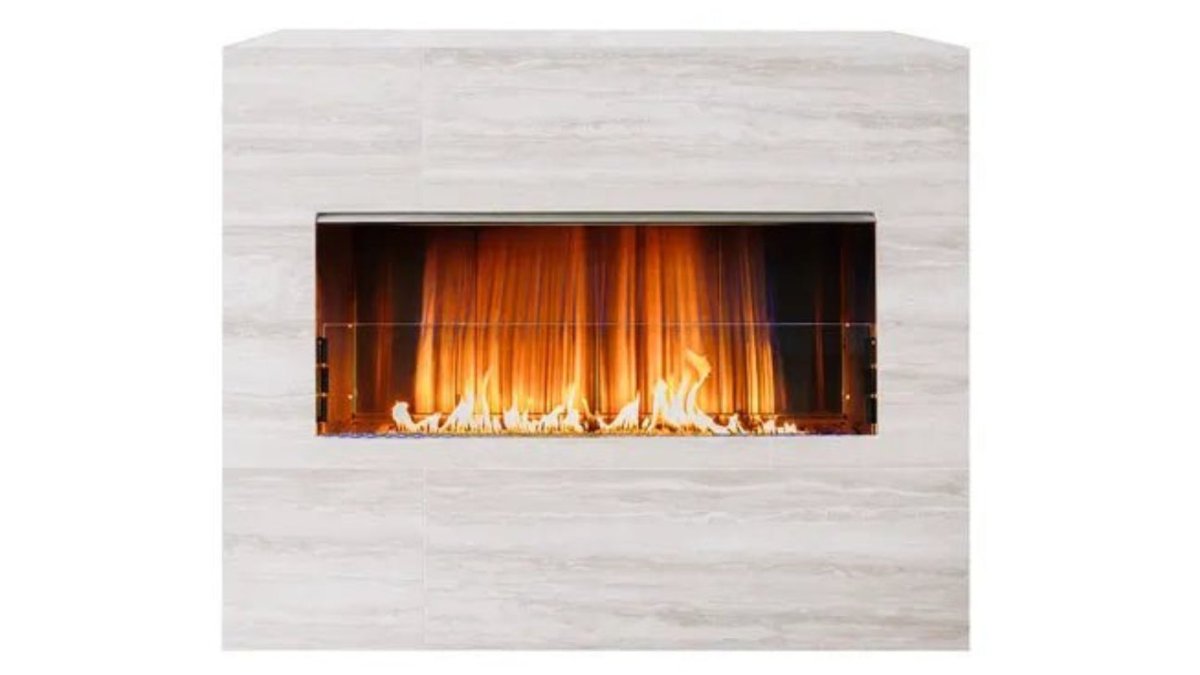
But the gathering effect isn't just aesthetic, it's physical. Fire draws people because it provides radiant warmth in a defined zone.
True Flame Kalea Bay Outdoor Linear Fireplace →
How heat output really works outdoors
Outdoor gas fireplaces are rated in BTUs (British thermal units), the same measure used for indoor heaters and grills. A few things are worth knowing:
- BTU ratings vary widely across models, from compact units suited to a small patio to high-output linear fireplaces built for large entertaining areas. Higher BTU generally means more heat, but not always more comfort.
- Radiant heat is directional. Unlike a forced-air system, a fireplace warms what it faces. Seating arranged in front of the unit stays comfortable; seating off to the side or behind it does not.
- Wind is the biggest variable. A steady breeze pulls heat away from the fire and can cut perceived warmth dramatically. Wind screens, glass surrounds, and thoughtful placement all help.
- An outdoor gas fireplace is a comfort feature, not whole-area heating. It creates a warm gathering zone. It will not heat a large open yard the way a patio heater might cover a broader footprint, and it isn't designed to.
This is why layout matters as much as model choice.
Design options that shape the space
Outdoor gas fireplaces come in several broad formats, each suited to different layouts:
| Format | Best suited to | Design note |
|---|---|---|
| Linear | Modern patios, outdoor kitchens | Wide flame profile; works as a low horizontal focal point |
| Traditional | Classic or transitional spaces | Taller profile; often paired with a mantel or surround |
| See-through | Dividing two seating zones | Creates two gathering sides from one unit |
| Fire tables | Multi-use patios | Combines a surface for drinks with a central flame |
Linear models like the True Flame Kalea Bay suit contemporary patios and outdoor kitchens where a clean horizontal line anchors the space.
What this means for home appeal
A well-designed outdoor fireplace signals that the home has been thoughtfully upgraded. It's one of the few outdoor investments that changes how a space is used, not just how it looks.
That said, it's worth being measured about value claims.
The gathering effect is real. Fire creates a natural reason to linger, sit together, and connect.
Outdoor Gas Fireplace Installation and Fuel Options
Understanding installation and fuel choices is essential before you commit to an outdoor gas fireplace. These decisions affect both performance and long-term usability.
Natural Gas vs. Liquid Propane
Natural gas is the simpler choice if your home has an existing gas line.
Propane works anywhere, with no existing gas infrastructure required.
Neither option is inherently superior. Natural gas is more convenient if available; propane offers flexibility for locations without gas lines.
Professional Installation Matters
Outdoor gas fireplaces require professional installation. Gas lines must be properly sized, tested, and inspected to code.
This isn't a DIY project.
Space and Design Considerations
Before selecting a fireplace, think about your space. Fire tables like the True Flame Sanctuary 1 or Alameda models serve dual purposes, gathering spaces and heat sources.
Smaller spaces benefit from compact models, while larger entertaining areas can accommodate statement pieces.
| Feature | Natural Gas | Liquid Propane |
|---|---|---|
| Installation | Requires existing gas line | Works anywhere; uses tank |
| Convenience | No refills needed | Requires periodic tank refills |
| Supply | Continuous | Limited by tank capacity |
| Flexibility | Fixed location | Can relocate if needed |
| Best For | Homes with gas infrastructure | Remote locations, flexibility |
An outdoor gas fireplace transforms how you use your outdoor space.
At Eternal Flame Outdoors, we specialize in premium outdoor fireplaces and fire features from trusted brands like True Flame, The Outdoor Plus, and Amantii.
Frequently Asked Questions
What are the main advantages of an outdoor gas fireplace over a wood-burning fire pit?
An outdoor gas fireplace offers instant heat with on/off control, requires no firewood storage or handling, produces minimal smoke and fewer sparks, and demands far less maintenance than wood-burning alternatives. You get reliable warmth and ambiance with the convenience of a simple ignition system, ideal for entertaining or relaxing without the hassle of managing a traditional fire.
Does an outdoor gas fireplace require a gas line for installation?
Installation depends on your fuel choice. Natural gas models connect to an existing gas line, while propane models use a portable tank stored nearby or in a concealed compartment. Both options are viable; your choice depends on what's available at your location and your preference for fuel delivery. Professional installation ensures safe, code-compliant setup.
How much maintenance does an outdoor gas fireplace need?
Maintenance is minimal compared to wood-burning fireplaces. Periodic cleaning of the burner and glass, checking ignition components, and ensuring proper ventilation are typical tasks. There's no ash cleanup, chimney sweeping, or firewood seasoning required. Most owners perform basic upkeep themselves, though annual professional inspection is recommended for optimal performance.
Can an outdoor gas fireplace increase my home's value?
Yes, an outdoor gas fireplace enhances your property's appeal and functionality, creating an attractive outdoor entertaining space. Buyers often view premium fire features as desirable amenities that extend usable living space. While the exact value increase varies by market and installation quality, a well-designed outdoor gas fireplace typically adds both aesthetic and practical appeal to your home.
What safety features should I look for in an outdoor gas fireplace?
Key safety features include flame-sensing shutoff that stops gas flow if the flame extinguishes unexpectedly, weather-protected ignition systems safe for rain or pool-side use, sturdy construction with proper ventilation, and clear access to manual controls. Look for models certified by recognized standards bodies. Always follow manufacturer guidelines and local building codes during installation and operation.

Leave a comment
This site is protected by hCaptcha and the hCaptcha Privacy Policy and Terms of Service apply.