
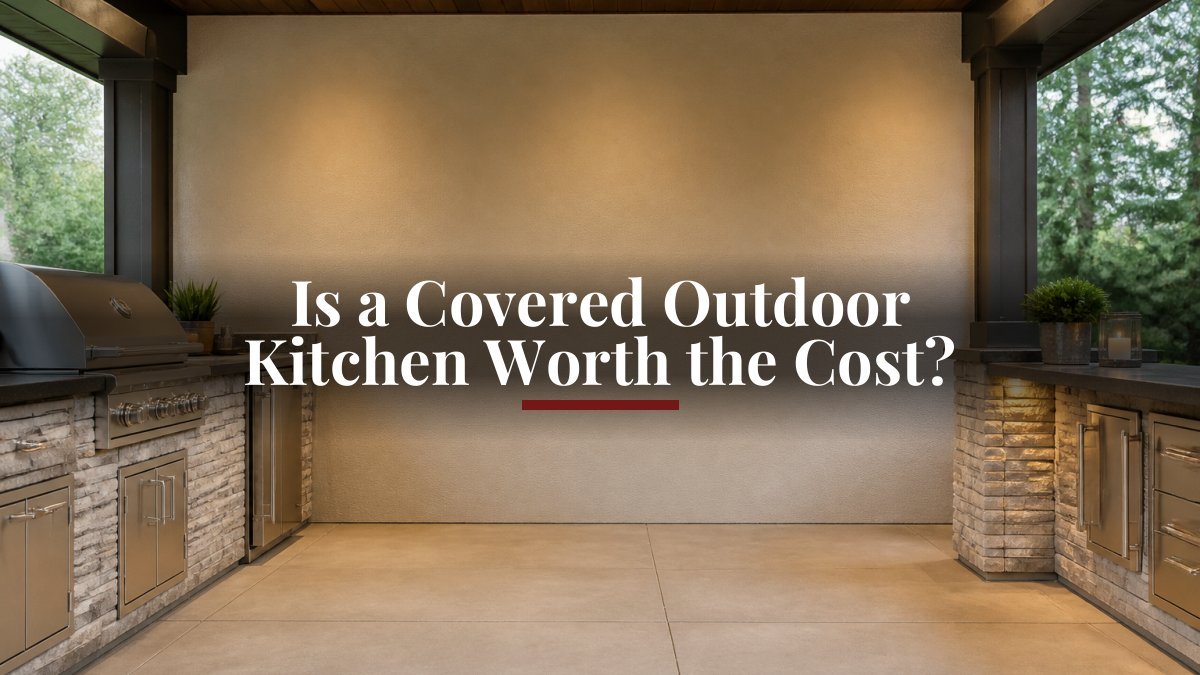
Is a Covered Outdoor Kitchen Worth the Cost?
Table of Contents
- Covered vs Uncovered Outdoor Kitchen: Cost and Feature Comparison
- Breaking Down Outdoor Kitchen Installation and Construction Costs
- Outdoor Kitchen Roof Ideas and Design Options
- Does an Outdoor Kitchen Add Value to a Home?
- Outdoor Kitchen Maintenance and Lifecycle Costs
- Climate, Seasonal Use, and Long-Term Protection
- Making Your Decision: When Coverage Pays Off
- Frequently Asked Questions
Last Updated: October 10, 2026
Covered vs Uncovered Outdoor Kitchen: Cost and Feature Comparison
A covered outdoor kitchen typically costs 30-50% more than an uncovered version, but the protection and extended usability often justify the investment for homeowners in variable climates. Whether that premium makes sense, in other words, whether a covered outdoor kitchen is a covered outdoor kitchen worth the cost, depends on your location, how frequently you entertain, and how long you plan to stay in your home.
At Eternal Flame Outdoors, we empower homeowners to transform any space into an inspiring oasis of warmth and connection, providing expert guidance and personalized service. The core question isn't whether a cover is nice to have, it's whether the dollars spent on a roof structure, materials, and installation align with the real benefits you'll experience year-round.
This guide walks through the cost breakdown, compares covered and uncovered options side by side, and shows you exactly when a covered outdoor kitchen pays for itself.
Breaking Down Outdoor Kitchen Installation and Construction Costs
Base Kitchen Investment
A fully equipped outdoor kitchen, grill, countertops, storage, and appliances, ranges widely depending on size and materials. A basic grill station with simple countertop and cabinetry starts around $8,900 for a 60-inch island. A fully equipped 112-inch kitchen with multiple cooking surfaces, refrigeration, and integrated sink runs $17,105 to $17,625. The largest luxury configurations with griddles, dual grills, and premium finishes can be found in our collection, such as the Videl Maestro 144L BBQ Island at $23,865.00.
These are the foundation costs. A quality outdoor kitchen island from Eternal Flame Outdoors, like the Videl Pacific series or Maestro collection, includes commercial-grade composite construction, granite countertops, built-in appliances, and integrated storage. You're paying for durability and finished appearance, not a bare framework.

The question then becomes: what do you add on top?
Cover and Structural Costs
A roof structure over an outdoor kitchen demands more than a simple patio umbrella. You're looking at:
Structural framing, Posts, beams, and anchoring systems that support roof weight and resist wind loads. Depending on local building codes, this might require concrete footings, engineered posts, and professional installation.
Roofing materials, Polycarbonate panels, metal, wood shingles, or composite materials each have different costs and performance profiles. Polycarbonate (translucent, allows light through) costs less upfront but yellows over time. Metal roofing is durable and sheds water well but conducts heat. Wood requires regular maintenance.
Installation and permits, Most jurisdictions require permits for permanent roof structures.
Ventilation and drainage, A roof traps heat and moisture from cooking. Without proper ventilation, you risk damage to the structure and appliances.
Total coverage cost: $6,500-$28,000+ depending on size, materials, and local labor rates. A modest pergola-style cover runs $6,500-$12,000. A fully enclosed, weatherproof structure approaches $20,000-$28,000.
Outdoor Kitchen Roof Ideas and Design Options
The right roof style balances aesthetics, function, and budget. Here are the main options:
Pergola or open-frame structures provide partial shade and visual interest without full weather protection. They block direct sun but allow rain through. Cost: $3,000-$8,000. Best for mild climates or homeowners who don't cook during rain.
Polycarbonate panels offer translucent coverage that lets light through while blocking UV rays. They're lightweight, affordable, and easy to install. Drawback: they yellow over 5-10 years and don't handle heavy snow loads well. Cost: $4,000-$10,000.
Metal roofing (aluminum or steel) is durable, sheds water efficiently, and handles snow and wind well. It reflects heat rather than absorbing it, keeping the cooking area cooler. Metal requires professional installation and costs more upfront. Cost: $6,000-$15,000. Best for regions with heavy rain or snow.
Solid wood or composite roof creates a finished, high-end appearance and integrates with home architecture. Wood requires ongoing maintenance (staining, sealing). Composite materials are lower-maintenance but cost more. Cost: $8,000-$18,000. Ideal for homeowners prioritizing aesthetics and willing to invest in upkeep.
Retractable awnings or motorized covers offer flexibility, open on nice days, closed during rain or intense sun. Modern motorized systems integrate with smart home controls. Cost: $3,000-$8,000 for quality systems. Best for homeowners who want options without permanent structural commitment.
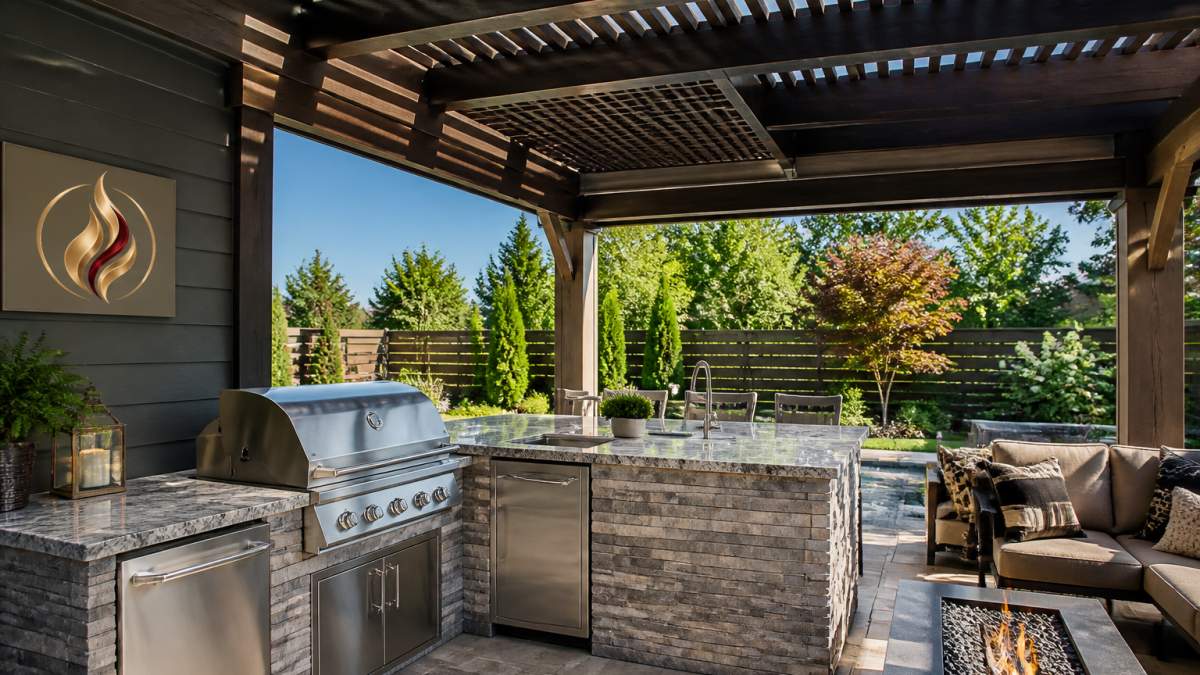
The style you choose depends on your climate. In regions with frequent rain or snow, a solid roof with proper drainage is essential. In dry, sunny climates, a pergola or polycarbonate cover provides enough protection while keeping costs lower.
Does an Outdoor Kitchen Add Value to a Home?
Homeowners often ask whether an outdoor kitchen investment comes back at resale. The answer is nuanced.
An outdoor kitchen adds perceived value and appeal to potential buyers. It signals a home designed for entertaining and outdoor living, qualities many buyers prioritize.
A few factors influence this:
Location and buyer demographics, In warm climates where outdoor living is year-round, outdoor kitchens command stronger returns. In colder regions, buyers view them as luxury add-ons rather than essential features. Affluent neighborhoods see higher ROI than modest ones.
Quality and integration, A well-designed outdoor kitchen that flows naturally from your home's architecture and matches its style adds more value than a disconnected, mismatched setup. Premium materials and finishes matter.
Condition at resale, A neglected, weathered outdoor kitchen actually detracts from value. Buyers see maintenance costs and repairs ahead. A well-maintained, covered kitchen in good condition preserves value better.
Videl Pacific 112" BBQ Island – Composite Outdoor Kitchen with Granite →
Covered vs uncovered, A covered outdoor kitchen holds value better. It demonstrates that you've invested in protection and longevity, and it extends the usable season. Buyers in variable climates especially appreciate this.
If resale value is your primary motivation, a covered outdoor kitchen is the smarter choice. It signals durability and year-round functionality, which appeals to more buyers than an exposed grill station.
Outdoor Kitchen Maintenance and Lifecycle Costs
This is where coverage truly pays dividends. An uncovered outdoor kitchen requires constant maintenance:
Grill and appliance upkeep, Exposed grills oxidize faster. Stainless steel needs regular cleaning to prevent rust spots. Gas lines corrode. Refrigerators and other appliances exposed to rain and UV degrade quicker.
Countertop and cabinetry damage, Granite and composite materials can crack from freeze-thaw cycles. Wood cabinetry rots. Moisture seeps into storage areas.
Seasonal winterization, In cold climates, you'll need to drain gas lines, cover appliances, and prepare for freeze damage. This is labor-intensive and doesn't guarantee protection.
Cleaning frequency, Uncovered kitchens need weekly cleaning to prevent mold, mildew, and staining. Covered kitchens need less frequent deep cleaning.
A covered outdoor kitchen reduces these costs significantly. The roof shields appliances from rain, UV rays, and temperature extremes. Maintenance shifts from damage control to routine upkeep. Your grill, refrigerator, and countertops last longer, reducing replacement costs over 15-20 years.
Climate, Seasonal Use, and Long-Term Protection
Your climate is the biggest factor in the coverage decision.
Hot, dry climates (Southwest, Southern California) benefit from coverage mainly for UV protection and heat reflection. Rain isn't a concern, but intense sun degrades materials faster. A pergola or polycarbonate cover extends equipment life noticeably. Full enclosure is less critical.
Temperate climates with moderate rain (Pacific Northwest, parts of the Northeast) see real value in coverage. Rain exposure causes rust and wood rot. A solid roof with proper drainage protects your investment. You'll use the kitchen year-round under cover.
Cold climates with snow (Upper Midwest, Northeast, Mountain regions) demand full coverage. Freeze-thaw cycles crack stone and concrete. Snow load requires structural support. Without coverage, your outdoor kitchen is essentially seasonal (May-September). With coverage and heating, you might extend use to 8-9 months. The cost of coverage is justified by extended usability alone.
Humid subtropical climates (Southeast, Gulf Coast) face mold, mildew, and rust challenges. Constant moisture exposure degrades everything faster. A covered kitchen with good ventilation is nearly essential if you want the investment to last.
If you use your outdoor kitchen year-round or plan to stay in your home for 10+ years, coverage pays for itself through extended lifespan and reduced repairs. If you use it seasonally and plan to move within 5 years, an uncovered kitchen might make financial sense, but resale appeal will suffer.
Making Your Decision: When Coverage Pays Off
Use this framework to decide:
Coverage makes sense if:
- You live in a climate with frequent rain, snow, or temperature extremes
- You plan to stay in your home for 10+ years
- You cook outdoors more than 6 months per year
- You value year-round entertaining capability
- Resale appeal matters (covered kitchens attract more buyers)
- You want to minimize maintenance and repairs
Skip coverage if:
- You live in a consistently dry climate (minimal rain, stable temperatures)
- Your outdoor kitchen is primarily seasonal (3-4 months per year)
- You're willing to accept higher maintenance costs
- Budget is severely constrained
- You plan to move within 5 years and view the kitchen as a short-term feature
The math is straightforward: determining whether a covered outdoor kitchen is a covered outdoor kitchen worth the cost comes down to comparing the premium against long-term savings. Over time, that can break even when you factor in reduced appliance replacement, fewer repairs, and extended usability, especially in climates where coverage prevents weather damage.
A fully equipped outdoor kitchen from Eternal Flame Outdoors, like the Videl Pacific 96-inch island or the premium Maestro 144L, represents a significant investment. Adding a proper roof structure protects that investment and ensures you enjoy it for decades.


| Decision Factor | Uncovered Kitchen | Covered Kitchen |
|---|---|---|
| Initial cost | Lower | Higher ($6,500-$28,000 more) |
| Annual maintenance | $800-$1,200 | $400-$600 |
| Equipment lifespan | 7-10 years | 12-15 years |
| Usable season | 4-6 months | 8-12 months |
| Resale value retention | 50-60% | 65-75% |
| Climate suitability | Dry, mild only | All climates |
| Best for | Budget-conscious, seasonal use | Long-term owners, frequent entertaining |
The decision between a covered and uncovered outdoor kitchen comes down to your climate, how much you'll use the space, and how long you plan to stay in your home. In most cases, the extended lifespan, reduced maintenance, and year-round usability of a covered kitchen justify the additional investment.
At Eternal Flame Outdoors, we work with homeowners to design outdoor kitchens that fit both their entertaining vision and their budget. Whether you're starting with a compact grill station or building a luxury L-shaped kitchen with multiple cooking surfaces, we can help you evaluate whether coverage makes sense for your situation. Explore our full range of premium outdoor kitchen islands, or contact our team for a personalized consultation on designing an outdoor space built to last.
Frequently Asked Questions
What is the cost difference between a covered and uncovered outdoor kitchen?
A covered outdoor kitchen typically costs more than an uncovered one, depending on the cover type and structural requirements. A basic uncovered grill station might start around $8,900 for a 60-inch island. The exact premium depends on your climate, local building codes, and whether the cover is a simple shade structure or a fully enclosed weatherproof design.
Does a covered outdoor kitchen add value to a home?
A well-designed covered outdoor kitchen can add value to your home, depending on your market and how the space is finished. Buyers increasingly value extended outdoor living areas, especially in regions with favorable weather year-round. However, the return depends on how the kitchen is integrated into your overall landscape design and whether it complements your home's style.
What are the main benefits of covering an outdoor kitchen?
Covering your outdoor kitchen extends its usable season, protects appliances and finishes from sun, rain, and debris, and creates a comfortable entertaining space during inclement weather. You'll spend less time on maintenance, reduce weather-related wear on grills and countertops, and gain the flexibility to cook and entertain year-round. A cover also shields food preparation surfaces and keeps ingredients fresher during hot days, making the kitchen more functional for frequent entertaining.
What maintenance does a covered outdoor kitchen require?
Covered kitchens require regular cleaning of the roof or cover structure to prevent debris buildup and mold, especially in humid climates. Inspect seals and joints annually to catch water leaks early. Grills and appliances still need seasonal maintenance, cleaning grates, checking gas lines, and protecting equipment during winter. Granite countertops benefit from periodic sealing. Overall, a cover reduces exposure damage, so you'll spend less on equipment replacement and refinishing compared to an uncovered kitchen, though the cover itself needs occasional upkeep.

Leave a comment
This site is protected by hCaptcha and the hCaptcha Privacy Policy and Terms of Service apply.