
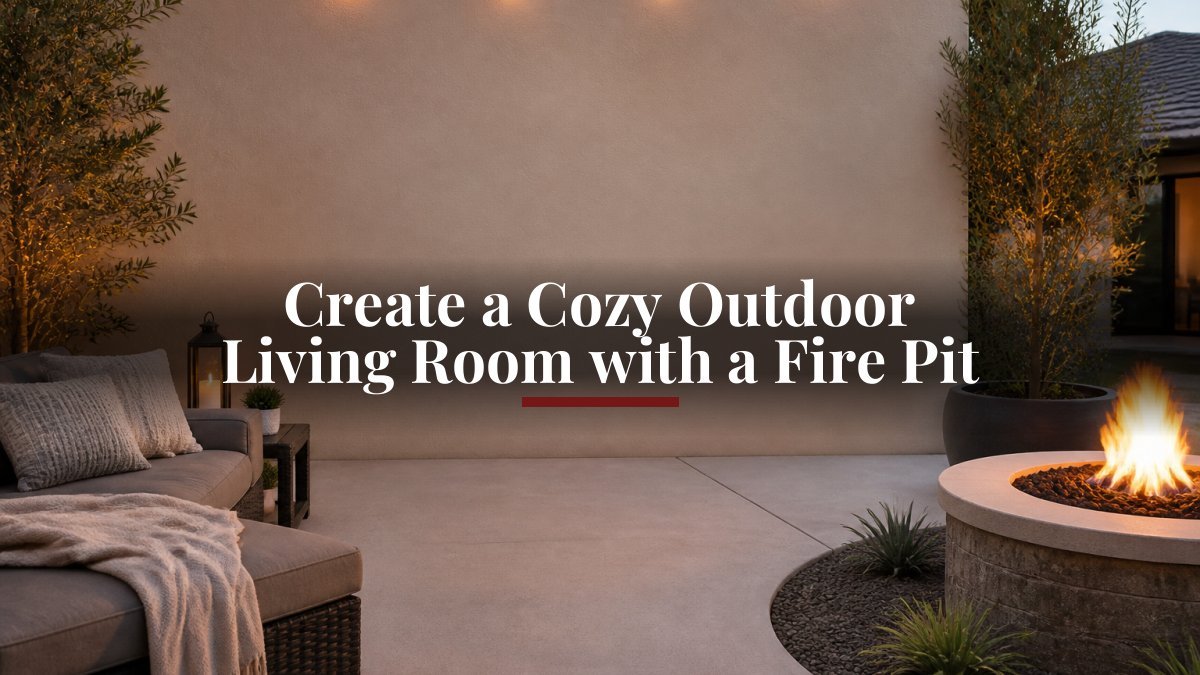
Create a Cozy Outdoor Living Room with a Fire Pit
Table of Contents
- Choose Your Fire Feature as the Focal Point
- Plan Your Outdoor Living Room Layout with Fire Pit Placement
- Fire Pit Safety and Placement Considerations
- Fire Pit Landscaping Ideas to Define Your Space
- Layer Lighting and Soft Textiles for Warmth
- Weatherproofing and Year-Round Maintenance
- Frequently Asked Questions
Last Updated: October 10, 2026
Choose Your Fire Feature as the Focal Point
An outdoor living room fire pit or fire table is the heart of any outdoor living room, anchoring your layout like an indoor fireplace. Everything else, seating, lighting, landscaping, flows from this central point.

Fire Tables vs. Fire Pits
Fire tables are elevated platforms that double as dining or gathering surfaces, working well in compact spaces. Fire pits are ground-level features that create a more traditional gathering experience with dramatic flames, suiting larger yards.
Consider your space and lifestyle:
| Feature Type | Best For | Key Benefit |
|---|---|---|
| Fire Table | Smaller patios, dining gatherings | Compact, functional surface |
| Fire Pit | Larger yards, lounge seating | Dramatic flames, cozy atmosphere |
Fire tables like The Outdoor Plus Alameda Fire Table offer customizable tops and base colors. Gas fire features provide clean, adjustable flames; wood-burning pits offer authentic crackling. Your choice depends on convenience, local regulations, and desired atmosphere.
Plan Your Outdoor Living Room Layout with Fire Pit Placement
Identify your fire feature's location: visible from your home, positioned to take advantage of natural wind patterns, and not directly in front of your main view.
Measure and Map Your Space
Measure your patio and sketch your space, marking existing structures: house, trees, fences, and utilities.
Most fire pits require at least 10 feet of clear space in all directions from structures and vegetation. Check local fire codes, requirements vary by location.
Plan for 3 to 5 feet between the fire feature and the nearest seat to keep guests comfortable and conversation easy.
Create natural traffic paths from the house through the seating area, allowing people to move without stepping over seating or approaching the fire too closely.
Arrange Seating Around the Fire
Arrange seating in a loose circle or arc around your fire feature to encourage conversation and keep everyone warm.
Space seating 8 to 10 feet apart for comfortable conversation; adjust for intimate gatherings or larger events.
Mix seating types: lounge chairs, benches, and side tables for drinks and snacks.
Arrange seating so people face the fire and each other in curved, organic arrangements rather than straight lines.
Position seating so guests see the fire at eye level or slightly above without craning their necks.
Fire Pit Safety and Placement Considerations
Safety is not negotiable. A fire feature should enhance your outdoor living room, not create hazards for your family, guests, or neighbors. Understanding clearances, local regulations, and proper operation prevents accidents and ensures your fire feature remains legal and insurable.
Clearance Requirements and Local Fire Codes
Requirements vary significantly by location. Before purchasing or installing a fire feature, contact your local fire marshal's office or building department to confirm specific rules.
Common clearance minimums include:
- 10 to 15 feet from structures (house, garage, shed, deck)
- 10 to 15 feet from tree canopies and overhanging branches
- 5 to 10 feet from property lines
- Clear ground space of at least 10 feet in all directions, free of leaves, mulch, and combustible debris
Your local code may be more or less restrictive. Some municipalities prohibit wood-burning fires or restrict them seasonally; others require permits or inspections. Contact your local authority to confirm requirements.
Ground Preparation and Drainage
Your fire feature must sit on level, stable ground. If your yard slopes, build a retaining wall or level platform at least 2 to 3 feet wider than the fire feature on all sides.
Standing water rusts metal components and degrades concrete. If your patio doesn't drain well, grade the ground away from the fire feature at a slight slope (1/8 inch per foot minimum), install a perimeter drain if needed, or use a permeable paver base.
Wind, Smoke, and Neighbor Relations
Prevailing winds carry smoke and sparks toward downwind properties. Observe wind patterns and position your fire feature so winds blow smoke away from your house and neighbors. If your yard is small or surrounded by neighbors, consider a gas fire feature, it produces less smoke and is easier to control.
Vegetation and Clearance Around the Fire Feature
Low-hanging branches, dense shrubs, and overhanging trees are fire hazards. Trim branches at least 15 feet above the flames, remove dead branches, maintain at least 3 to 4 feet of clear space around the feature, and clear leaves and debris regularly.
Supervision and Emergency Preparedness
Never leave a lit fire unattended. Before lighting, keep a fire extinguisher within 10 feet, have a garden hose ready, ensure an adult remains present, keep children and pets at least 10 feet away, and never use accelerants. Fully extinguish embers with water and stir ashes before leaving.
Insurance and Liability
Some homeowners' insurance policies restrict or exclude coverage for fire features. Contact your insurance agent before installation to confirm coverage and understand any conditions or exclusions.
Fire Pit Landscaping Ideas to Define Your Space
Landscaping frames your outdoor living room fire pit and creates visual boundaries. It makes the space feel intentional and complete.
Natural Stone and Pavers
Stone and pavers define the seating area and protect grass from foot traffic. A circular or curved paver patio around your fire feature is both practical and attractive.
The Outdoor Plus Alameda Fire Table GFRC Top and Powder Coat Base →
Natural stone like flagstone, slate, and bluestone adds texture and visual interest. Choose stone tones that complement your fire feature, warm-toned pavers harmonize with light GFRC tops; darker pavers ground lighter tables.
Plants and Greenery
Plant tall shrubs or evergreens behind seating areas for privacy and wind reduction. Low plantings and decorative grasses add softness without blocking views. Choose native plants suited to your climate. Avoid planting directly next to the fire feature; maintain at least 3 to 4 feet of clear space.
Layer Lighting and Soft Textiles for Warmth
Evening lighting transforms your outdoor living room. It extends usability into the night and creates atmosphere.
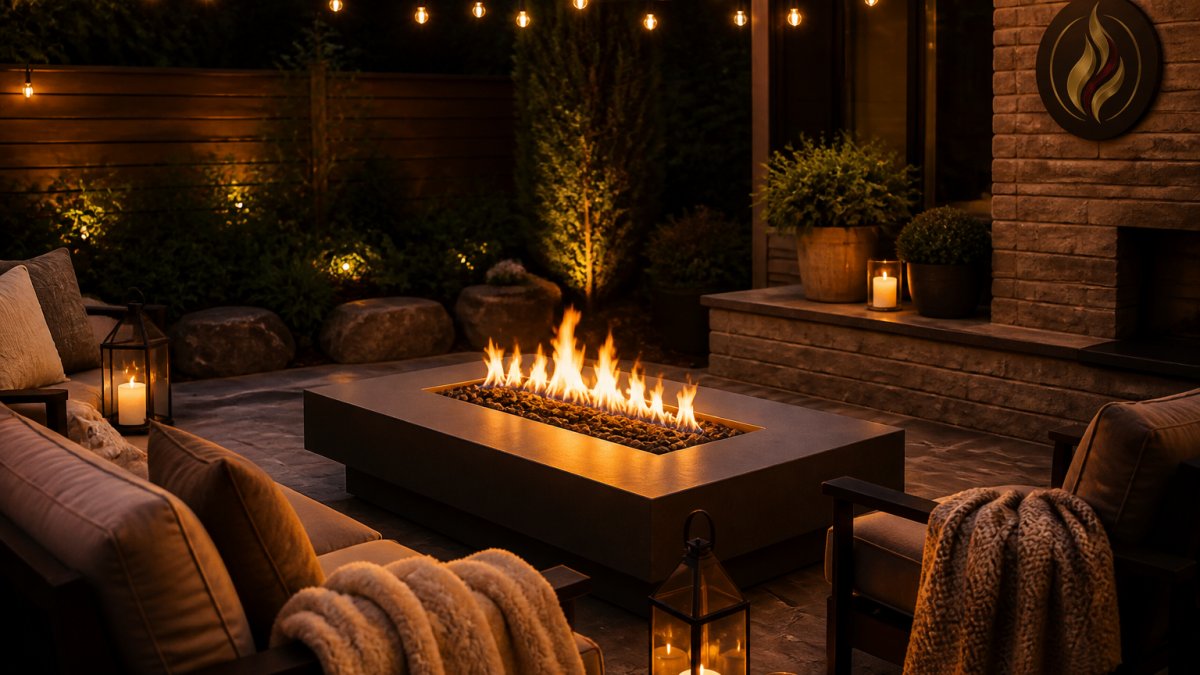
Ambient lighting sets the mood. String lights overhead create a canopy of warm glow. Solar pathway lights guide movement through the space. Uplighting on plants and architectural features adds depth.
The fire feature itself provides light and warmth. Supplement it with subtle lighting that doesn't overpower the flames. Soft, warm-toned bulbs work best. Avoid bright white or blue lights that clash with firelight.
Soft textiles add comfort and coziness. Blankets draped over chairs keep guests warm on cool evenings.
Weatherproofing and Year-Round Maintenance
Your outdoor living room investment deserves protection. Proper maintenance keeps your fire feature, paving, and surrounding materials looking beautiful and functioning safely for years. Different materials require different care, and seasonal preparation prevents costly damage.
Seasonal Preparation and Storage
Before winter:
- Gas fire features: Have the gas line inspected annually by a licensed professional; turn off the main supply if unused for several months
- Wood-burning fire pits: Clean out ash and debris; inspect for rust and apply rust preventative if needed
- Fire tables: Cover with a fitted, breathable cover to prevent moisture buildup
- Cushions and textiles: Store indoors in a dry location
- Outdoor rugs: Roll up and store indoors or cover with a tarp
Material-Specific Care
Natural stone and pavers:
- Sweep or blow off leaves and debris monthly
- Pressure wash gently (under 1500 PSI) in spring; avoid high-pressure washing on softer stones
- Seal pavers annually to prevent water absorption and staining
- Address cracks or settling promptly to prevent trip hazards
- In freeze-thaw climates, ensure proper drainage to prevent heaving and damage
Concrete fire tables and surrounds:
- Clean with mild soap and water; avoid harsh chemicals
- Seal every 1 to 2 years to protect against water absorption and freeze-thaw damage
- Fill cracks with concrete crack filler to prevent water infiltration
- Avoid salt-based de-icers in winter; use sand or calcium chloride instead
Metal fire features (steel, aluminum, cast iron):
- Wipe down after each use to remove ash and moisture
- Inspect regularly for rust and address early with a wire brush and rust-preventative spray
- Apply a high-temperature protective coating annually if exposed year-round
- Check that gas burner ports are clear and the ignition system functions smoothly
- Store removable parts indoors during winter
Outdoor fabrics and cushions:
- Vacuum or brush off debris weekly
- Spot-clean spills immediately with mild soap and water
- Deep clean annually with a fabric-safe cleaner
- Allow cushions to dry completely before storing
- Rotate seasonally to ensure even wear
Spring and Fall Maintenance Checklist
Spring (before heavy use):
- Test your fire feature. Light it up and check that flames burn evenly and controls respond smoothly
- Inspect the burner, ignition system, and gas connections for damage or corrosion
- Clean out any debris, leaves, or nesting material from the fire bowl or burner area
- Check that all fasteners are tight and nothing is loose or rattling
- Inspect surrounding paving for cracks, settling, or drainage issues
- Trim back any vegetation that has grown too close to the fire feature
- Power wash or sweep the patio to remove winter grime
Fall (before winter weather):
- Perform a final inspection of the fire feature and surrounding area
- Clean out the fire bowl or pit completely
- Drain and store garden hoses
- Cover the fire feature with a breathable cover
- Store blankets and textiles indoors
- Trim dead branches from nearby trees
- Clear gutters and downspouts to ensure water drains away from the patio
- Apply sealer to pavers if needed before winter
Gas Line and Burner Maintenance
If your fire feature uses natural gas or propane, annual professional inspection is essential. A licensed technician will:
- Check for gas leaks using a soap solution
- Inspect connections and fittings for corrosion or damage
- Test the ignition system and flame control
- Clean or replace the burner if necessary
- Verify that the feature is operating safely and efficiently
Do not attempt to repair gas lines or burners yourself. Gas work requires proper licensing and certification.
Addressing Common Issues
Rust on metal components:
- Wire-brush the affected area to remove loose rust
- Apply a rust converter to stop active corrosion
- Paint with high-temperature paint or protective coating
- Prevent future rust by keeping the area dry and applying a protective coating annually
Uneven flame or burner issues:
- Check that the burner ports are clear of debris, ash, or insect nests
- Ensure the fuel supply is adequate and connections are tight
- Have a professional inspect the ignition system if the burner won't light or flames are weak
Water pooling around the fire feature:
- Grade the surrounding area to slope away from the feature
- Install a perimeter drain if pooling persists
- Ensure that downspouts and gutters direct water away from the patio
Cracked or settling pavers:
- Address settling promptly to prevent tripping hazards
- Fill cracks with concrete filler or polymeric sand
- If settling is severe, have a professional assess whether the base is adequate or if re-leveling is needed
Proper maintenance is an investment in safety, longevity, and enjoyment. A well-maintained fire feature and outdoor living space will serve your family for decades.
Frequently Asked Questions
How much space should you leave around an outdoor fire pit?
Most fire codes recommend at least 10 feet of clearance from the fire pit to any structure, fence, or overhanging branches. For seating comfort and safety, plan 8-12 feet of radius around your fire feature. This gives guests enough distance from heat and flames while keeping the gathering space intimate. Always check local fire codes in your area, as requirements may vary.
What's the difference between a gas fire pit and a wood-burning fire pit?
Gas fire pits offer convenience, easy ignition, and clean operation with adjustable flames, making them ideal for frequent entertaining. Wood-burning fire pits provide authentic ambiance and crackling sounds but require more maintenance and fuel storage. Gas models work better in urban areas with smoke restrictions, while wood-burning pits suit larger properties. Consider your climate, entertaining style, and local regulations when deciding between gas fire pit vs. wood-burning fire pit options.
How do you arrange an outdoor living room around a fire pit?
Start by positioning your fire feature as the central focal point. Arrange seating in a semi-circle or U-shape facing the fire, keeping 8-12 feet distance. Place larger pieces first, then add chairs and accent seating. Ensure clear sightlines between guests and define the space with a patio. Add side tables for drinks and decor, and layer landscaping or pavers around the perimeter to ground the outdoor living room layout with fire pit placement.
What are some creative fire pit landscaping ideas?
Use natural stone or pavers to create a defined patio around your fire feature, anchoring the space visually. Plant ornamental grasses, shrubs, and evergreens around the perimeter for privacy and texture. Add a low retaining wall or planter beds to frame the area. Consider decorative mulch or gravel pathways connecting the fire pit to other outdoor living zones. These fire pit landscaping ideas help define boundaries, soften hardscapes, and create a cohesive outdoor oasis.



Leave a comment
This site is protected by hCaptcha and the hCaptcha Privacy Policy and Terms of Service apply.