
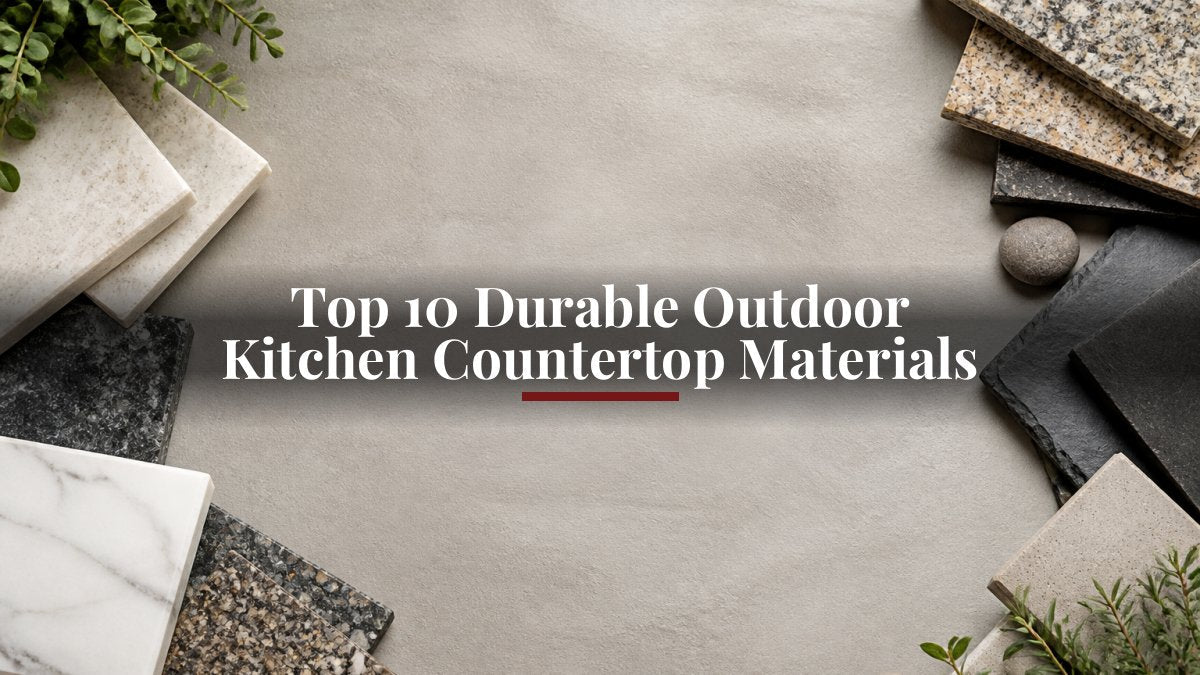
Top 10 Durable Outdoor Kitchen Countertop Materials
Table of Contents
- What Makes a Great Outdoor Kitchen Countertop Material
- Quartz vs Granite for Outdoor Kitchens: Which Wins
- The 10 Best Outdoor Kitchen Countertop Materials Ranked
- Outdoor Kitchen Countertop Thickness: What You Need to Know
- Outdoor Kitchen Countertop Maintenance and Sealing
- Choosing the Right Material for Your Climate and Lifestyle
- Conclusion
- Frequently Asked Questions
Last Updated: October 12, 2026
What Makes a Great Outdoor Kitchen Countertop Material
Choosing the right outdoor kitchen countertop material is one of the most important decisions you'll make when building a premium outdoor living space. Your countertop faces constant exposure to sun, rain, temperature swings, and heavy use, so durability matters far more than aesthetics alone.
The difference between a countertop that looks great for five years and one that performs flawlessly for 20 comes down to material selection and understanding how each option performs in real-world conditions.
Quartz vs Granite for Outdoor Kitchens: Which Wins
Granite and quartz engineered surfaces dominate outdoor kitchen countertop material conversations, but they solve different problems.
Granite is a natural stone formed deep in the earth over millions of years.
Quartz engineered surfaces are manufactured from crushed quartz combined with resin binders and pigments.
Here's where they diverge: granite needs periodic resealing (every 1-3 years depending on climate and use), while quartz doesn't.
For outdoor kitchens specifically, granite offers strong direct heat tolerance.
The 10 Best Outdoor Kitchen Countertop Materials Ranked
1. Granite
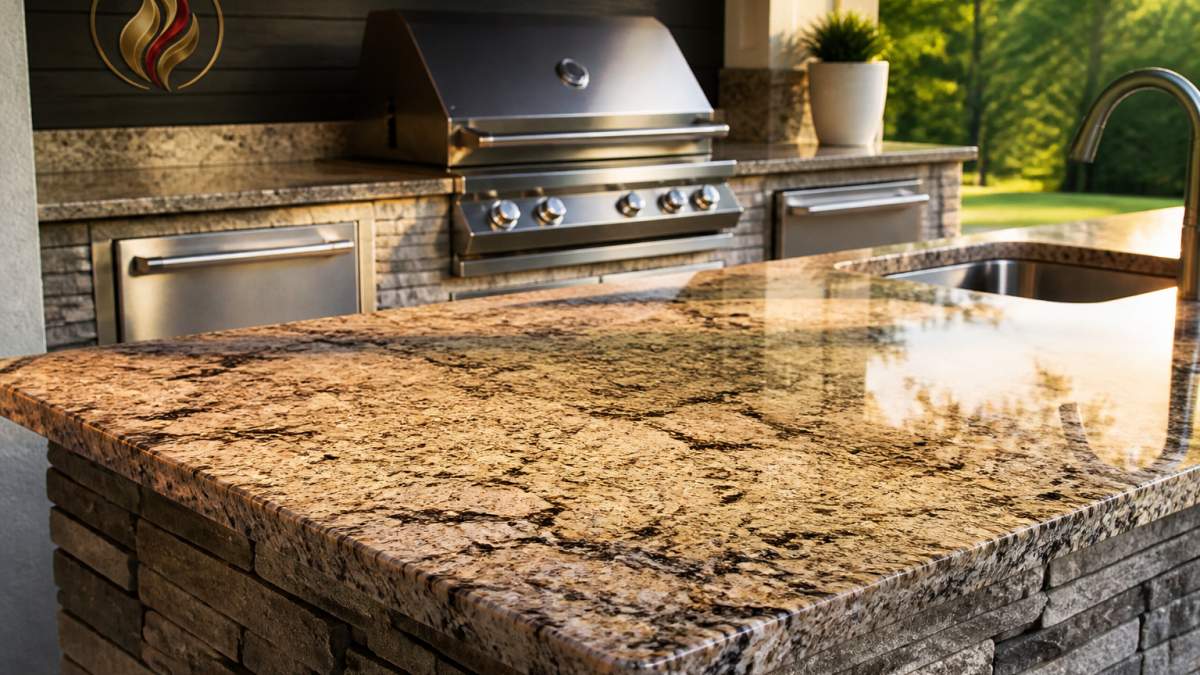
Granite is the gold standard for outdoor kitchen countertop materials, and for good reason.
Heat Resistance: Granite handles direct heat from grills exceptionally well.
Weather Resistance: Properly sealed granite resists staining from wine, oil, and food acids.
Maintenance: Granite requires regular sealing and periodic deep cleaning.
Limitations: Granite can be pricey, especially for rare colors or patterns. Sealing adds ongoing cost and effort.
2. Quartzite
Quartzite is a natural stone that often gets confused with quartz engineered surfaces, but it's completely different.
Quartzite is quarried and cut into slabs, then typically sealed like granite.
Weather Resistance: Sealed quartzite resists staining and moisture absorption. It's stable in freeze-thaw climates.
Durability: Quartzite is harder than granite, which means it resists scratching and etching better.
Limitations: Quartzite is more expensive than granite and less available in many regions. Color options are more limited.
3. Quartz Engineered Surfaces
Because they're factory-sealed with resin, quartz engineered surfaces don't require field sealing.
Color Consistency: Engineered quartz offers unlimited color options and consistent patterns across slabs.
Weather Resistance: Quartz resists moisture and won't absorb water, making it stable in humid or freeze-thaw climates.
Heat Limitation: This is the critical trade-off.
Maintenance: Minimal. Wipe with mild soap and water. No sealing required.
4. Porcelain Slabs
Porcelain slabs are large-format tiles made from porcelain clay fired at extreme temperatures.
Porcelain is non-porous, meaning it doesn't absorb water or stains.
Durability: Porcelain slabs are highly durable in outdoor conditions.
Heat Resistance: Porcelain handles heat well, though not quite as reliably as granite.
Installation Complexity: Porcelain slabs are heavy and require skilled installation.
Maintenance: Essentially none. Wipe with soap and water. No sealing needed.
5. Concrete
Concrete countertops offer a modern, industrial aesthetic that's become increasingly popular in premium outdoor kitchens.
Customization: Concrete allows complete design control. You can create a surface that's truly one-of-a-kind.
Durability Challenge: Concrete is porous and requires regular sealing, similar to granite.
Maintenance: Concrete demands more maintenance than most alternatives.
Cracking Risk: Concrete naturally cracks over time as it settles and responds to temperature changes.
6. Stainless Steel
Heat Resistance: Stainless steel is essentially immune to heat.
Durability: Steel can last a very long time if properly maintained.
Maintenance: Wipe with mild soap and water. That's it. No sealing, no special care.
Aesthetic Trade-off: Stainless steel is industrial and cold-feeling compared to stone or wood.
Cost: Stainless steel is moderately priced, less than granite, similar to or slightly more than concrete.
Noise: Metal is loud.
7. Soapstone
Soapstone is a natural metamorphic rock composed primarily of talc.
Soapstone is quarried and cut into slabs.
No Sealing Required: Soapstone is one of the few natural stones that doesn't need sealing.
Stain Resistance: The dense, non-porous structure means soapstone resists staining from wine, oil, and acids.
Aesthetic Development: Soapstone darkens and develops character over time.
Videl Pacific 112" BBQ Island – Composite Outdoor Kitchen with Granite →
Cost: Soapstone is moderately priced, comparable to granite, sometimes less depending on source.
8. Ceramic Tile
Ceramic tile is an affordable, accessible option for outdoor kitchen countertops.
Ceramic is non-porous when glazed, resisting staining and moisture.
Design Flexibility: Tile allows creative patterns and color combinations.
Durability Limitation: Individual tiles are durable, but grout is the weak point.
Maintenance: Grout requires regular sealing and cleaning. Stains in grout are difficult to remove.
Heat Resistance: Ceramic handles heat reasonably well, though thermal shock (rapid temperature change) can crack tiles.
9. Dekton
Dekton is non-porous, very hard, and designed for outdoor durability.
Extreme Durability: Dekton resists staining, scratching, and UV fading exceptionally well.
Weather Resistance: Non-porous structure means zero moisture absorption. Freeze-thaw cycles don't affect it.
Low Maintenance: No sealing required. Wipe with soap and water.
Cost: Dekton is premium-priced, more expensive than granite but comparable to high-end porcelain or quartzite.
Limited Availability: Dekton isn't as widely available as granite or quartz, which can make sourcing and installation more challenging in some regions.
10. Butcher Block (Sealed)
Sealed butcher block brings warmth and natural wood character to outdoor kitchens.
Sealed butcher block can perform adequately if properly maintained.
Aesthetic Appeal: Wood adds warmth and character that stone or metal can't match.
Moisture Risk: Even sealed, wood absorbs moisture over time.
Durability: Expect 5-10 years of service with consistent maintenance. It's not a permanent solution.
Cost: Butcher block is moderately priced upfront, but ongoing sealing costs add up over time.
Outdoor Kitchen Countertop Thickness: What You Need to Know
Countertop thickness affects both aesthetics and structural integrity.
Standard Thickness (1.25" to 1.5"): Most outdoor kitchen countertops are 1.25 to 1.5 inches thick.
Premium Thickness (2" or greater): Thicker countertops create a more substantial, luxury appearance.
Substrate and Support: Thickness alone doesn't guarantee durability.
Edge Profiles: Thicker countertops allow for more dramatic edge profiles, beveled edges, waterfall edges, or decorative details. Thinner countertops limit edge options.
Outdoor Kitchen Countertop Maintenance and Sealing
Maintenance requirements vary dramatically by material.
Engineered Surfaces (Quartz, Dekton, Porcelain): These materials require no sealing.
Concrete: Concrete requires sealing every 1-2 years, similar to natural stone. Stains must be addressed immediately.
Stainless Steel: Wipe with mild soap and water. For a polished appearance, use specialized stainless steel cleaner monthly.
Ceramic Tile: Grout is the maintenance burden. Seal grout annually and clean stains promptly.
Butcher Block: Seal every 6-12 months. Wipe spills immediately to prevent water damage.
| Material | Sealing Required | Frequency | Maintenance Difficulty |
|---|---|---|---|
| Granite | Yes | Every 1-3 years | Moderate |
| Quartzite | Yes | Every 1-3 years | Moderate |
| Quartz (Engineered) | No | None | Minimal |
| Porcelain | No | None | Minimal |
| Concrete | Yes | Every 1-2 years | High |
| Stainless Steel | No | None | Minimal |
| Soapstone | No | None | Minimal |
| Ceramic Tile | Grout only | Annually | High |
| Dekton | No | None | Minimal |
| Butcher Block | Yes | Every 6-12 months | High |
Choosing the Right Material for Your Climate and Lifestyle
Freeze-Thaw Climates: If you experience significant seasonal temperature swings with freezing winters, prioritize non-porous materials.
Hot, Sunny Climates: UV exposure fades some materials over time.
Humid or Coastal Climates: Salt air and moisture accelerate material degradation.
High-Use Kitchens: If you cook frequently and entertain regularly, prioritize durability and low maintenance.
Budget Consideration: Ceramic tile and concrete are affordable upfront but costly long-term (maintenance, repairs, eventual replacement).
Conclusion
The best outdoor kitchen countertop material depends on three factors: your climate, your cooking habits, and your maintenance tolerance. Granite and quartzite deliver authentic natural stone character with excellent heat and weather resistance, but they require periodic sealing.
When you're ready to build or upgrade your outdoor kitchen, the countertop material you choose sets the tone for the entire space. Our Videl Pacific BBQ Islands feature genuine granite countertops paired with professional-grade grills and integrated storage, built to last decades while delivering the functionality and aesthetics you expect from a luxury outdoor kitchen.

Whether you're planning a modest 60-inch island or a comprehensive 112-inch entertainment space, the right countertop material matters as much as the grill itself.
Frequently Asked Questions
What countertop material holds up best outdoors?
Granite, quartzite, and porcelain slabs are among the most durable outdoor kitchen countertop materials. They resist UV damage, weathering, and temperature swings that cause softer materials to crack or fade. Granite and quartzite are natural stone with exceptional hardness, while porcelain offers engineered durability without sealing. Stainless steel and Dekton also perform excellently in harsh conditions. Your best choice depends on your climate, maintenance commitment, and aesthetic preferences.
Is granite a good choice for an outdoor kitchen countertop?
Yes, granite is an excellent outdoor kitchen countertop material. It resists heat, scratches, and UV exposure well, and its natural beauty adds elegance to any outdoor space. Granite does require periodic sealing to prevent water absorption and staining, especially in freeze-thaw climates. The investment is worthwhile for homeowners who want a long-lasting, attractive surface that handles frequent entertaining and daily cooking.
Are quartz countertops suitable for outdoor kitchens?
Engineered quartz can work outdoors, but it has limitations compared to granite or quartzite. Quartz may be less heat-resistant than natural stone and can discolor under intense UV exposure over time. If you choose quartz for an outdoor kitchen, select UV-resistant formulations and provide shade when possible. Many designers prefer quartzite, porcelain, or granite for outdoor applications because they handle sun and heat more reliably without fading.
How thick should an outdoor kitchen countertop be?
Standard outdoor kitchen countertop thickness is 1.25 to 1.5 inches for natural stone like granite and quartzite. Thicker slabs (2 inches) offer a more substantial, luxury appearance and can offer good heat distribution around built-in grills. Concrete can be poured to custom thicknesses, typically 2 to 4 inches. Thicker countertops also provide better structural support for heavy appliances and resist cracking under thermal stress from high-temperature cooking.
How do you maintain outdoor kitchen countertops?
Maintenance depends on material. Natural stone like granite and quartzite need annual sealing to repel water and stains. Wipe spills promptly and use pH-neutral cleaners. Porcelain and Dekton require only soap and water. Concrete needs regular sealing and may need refinishing every few years. Stainless steel benefits from occasional oil treatment to prevent water spots. Soapstone darkens naturally over time but needs minimal upkeep. Follow your material's specific care guidelines to extend its lifespan.

Leave a comment
This site is protected by hCaptcha and the hCaptcha Privacy Policy and Terms of Service apply.