

Outdoor Kitchen Maintenance for Coastal Homes Guide
Last Updated: October 29, 2026
Quick Summary
Outdoor kitchen maintenance for coastal homes means rinsing salt film off stainless surfaces, drying them completely, and checking hidden parts like fasteners, hinges, burner ports, and electrical connections. Salt air settles on every surface and corrodes components faster than inland conditions, so the routine needs to be more frequent and more detailed.
- Rinse salt residue off grills and islands after windy days and storms.
- Check fasteners, hinges, and burner ports monthly for rust bloom and corrosion.
- Choose 304 stainless steel and corrosion-rated hardware for coastal installations.
- Rinse and dry completely before putting a cover on the grill.
- Inspect the kitchen for water intrusion and debris after any significant storm.
Table of Contents
- Why Salt Air and Humidity Demand a Different Maintenance Routine
- Choosing Materials That Hold Up Near the Coast
- Protecting Outdoor Appliances from Salt Air
- Stainless Steel Grill Maintenance Step by Step
- Outdoor Kitchen Maintenance Checklist by Season
- Storm, Moisture, and Mold Preparation for Coastal Kitchens
- Winterizing Your Outdoor Kitchen Before the Off-Season
- Scheduling Your Next Coastal Kitchen Care Visit
- Frequently Asked Questions
Why Salt Air and Humidity Demand a Different Maintenance Routine
Coastal properties need an outdoor kitchen maintenance for coastal homes routine that differs from the inland standard. Salt-laden air settles on every surface of a grill, island, and refrigerator, and it accelerates corrosion in ways a typical backyard does not. Humidity compounds the problem by keeping surfaces damp longer after rain or morning fog.
The practical difference is frequency and attention to detail. A grill that gets a quick brush-down after each cookout inland may need a more thorough rinse-and-dry routine near the water. Components with hidden seams, fasteners, and burner ports are where salt residue tends to collect and stay.
Coastal kitchens also see more wind-driven debris, sand, and moisture getting into vents, drawers, and utility openings. Building a habit of outdoor kitchen maintenance for coastal homes around those specific exposures is what keeps the investment looking and working as intended.
Choosing Materials That Hold Up Near the Coast
Material choice decides how much work your outdoor kitchen will demand over time. Commercial-grade 304 stainless steel is a common choice for coastal settings because it resists rust better than many alternatives, though it still benefits from regular rinsing and drying. Surfaces that trap moisture, such as untreated metals and porous stone without sealing, will show wear sooner near the ocean.
When evaluating materials, ask the following:
- Is the component stainless steel, and what grade is it?
- Are fasteners, hinges, and brackets rated for outdoor and corrosive environments?
- Does the countertop or cabinetry have a sealed or weather-resistant finish?
- Can the vents and access doors be cleaned without disassembly?
Our Videl Custom Air Vents, for example, are built from 304 stainless steel to resist rust and corrosion in outdoor environments.
Protecting Outdoor Appliances from Salt Air
Salt air does not attack an outdoor kitchen evenly. Airborne chloride settles on horizontal surfaces, wicks into seams and fastener threads, and stays there until it is rinsed away. The components that fail first are usually the ones you cannot see: hinge pins, screw heads, burner mounting brackets, the underside of a side shelf, and the terminals inside an electrical outlet box. Understanding where salt collects lets you protect the right parts instead of just covering the grill.
Where salt damage starts
- Fasteners and hardware. Stainless screws threaded into dissimilar metals can set up galvanic corrosion, especially where salt water pools in the joint. Check screw heads for white or rust-colored bloom each month.
- Hinges and pivot points. Grease and salt combine into a sticky paste that stiffens hinges and traps moisture against the metal.
- Burner ports and venturis. Salt residue and insect debris clog burner openings, causing uneven flames and hot spots that shorten burner life.
- Electrical connections. Outlet covers, igniter wires, and rotisserie motor plugs are vulnerable to corrosion that causes intermittent failures.
- Underside and back panels. These hidden faces rarely get rinsed and are often the first place rust appears.
A protection routine that actually works
- Rinse before you cover. A light freshwater rinse removes salt film before it can concentrate under a cover. Do this after windy days and especially after storms.
- Dry completely, then cover. Trapping moisture under a cover is worse than leaving the grill exposed. Use a fitted cover only on a dry surface.
- Apply a manufacturer-approved stainless protectant. A thin film on exterior stainless surfaces helps shed salt and water. Follow the grill maker's guidance on product type and frequency.
- Lubricate hinges and pivot points with a food-safe or manufacturer-recommended lubricant to keep salt from binding moving parts.
- Inspect electrical covers and igniter connections monthly, and replace cracked or loose covers promptly.
Products that support the routine
The Videl Grill Cover is designed to guard against rain, dust, UV rays, and debris. The Videl 36" Grill Stainless Steel Wind Guard helps protect grill flames from wind and promotes more consistent cooking temperatures.


What covers cannot fix
If you see rust bloom on a fastener, replace it before the corrosion spreads to the surrounding panel.
Stainless Steel Grill Maintenance Step by Step
Stainless steel stays attractive longer when you follow a consistent cleaning routine. You should always check the manufacturer's care guidance for your specific model.
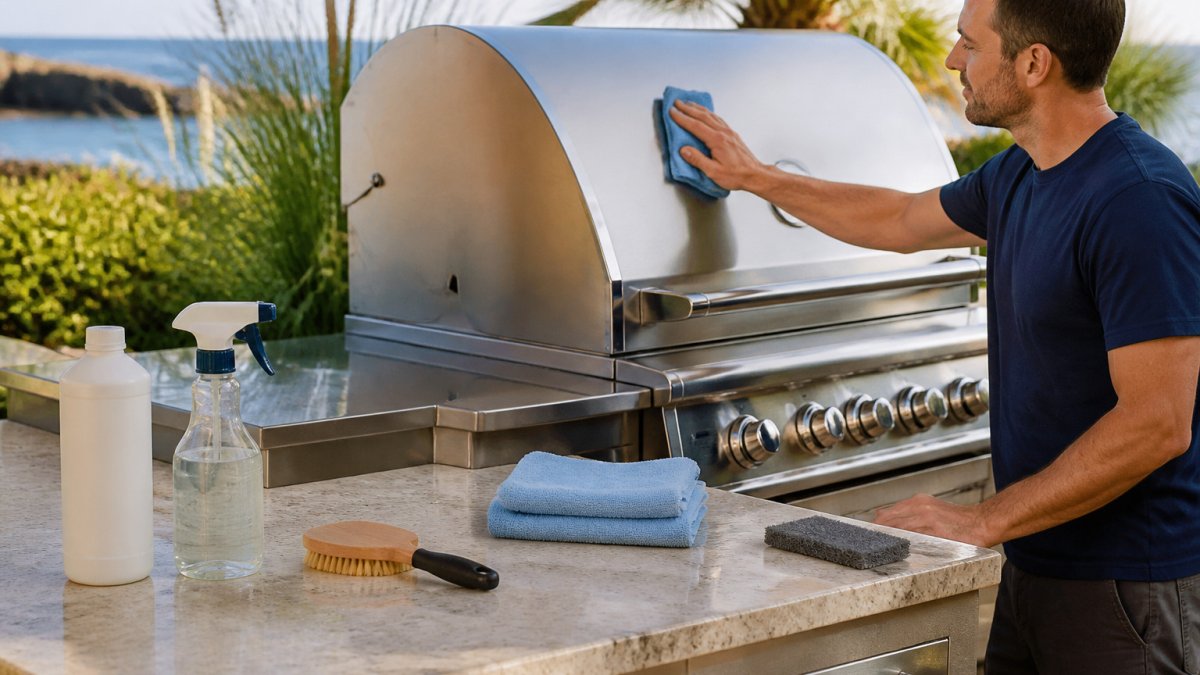
- Let the grill cool completely. Work on a cool surface to avoid warping or burns.
- Remove grates and drip pans. Clean them separately, since grease and salt residue collect in these areas.
- Wash with mild soap and warm water. Use a soft cloth or non-abrasive pad and wipe in the direction of the grain.
- Rinse thoroughly. Salt left behind can start new spots, so rinse all soap residue away.
- Dry immediately. Use a clean microfiber towel to prevent water spots and moisture pooling in seams.
- Apply a protectant if the manufacturer recommends one. Avoid abrasive chemicals and harsh cleaners that can scratch the finish.
Outdoor Kitchen Maintenance Checklist by Season
A seasonal checklist can help organize maintenance. Use the framework below as a starting point and adjust it to your local weather patterns and the manufacturer's guidance for each appliance.
Daily and after-every-use habits
- Rinse and dry stainless surfaces after windy days or salt spray.
- Brush grill grates while warm, then wipe down the exterior once cool.
- Remove covers after rain or heavy fog so moisture does not sit against the surface.
- Wipe down countertops and close cabinet doors to limit humid air intrusion.
Monthly checks
- Inspect fasteners, hinges, and brackets for white or rust-colored bloom.
- Clean burner ports and venturis; check for insect nests and salt residue.
- Test igniters and electrical outlet covers for corrosion or loose connections.
- Rinse the underside and back panels of the grill and island.
- Check cabinet interiors for musty smells or visible mildew.
Seasonal checklist
| Season | Focus areas | Coastal-specific actions |
|---|---|---|
| Spring | Inspection and deep clean | Rinse all stainless, inspect fasteners and hinges, test gas and electrical connections, confirm covers fit securely |
| Summer | Heavy-use maintenance | Rinse after windy days, clean burners monthly, wipe down stainless weekly, check ventilation in cabinets |
| Fall | Storm readiness | Clear vents and drawers of debris, secure covers, review storm shutoff procedures, inspect for corrosion before winter |
| Winter | Off-season protection | Deep clean and dry all surfaces, follow winterization steps for grill and refrigerator, keep vents clear for air circulation |
Post-storm inspection
After any significant storm, inspect before using the kitchen:
- Look for water intrusion in cabinets, drawers, and electrical boxes.
- Check burners and vents for debris, sand, or salt residue.
- Confirm gas connections are secure and shutoffs are functioning.
- Inspect covers and wind guards for damage.
- Dry all surfaces thoroughly before covering.
Keeping a maintenance log
For off-season steps, see our guides to 7 Steps to Winterize Your Outdoor Grill and 8 Steps to Winterize Your Outdoor Kitchen Refrigerator.
Storm, Moisture, and Mold Preparation for Coastal Kitchens
Storms and flooding are a significant risk for coastal outdoor kitchens. Before a forecasted storm, secure or store loose items, confirm covers are fastened, and turn off gas supplies at the source according to the manufacturer's instructions. After a storm, inspect the unit before using it, looking for water intrusion, damaged components, and debris in burners or vents.
Mold and mildew thrive in damp, shaded spaces. Keep enclosed cabinets and drawers ventilated, and avoid storing wet items inside them. If you notice a musty smell or visible growth, clean the area with a mild cleaner suited to the surface and let it dry fully. Keep in mind that some surfaces, particularly porous stone and fabric, may need specialized care, so check the material guidance before using strong products.
Winterizing Your Outdoor Kitchen Before the Off-Season
Preparing your kitchen for the off-season protects it from freezing temperatures and prolonged moisture. Start by deep cleaning every surface and drying it thoroughly, since residue left over winter can stain and corrode. Disconnect and secure gas and water lines according to the manufacturer's instructions, and consider professional help for any utility work.
For detailed steps on protecting your grill over the cold months, see our guide to 7 Steps to Winterize Your Outdoor Grill. Outdoor refrigerators need their own preparation, so review 8 Steps to Winterize Your Outdoor Kitchen Refrigerator before shutting them down for the season.
Once everything is clean and dry, cover the grill with a fitted cover and make sure vents are clear so air can circulate and moisture can escape.
Scheduling Your Next Coastal Kitchen Care Visit
If you are planning a maintenance review, product upgrade, or personalized guidance on protecting your investment, contact us and our team at Eternal Flame Outdoors can help you determine the right next step for your space.
Frequently Asked Questions
How often should you clean an outdoor kitchen near the coast?
Rinse the outdoor kitchen with fresh water after salt-air exposure, ideally every one to two weeks during warm months and after any storm that brings spray or wind-blown debris. A thorough cleaning of grates, burners, drip trays, and countertops is typically recommended monthly during peak season. Coastal homes near open water may need more frequent rinsing than inland properties, because salt residue settles on metal surfaces and accelerates corrosion if it is left to dry. Keeping a simple routine makes the difference between surfaces that stay bright and components that begin to pit.
How do you protect an outdoor kitchen from salt air?
Start with materials and components rated for marine or coastal exposure, such as 304 stainless steel, and keep surfaces rinsed with fresh water to remove salt before it dries. Use a fitted cover when the kitchen is not in use, and make sure any grill cover is breathable so moisture does not get trapped underneath. Check fasteners, hinges, and vent openings periodically for early signs of rust. Providing airflow through ventilation, such as Videl Custom Air Vents, helps the interior of built-in components stay dry.
What is the best way to clean stainless steel outdoor appliances?
Always check the manufacturer's care instructions for your specific model before using any commercial cleaner.
Should you cover an outdoor kitchen when it is not in use?
The Videl Grill Cover is described as protecting compatible Videl grills from rain, snow, UV rays, dust, pollen, and other outdoor elements. The Blackstone Select Pizza Oven Cover is described as providing outdoor all-season protection for the Blackstone Select Pizza Oven.
How do you maintain an outdoor grill in a humid climate?
Keep the grill dry after each use by wiping down surfaces and emptying grease trays promptly, since moisture combined with grease encourages mold and corrosion. Store the grill under a breathable cover in a location with airflow. Clean burners and gas lines according to the manufacturer's guidance, and inspect connections periodically for wear. A wind guard can also help protect burners and reduce debris from settling inside the firebox.
How should you prepare an outdoor kitchen for a coastal storm?
Before a storm, remove loose items such as cushions, utensils, and small accessories that could be carried away by wind. Secure or cover grills and appliances with properly fitted covers, and close any access doors or vent openings where possible. Turn off gas at the supply valve and follow local utility guidance. After the storm, inspect the kitchen for water intrusion, debris, and damage before using any appliances, and rinse surfaces with fresh water to remove salt deposits.
What outdoor kitchen materials hold up best near the ocean?
The Videl Custom Air Vents are made from commercial-grade 304 stainless steel and are described as resisting rust and corrosion. The Videl 36" Grill Stainless Steel Wind Guard is made from commercial-grade 304 stainless steel and is described as weather- and corrosion-resistant. The Videl Grill Cover is described as protecting compatible Videl grills from rain, snow, UV rays, dust, pollen, and other outdoor elements.




Leave a comment
This site is protected by hCaptcha and the hCaptcha Privacy Policy and Terms of Service apply.