
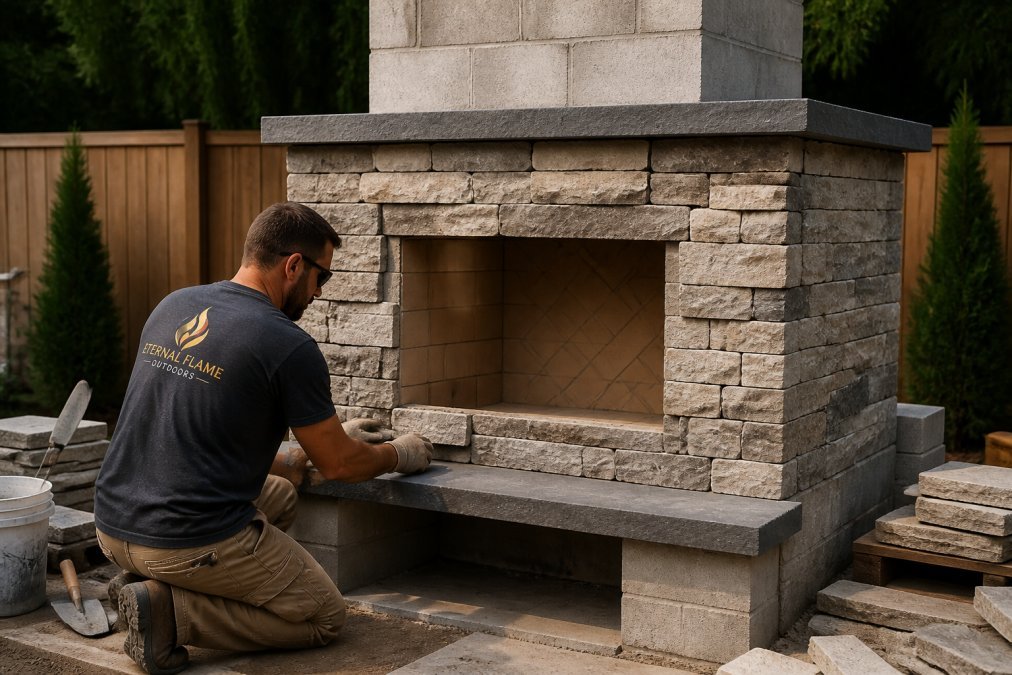
How to Safely Install a Backyard Fireplace
Table of Contents
- Understanding Outdoor Fireplace Clearance Requirements
- Obtaining Outdoor Fireplace Building Permits
- Preparing the Best Foundation for Your Outdoor Fireplace
- Step-by-Step Installation Process for Your Backyard Fireplace
- DIY vs Professional Fireplace Installation
- Post-Installation Safety Inspection Checklist
- Insurance Implications and Compliance
- Frequently Asked Questions
Last Updated: September 24, 2026
Understanding Outdoor Fireplace Clearance Requirements
Safe backyard fireplace installation starts with understanding clearance requirements, the distance your fireplace must maintain from anything that can burn. These rules protect your home, property, and family from fire hazards.
Most building codes require at least 3 feet of clearance on sides and the rear of a fireplace. The top requires even more space, typically 10 to 12 feet to overhead structures like eaves, tree branches, or pergolas. These distances vary by fireplace type and local regulations, so checking your municipal codes is essential.
Heat radiates outward and upward from your fireplace. Without proper distance, nearby materials can ignite or suffer damage over time, and even non-combustible materials like wood can char or warp from sustained heat exposure.
Document your clearance measurements before installation. Take photos and keep records. This documentation proves compliance if your insurance company or a building inspector asks.
Obtaining Outdoor Fireplace Building Permits
A building permit is your legal permission to install a backyard fireplace. Most jurisdictions require one, though requirements vary widely, some areas have simplified processes for outdoor fire features, while others treat them like major construction.
Contact your local building department or code enforcement office before buying your fireplace. Ask specifically about outdoor fireplace installation requirements. They'll tell you:
- Whether a permit is needed
- What inspections are required
- Which codes apply in your area
- What documentation you must submit
- Application fees and timelines
The permit process typically includes submitting plans, site drawings, and product specifications. Your fireplace manufacturer's documentation will help here.
Processing typically takes 1 to 4 weeks. Plan for this timeline before scheduling installation.
Preparing the Best Foundation for Your Outdoor Fireplace
A solid foundation prevents settling, cracking, and structural failure. The foundation must support your fireplace's full weight and handle freeze-thaw cycles without shifting.
Soil Stability and Drainage Analysis
Before pouring concrete, assess your soil. Soft, wet, or clay-heavy soil won't support a heavy fireplace reliably. Compacted, well-draining soil is ideal.
Check your yard's drainage patterns. Where does water flow after rain?
Concrete Pad Installation
A concrete pad provides the fire-safe base your fireplace needs. Most installations use a 4-inch-thick slab reinforced with rebar or wire mesh.
Step-by-Step Installation Process for Your Backyard Fireplace
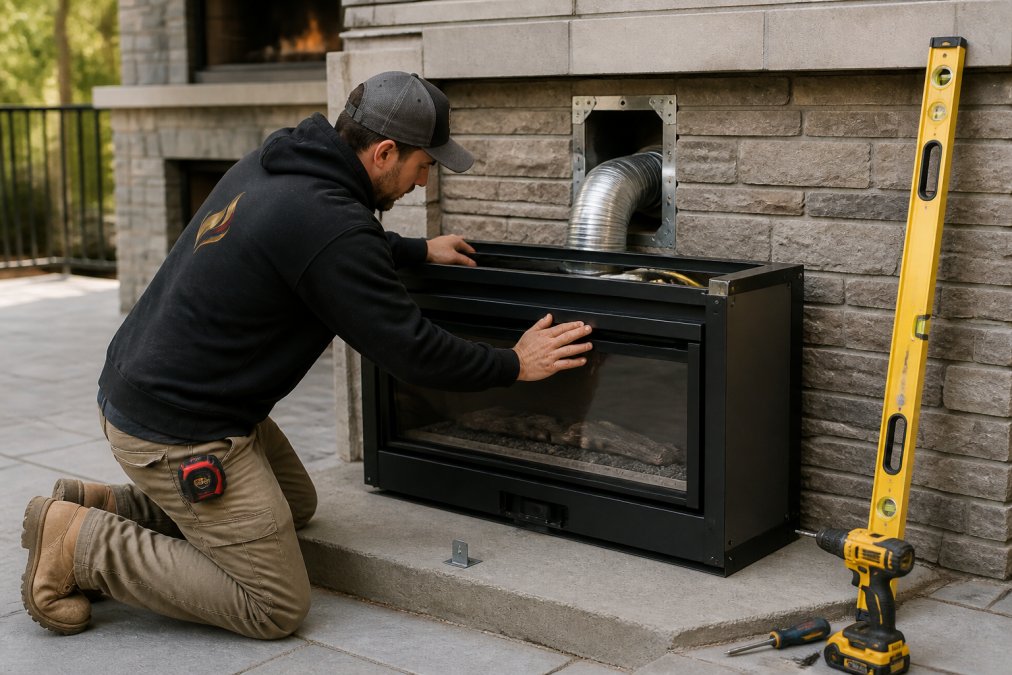
Ventilation and Chimney Setup
Ventilation removes combustion gases safely. Without it, smoke and carbon monoxide accumulate around your fireplace and seep into your home.
Heat Shielding and Non-Combustible Materials
Heat shielding protects nearby structures from radiant heat. Even with proper clearance, shielding adds an extra layer of safety.
Non-combustible materials are your best choice. These include:
- Stainless steel panels
- Tempered glass shields
- Ceramic fiber board
- Mineral wool insulation
- Metal mesh screens
Verify your specific unit's shielding requirements with the manufacturer.
Securing Structural Integrity
Your fireplace must be level and stable. Use a quality level to check all directions, front to back, side to side, and diagonals.
DIY vs Professional Fireplace Installation
Deciding between DIY and professional installation hinges on three factors: your skill level, your local code complexity, and your fireplace type. Not all projects are equally suited to owner installation.
When DIY Makes Sense
DIY installation works best when:
The Outdoor Plus Williams Fireplace →
- Your fireplace is a simpler model (gas fire table or fire pit insert rather than a built-in masonry or complex vented unit)
- Your local codes are straightforward and don't require sealed inspections
- You have experience with similar projects (deck building, concrete work, gas line connections)
- Your yard has ideal conditions (level ground, good drainage, no unusual frost depth)
- The manufacturer explicitly permits owner installation and provides clear assembly documentation
- You're comfortable obtaining permits and scheduling inspections yourself
Many homeowners successfully install prefabricated gas fireplaces or fire tables. These units arrive largely assembled and require mainly foundation prep, positioning, and connection work.
When Professional Installation Is Essential
Hire a professional if:
- Your fireplace is wood-burning or has complex venting requirements
- Your manufacturer requires professional installation as a warranty condition
- Your local codes demand sealed inspections by licensed contractors
- Your yard has challenging conditions: poor drainage, high water table, questionable soil stability, or deep frost lines
- You lack experience with gas connections, electrical work, or structural anchoring
- Your HOA or insurance policy mandates professional installation
The Warranty and Liability Question
Many manufacturers void warranties if installation isn't performed by a licensed contractor. Before buying, check the warranty terms. If your fireplace costs several thousand dollars, warranty protection matters. A voided warranty can cost you far more than professional installation fees.
Timeline and Hidden Costs
DIY installation typically takes 2-4 weekends, depending on foundation curing time and complexity. Professional crews finish in 1-2 days.
Our Recommendation
If your fireplace is a prefabricated gas unit with straightforward venting and your yard is well-prepared, DIY is feasible. If your fireplace is wood-burning, your codes are strict, or your warranty requires professional work, hire a licensed installer. Eternal Flame Outdoors can help you assess your specific situation and provide expert guidance on manufacturer requirements.
Post-Installation Safety Inspection Checklist
After installation, inspect your work thoroughly before using the fireplace.
Check these items:
- Fireplace is level and secure on its foundation
- All clearance to combustibles is maintained (3 feet sides/rear, 10-12 feet overhead)
- Flue liner is properly installed and extends above roofline
- Chimney cap and spark arrestor are secure
- Heat shielding is in place and fastened
- Gas lines are leak-tested with soapy water (for gas models)
- Electrical connections are dry and secure (for electronic ignition)
- Ventilation system is unobstructed
- Concrete pad is fully cured and level
- All fasteners and bolts are tight
- No combustible materials are stored near the fireplace
- Access for cleaning and maintenance is clear
Insurance Implications and Compliance
Insurance is often overlooked in fireplace installation planning, but it's critical. An unpermitted or improperly installed fireplace can void your homeowner's policy or result in claim denial.
Notify Your Insurer Before Installation
Contact your insurance agent before work begins, not after. Explain that you're installing an outdoor fireplace and ask:
- Does my policy cover outdoor fireplaces?
- Are there coverage limits or exclusions for fire features?
- Does the policy require professional installation?
- Do I need to file a modification notice or amendment?
- Will this affect my premium?
What Insurers Require for Coverage
Insurance companies typically demand proof of:
- Valid building permit, Unpermitted work is a red flag. Insurers may refuse coverage for unpermitted installations or deny claims related to them.
- Completed inspections, Final sign-off from your local building department shows compliance with code.
- Compliance documentation, Permits, inspection reports, and manufacturer specifications prove the fireplace meets safety standards.
- Professional installation (if required by your policy), Some policies explicitly require licensed contractor installation. Check your policy language.
- Maintenance records, Proof that you've maintained the fireplace per manufacturer guidelines. Neglected maintenance can void coverage.
The Unpermitted Installation Problem
If you install a fireplace without a permit and later file a claim for fire damage, water damage, or injury, your insurer may deny it. They may also use the unpermitted work as grounds to cancel your policy entirely. This applies even if the fireplace wasn't the direct cause of the loss, insurers view unpermitted work as evidence of risk management failure.
Documentation You Must Keep
Maintain a file with:
- Building permit application and approval
- All inspection reports (initial, mid-project, final)
- Manufacturer's installation manual and specifications
- Warranty documentation
- Proof of professional installation (if applicable), contractor license, invoice, warranty from installer
- Maintenance logs, dates of cleaning, inspections, repairs
- Photos of the completed installation showing clearance to combustibles and proper venting
- Any correspondence with your insurance agent
If a claim arises, this documentation proves you installed the fireplace responsibly and maintained it properly. Without it, you're vulnerable to denial.
Insurance Discounts and Premium Impact
Some insurers offer discounts for fire-safe features, professional installation, or certified safety upgrades. Ask your agent about these. The key is transparency and compliance.
Special Considerations for High-Value Fireplaces
If your fireplace is a premium unit, confirm it's covered under your homeowner's policy or consider adding a rider. High-value outdoor features sometimes need separate coverage.
Before You Start
Have this conversation with your insurer before purchasing your fireplace. It takes 15 minutes and prevents costly surprises later. Eternal Flame Outdoors can provide you with manufacturer specifications and installation requirements to share with your agent.
Frequently Asked Questions
Does an outdoor fireplace require a concrete footing?
Yes, a concrete footing is essential for backyard fireplace installation. A properly prepared concrete pad distributes the weight evenly, prevents settling, and ensures structural integrity over time. The foundation must be at least 4 inches thick and placed on stable, well-draining soil to prevent frost heave and moisture problems. Proper drainage around the foundation prevents water accumulation that could compromise the fireplace's stability and longevity.
Do I need a building permit to install an outdoor fireplace?
Most jurisdictions require a building permit for outdoor fireplace installation. Permits ensure your installation meets local fire codes, setback requirements, and structural standards. The permit process typically includes inspections at foundation, framing, and completion stages. Contact your local building department before starting work to understand specific requirements in your area, as codes vary significantly by location.
What are the minimum clearance requirements for outdoor fireplaces?
Clearance to combustibles varies by fireplace type and local codes, but generally ranges from 3 to 10 feet from structures, trees, and overhangs. Most gas fireplaces require at least 3 feet of clearance from combustible materials, while wood-burning units often need 10 feet or more. Always verify exact requirements with your local fire marshal and building department, as HOA restrictions and municipal codes may impose stricter standards than state guidelines.
Can I install a fireplace myself, or should I hire a professional?
DIY installation is possible for some homeowners with construction experience, but professional installation is recommended for most projects. Gas fireplace installation often involves gas line work, ventilation setup, and electrical connections. Wood-burning fireplaces need proper chimney installation and flue liner placement. Professional installers ensure code compliance, proper ventilation, and safety inspections, protecting your investment and family.



Leave a comment
This site is protected by hCaptcha and the hCaptcha Privacy Policy and Terms of Service apply.